Dutch guidance introduces tiny practice tastes between 4 and 6 months, alongside breast milk or formula. Around 6 months, complementary food becomes increasingly important. Sit your baby upright under direct supervision, follow hunger and fullness cues and offer an age-appropriate soft texture.
What to remember
- Milk remains the foundation during early practice. Food is exploration.
- Stay close and keep your baby calmly seated upright while eating.
- Do not pressure. Pause when your baby turns away or closes their mouth.
- Discuss peanut, egg or allergy risk with your health professional early.
When is your baby ready to taste?
Dutch guidance advises small practice tastes between 4 and 6 months. The WHO describes complementary feeding from around 6 months, when milk alone no longer covers all growing nutritional needs. Treat age as guidance, not a performance deadline, and ask your health professional when unsure.
Useful signs include interest in food, good head control and the ability to sit upright with support. No single milestone matters more than your baby's overall development.
A relaxed plan for the first week
Choose a calm moment when your baby is alert and not desperately hungry. Start with one or two small spoonfuls of a single soft taste. Looking, smelling, touching and making a mess are part of learning.
- Days 1 and 2: one soft fruit or vegetable, in a very small amount.
- Days 3 and 4: offer the same taste again. Familiarity takes repetition.
- Days 5 to 7: add another soft taste, without a portion target.
Responsive feeding: you offer, your baby answers
Responsive feeding means noticing hunger and fullness. Leaning towards food, opening the mouth and staying interested can be invitations. Turning away, closing the mouth, crying or losing interest are reasons to pause or stop.
Patient encouragement is different from persuasion. A new taste may need several meetings. The goal is confidence and skill, not an empty bowl.
A safer table: sit, prepare and stay close
Keep your baby calmly seated upright and remain within reach. Avoid whole nuts, popcorn and round or hard pieces. Grapes and small tomatoes need careful preparation; hard foods can be grated, cooked or steamed until soft.
Gagging can happen while learning textures, but choking is an emergency. Take an accredited baby first-aid course so you know how to respond. Call emergency services immediately for a severe obstruction and provide first aid.
Peanut and egg deserve a personal plan
Dutch guidance advises introducing peanut and egg in a suitable form in a timely way. Severe eczema, an existing allergy, a previous reaction or uncertainty calls for guidance from a doctor or child-health professional. Never offer a baby whole peanuts or nuts.
Introduce a new allergen when you can observe your baby. Seek emergency help for breathing difficulty, unusual drowsiness or swelling around the mouth or throat.
Prepare the table for learning, not perfection
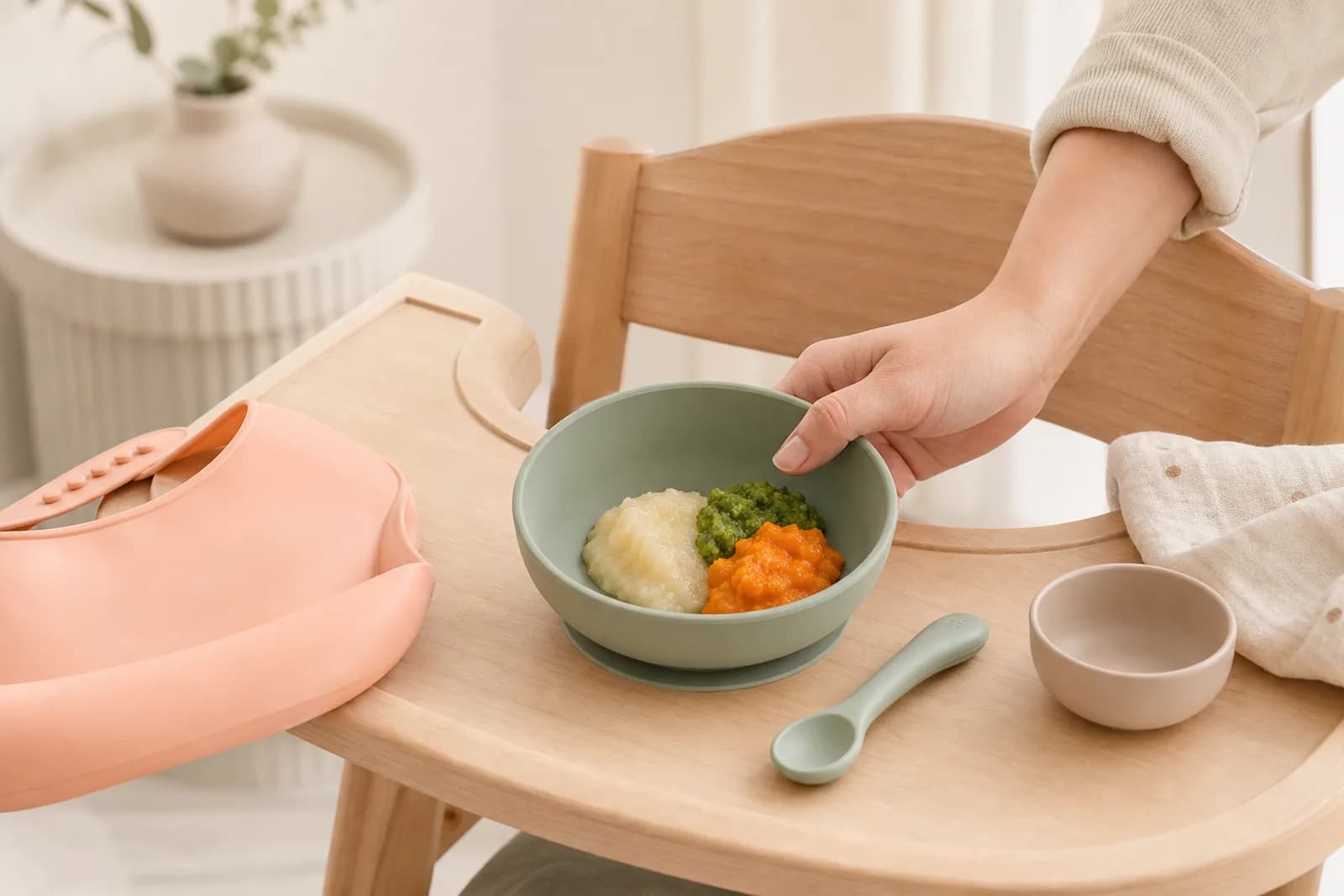
A stable bowl, small soft spoon, cloth and secure chair are enough. Serve a little and top up if needed. It keeps the moment clear and limits waste.
Wash hands and utensils, store food safely and discard leftovers that have been in contact with saliva. Simplicity is often the calmest luxury.
Frequently asked questions
How much should my baby eat at first?
Begin with one or two small spoonfuls. Early practice is about tasting; breast milk or formula remains the nutritional foundation.
Should I offer purées or pieces?
Match texture to your baby's development and skills. Smooth, mashed or safely soft food can all have a place. Ask your health professional if unsure.
When should I stop feeding?
Pause or stop if your baby turns away, closes their mouth, pushes food away or becomes clearly upset. Pressure does not support a healthy relationship with food.
Sources and review
This guide combines current Dutch public-health advice with WHO complementary-feeding guidance. It is general information, not individual nutrition or medical advice. Last content review: 15 July 2026.