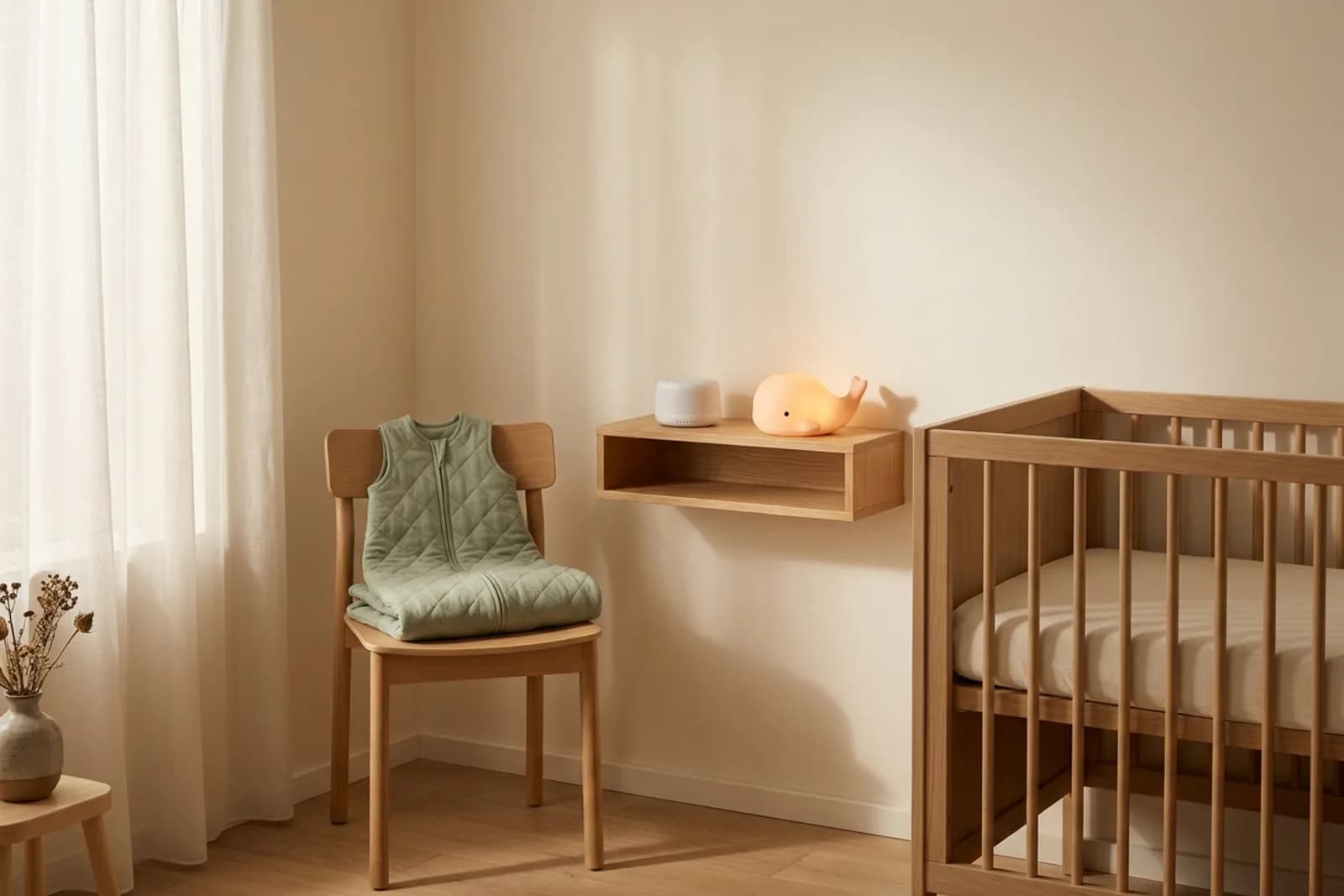
Keep the routine short and predictable: feed, change, dim the lights, sing and settle. Place your baby on their back for every sleep, in their own empty cot on a firm, flat mattress. A routine can support calm, but safe sleep matters more than any ritual.
What to remember
- Choose three to five steps you can repeat even on a busy evening.
- Put your baby down on their back in their own clear sleep space.
- Use a well-fitting sleep sack and keep loose items out of the cot.
- A difficult night is not a failed routine. Development is not linear.
Why a small routine is often the most useful one
Babies learn through repetition. Familiar steps can become cues that the day is slowing down. They are not a promise that a baby will sleep through; hunger, closeness, development and discomfort still matter.
A useful routine fits your real life. Ten calm minutes you can usually repeat are more valuable than an elaborate ritual that creates stress when plans change.
- Start at a broadly familiar time without letting the clock take over.
- Lower light, sound and pace one step at a time.
- Use one recognisable ending, such as a short song or phrase.
Build the safe foundation before adding atmosphere
Dutch safety body VeiligheidNL summarises safe sleep as four essentials: on the back, in a separate cot, in a sleep sack and in an empty cot. Use a firm, flat mattress with a tightly fitted sheet. Pillows, bumpers, sleep positioners, nests, large toys and other loose items stay outside the sleep space.
Check that the neck and arm openings of a sleep sack fit correctly and choose its weight for the room temperature. Keep lights, cords and sound devices stable, out of reach and outside the cot.
A simple example for each stage
Adapt the length to your baby. For a young infant, a calm feed, change and safe settle may be the whole routine. Later, one book or song can become the familiar anchor.
- 0 to 3 months: feed, change, soften the light, hold briefly and settle safely.
- 4 to 8 months: wash or bathe if calming, sleep sack, short feed, song and cot.
- 9 to 18 months: tidy together, wash, pyjamas and sleep sack, one book and a clear goodnight.
What to do when the evening goes differently
Some nights your baby is tired early, needs more closeness or the plan disappears completely. Keep only the smallest familiar cues: dim the light, slow your voice and use the same ending.
Discuss persistent concerns about sleep, breathing, growth or inconsolable crying with a qualified health professional. A general online routine can never replace individual medical assessment.
Let products support the routine, never lead it
A soft night light may help with care in the dark and a familiar sound can mark the transition. No accessory makes sleep safe or guarantees sleep. Keep devices stable, outside the cot and out of reach.
A blanket can be lovely for awake cuddles. For the sleep environment, always follow current safe-sleep advice and do not use loose blankets as cot decoration.
Frequently asked questions
How long should a bedtime routine take?
Ten to thirty minutes is often enough. The best length is the shortest version that feels calm and is realistic to repeat.
Can a soft toy stay in the cot?
Safe-sleep guidance recommends a clear cot. Keep soft toys, pillows, nests and other loose objects outside the sleep space.
What if my baby settles with a light on?
Use soft, indirect light if needed. Keep the cot empty and place lights and cords safely outside the sleep area and out of reach.
Sources and review
This guide was editorially reviewed against current Dutch safe-sleep guidance. It is general information, not medical advice. Last content review: 15 July 2026.