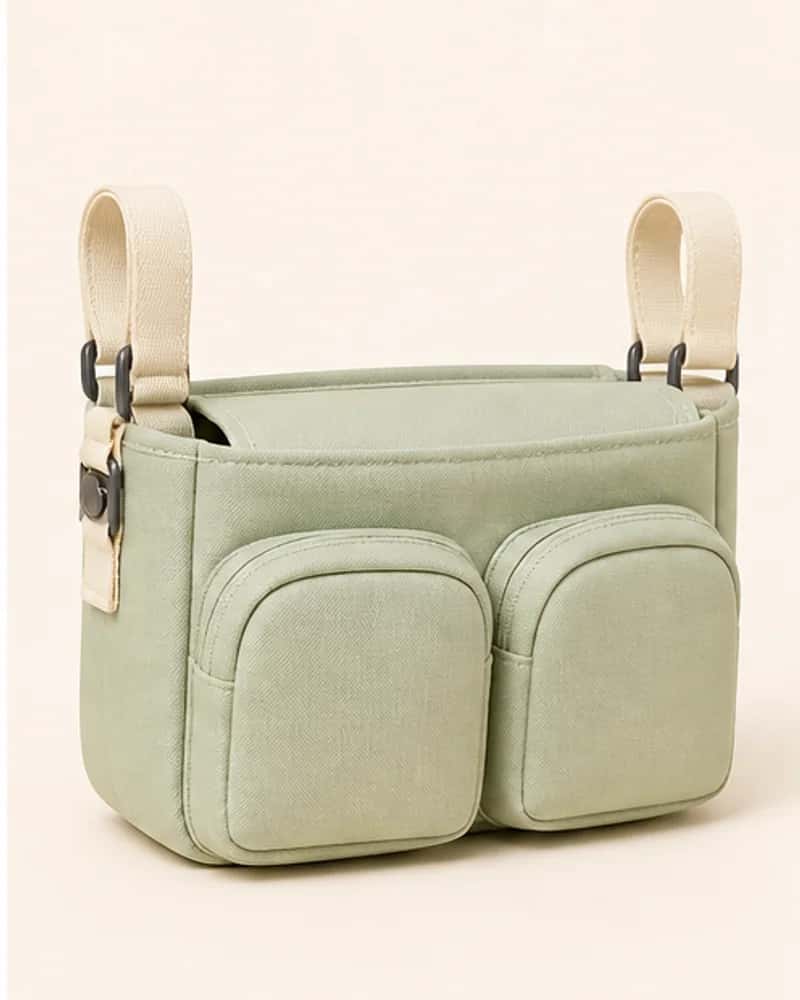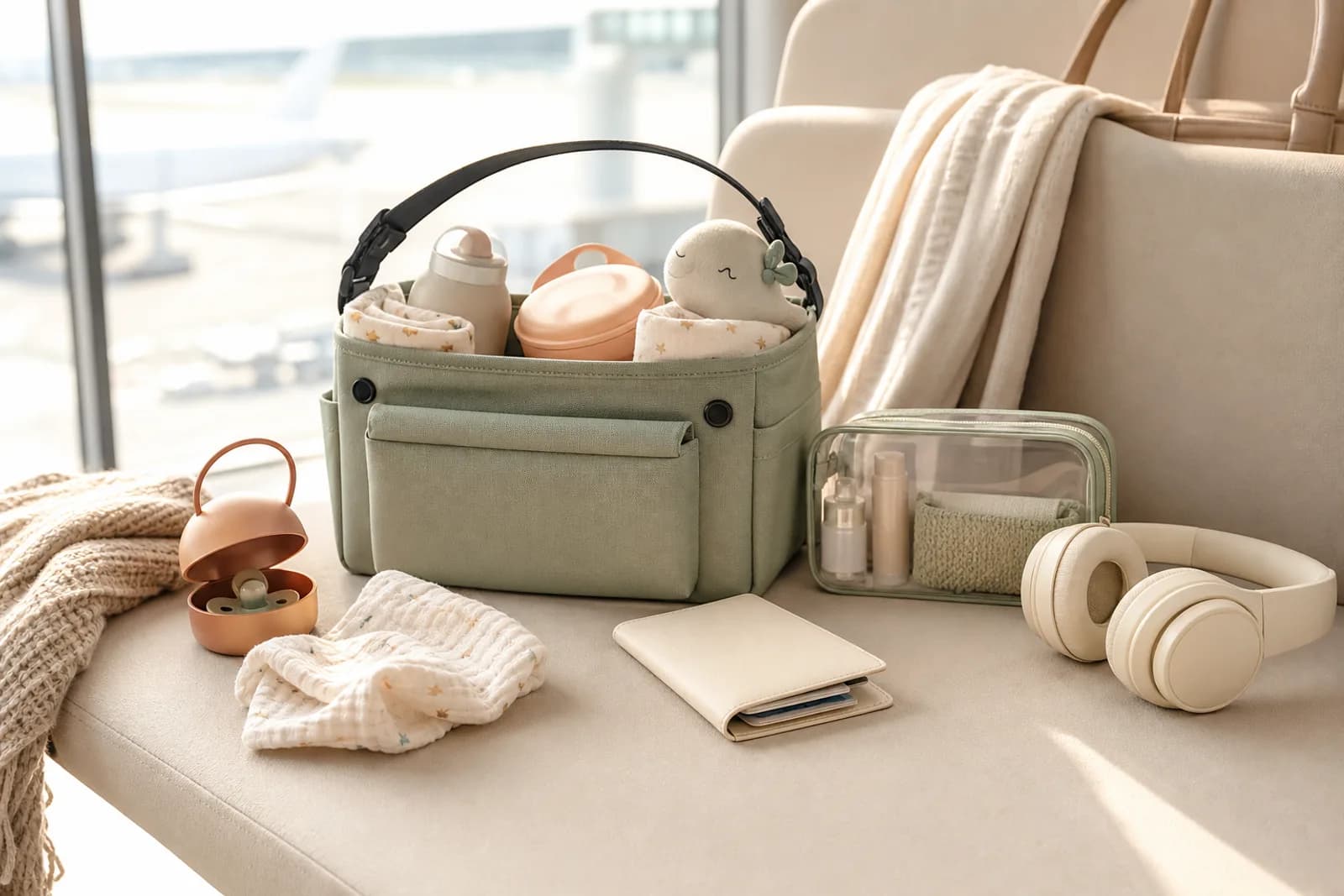
Check travel documents, any required consent from another legal guardian and the infant rules of every operating airline. Pack hand luggage by moment rather than product. Keep documents and one full change directly accessible, and add time for every transition.
What to remember
- A child needs their own valid travel document for international travel.
- Check every operating airline, including each codeshare flight segment.
- An onboard bassinet is not a certified child-restraint system.
- If two adults travel, divide essential supplies between both bags.
One week before: arrange what the airport cannot fix
For international travel, every child needs their own valid passport or accepted identity card. Check validity requirements for the destination and any transit countries.
When travelling without another person who shares parental responsibility, consent or evidence may be required. Check the official rules for your country and destination and carry documents that fit your situation.
- Check names, expiry dates and whether the photo is still recognisable.
- Save booking details and emergency contacts offline.
- Check baggage, buggy, seat, bassinet and liquid rules per segment.
Ask the airline about the seat, not only the ticket
EASA strongly recommends an approved child-restraint device on board, while the airline decides what is accepted on the specific aircraft. Check the approval label, dimensions and manual, then confirm with every operating carrier.
A bassinet is a cabin-service feature, not a child-restraint system. During taxi, take-off, landing and turbulence, crew instructions determine how your baby must be secured, even if your baby is asleep.
Pack hand luggage in three zones
Organise around the moments when you need things. That keeps you from emptying a whole bag in a narrow seat.
- Immediate: documents, phone, dummy, one cloth and a small feed for your routine.
- Care: two complete changes in separate pouches, nappies, wipes, baby clothes and a spare top for you.
- Reserve: extra feeds, medication in original packaging, second dummy and delay supplies.
At the airport: reduce the number of decisions
Decide who holds documents and who manages the baby and hand luggage. If it fits your routine, change your baby shortly before boarding and prepare food or water within airport rules.
Early boarding provides time to settle. Boarding later reduces time in the cabin. Choose what suits your baby and mobility; neither option is universally best.
On board: focus only on the next moment
Keep one small kit under the seat and stow the rest safely. Follow crew and manufacturer instructions whenever securing your baby or child seat. Nothing should obstruct an aisle or evacuation route.
A crying spell is not a verdict on your parenting. Check the basics, stay calmly present and ask the crew for practical help when needed. Their safety directions remain decisive.
After landing: leave a gentle buffer
Keep one change, a small feed and essential medication for arrival. Baggage, immigration and transport can all take longer than expected.
Keep the first day light on fixed plans. A calm recovery window helps everyone find a new rhythm.
Frequently asked questions
Does my baby need their own passport or identity card?
For international travel, children need their own valid travel document. Check the official requirements for your nationality, destination and transit countries.
Can I use my car seat on the aircraft?
Only if it is approved for aircraft use and the operating airline accepts it on that flight. Confirm in advance and bring the manufacturer's instructions.
Is an onboard bassinet a safe seat?
A bassinet is not a child-restraint system. During taxi, take-off, landing and turbulence, follow crew instructions for securing your baby.
Sources and review
Document and airline rules can change. Recheck your government, destination and every operating airline shortly before departure. Last content review: 15 July 2026.