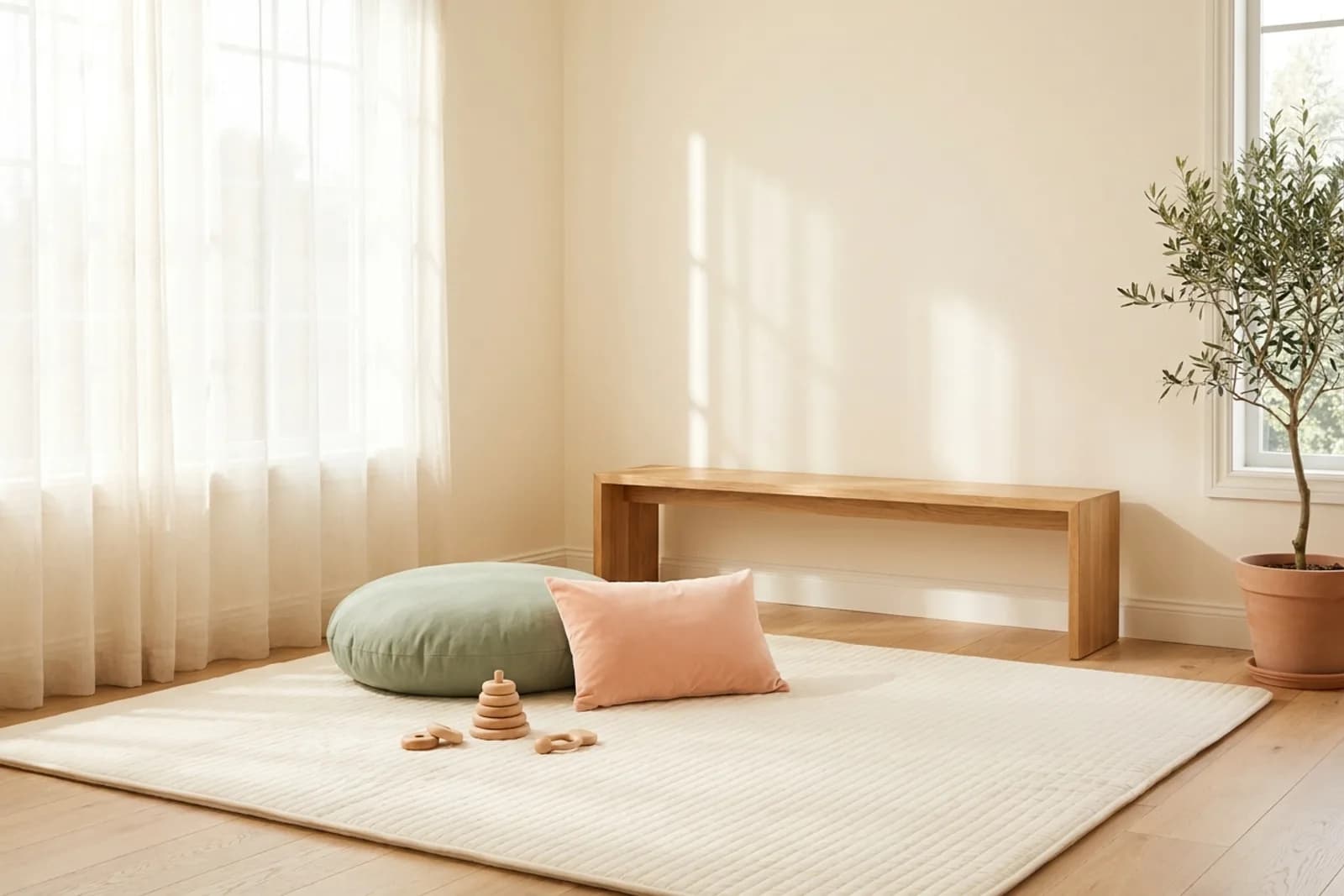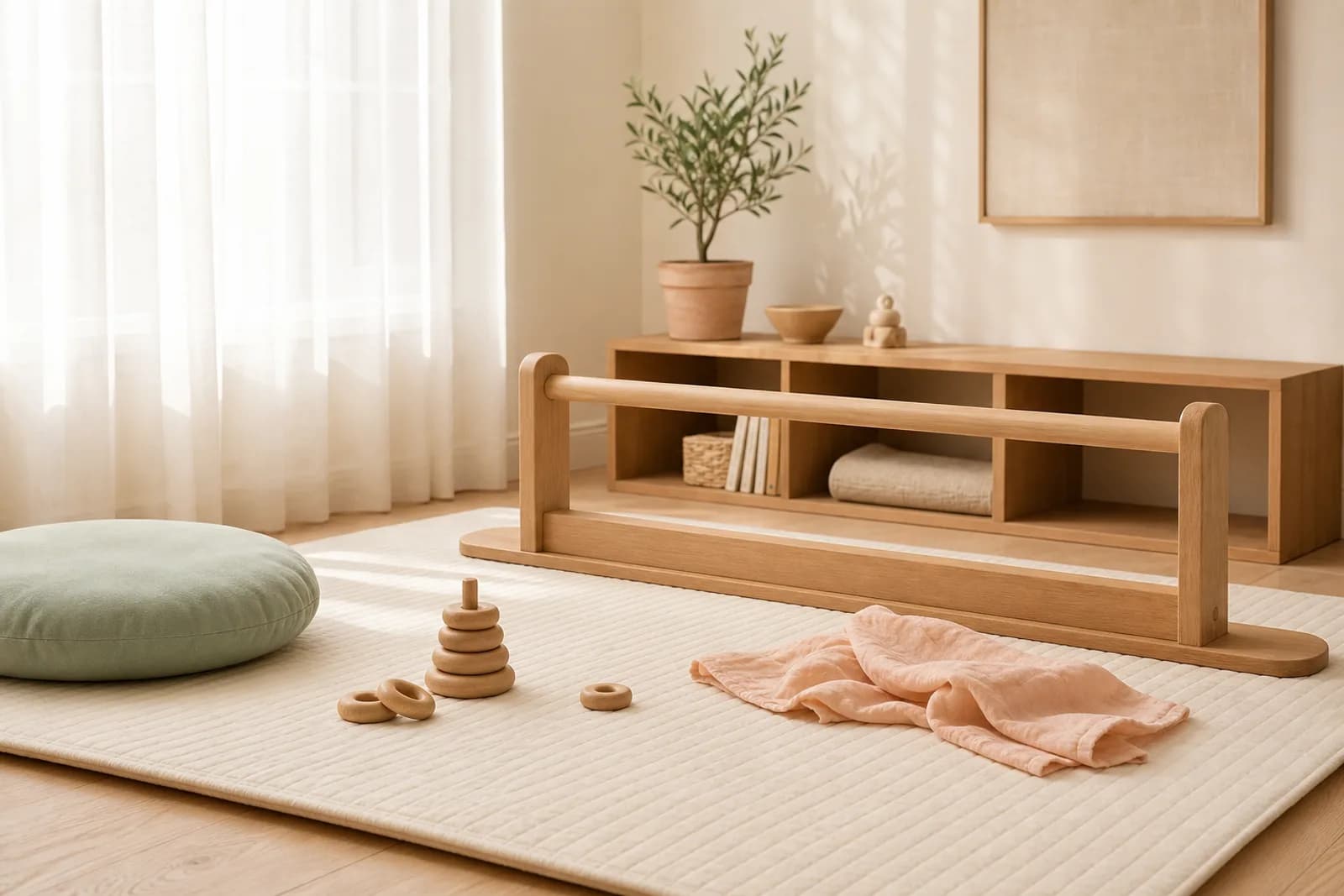
Falling backwards is common while a baby is still learning balance, trunk strength and how to react when weight shifts. Practise at floor level, clear stairs, sharp edges and unstable furniture, and stay close. After a hard fall, seek urgent medical help for loss of consciousness, a seizure, breathing difficulty, trouble waking, repeated vomiting, weakness or behaviour that feels seriously unusual.
What to remember
- Small floor-level plops are common while learning to sit, pull up and let go.
- Remove routes to a serious fall before trying to soften ordinary landings.
- Offer free floor play instead of spending most practice time restrained in seats.
- You know your baby. Behaviour that is not normal after a knock deserves medical advice.
Why babies often fall backwards
Balance develops through repetition. While sitting, a baby's centre of gravity is high, trunk strength is still growing and a hand may not reach the floor in time. While standing, the same thing happens when knees straighten, hands let go and weight shifts behind the heels.
CDC milestones include pulling to stand and cruising along furniture around the first birthday for many children. These are not deadlines. They simply describe a phase full of attempts, corrections and the occasional plop.
Start with the fall you need to prevent
A short drop from sitting on a clear floor is different from a fall off a bed, sofa, changing table or staircase. VeiligheidNL identifies stairs, seating and beds as important sources of fall injuries in very young children.
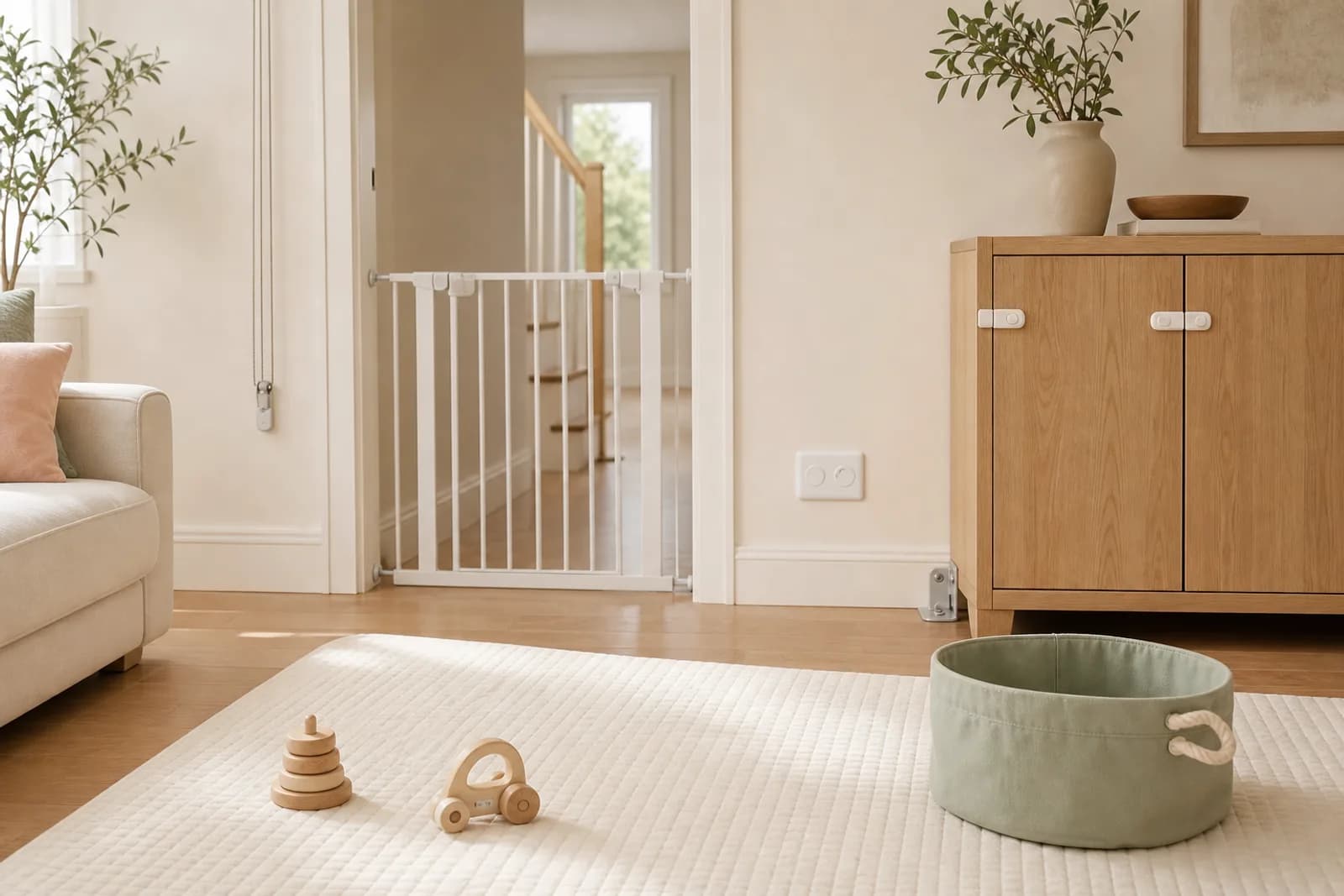
Practise at floor level. Fit gates before crawling begins, move climbable furniture away from windows, anchor cabinets and never leave a baby alone on a raised surface. These changes address the risk that matters most.
Build a calm practice zone
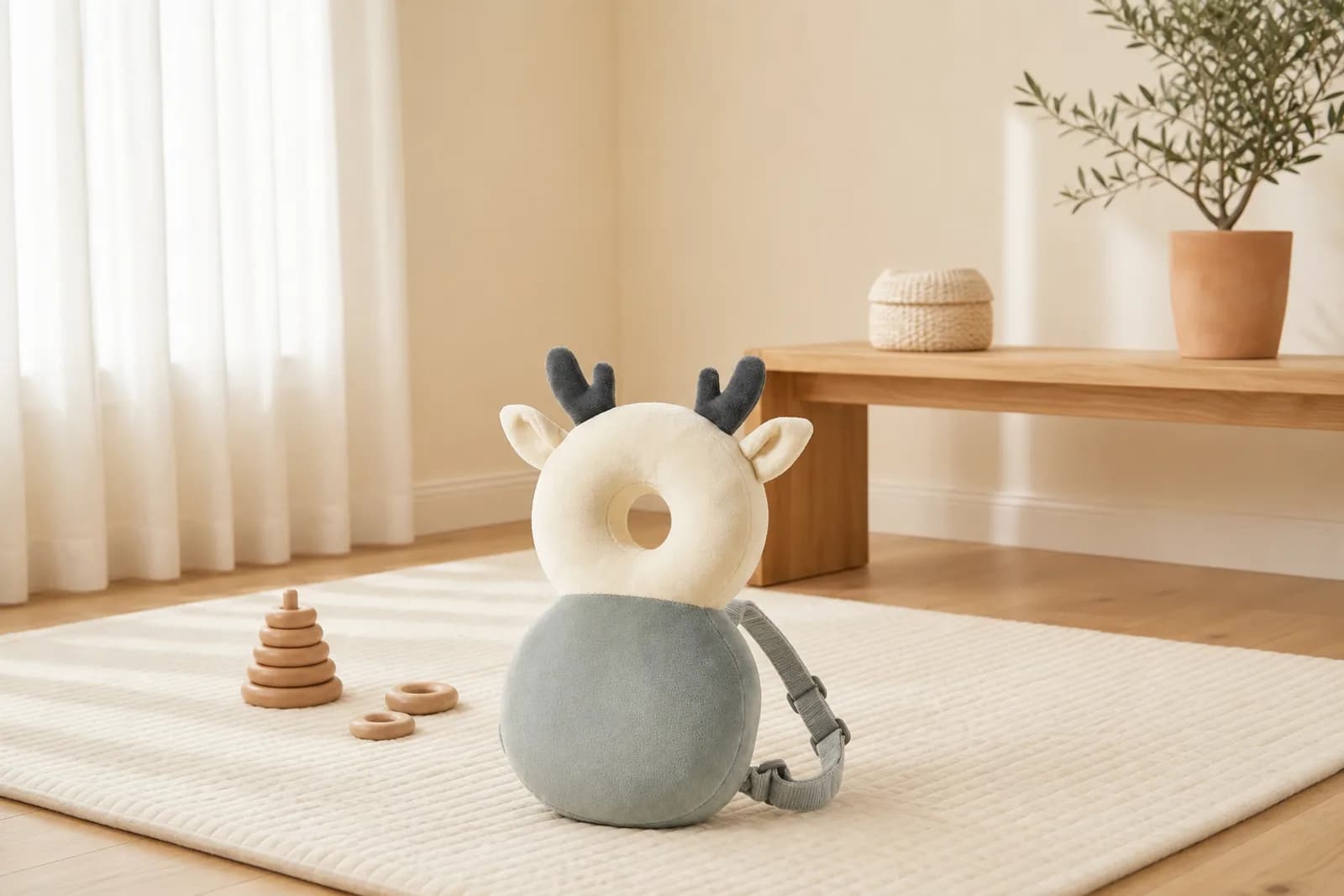
Choose a level, firm surface with grip and a play mat that does not slide or curl. Keep at least an arm's length clear of table corners, hard protruding toys and loose cords. A low support can help only when it cannot roll, tip or shift.
Sit on the floor nearby without holding every movement. Your baby can practise shifting weight and reacting independently while you remain close enough to block a dangerous route.
- A flat grippy surface with no loose mat edges.
- No stairs, glass, level changes or sharp edges in the practice zone.
- Stable support that cannot roll, slide or tip.
- An adult within reach and a phone out of hand.
After an ordinary plop: comfort, then observe
If your baby cries immediately, settle them and look at what made contact. A small red mark or brief cry may follow a minor bump. Resume play only when your baby seems completely like themselves again.
An article cannot assess a head impact. Contact a medical professional whenever you are unsure. Seek urgent help for loss of consciousness, a seizure, breathing difficulty, trouble waking, repeated vomiting, weakness or markedly unusual behaviour.
Where extra cushioning may fit
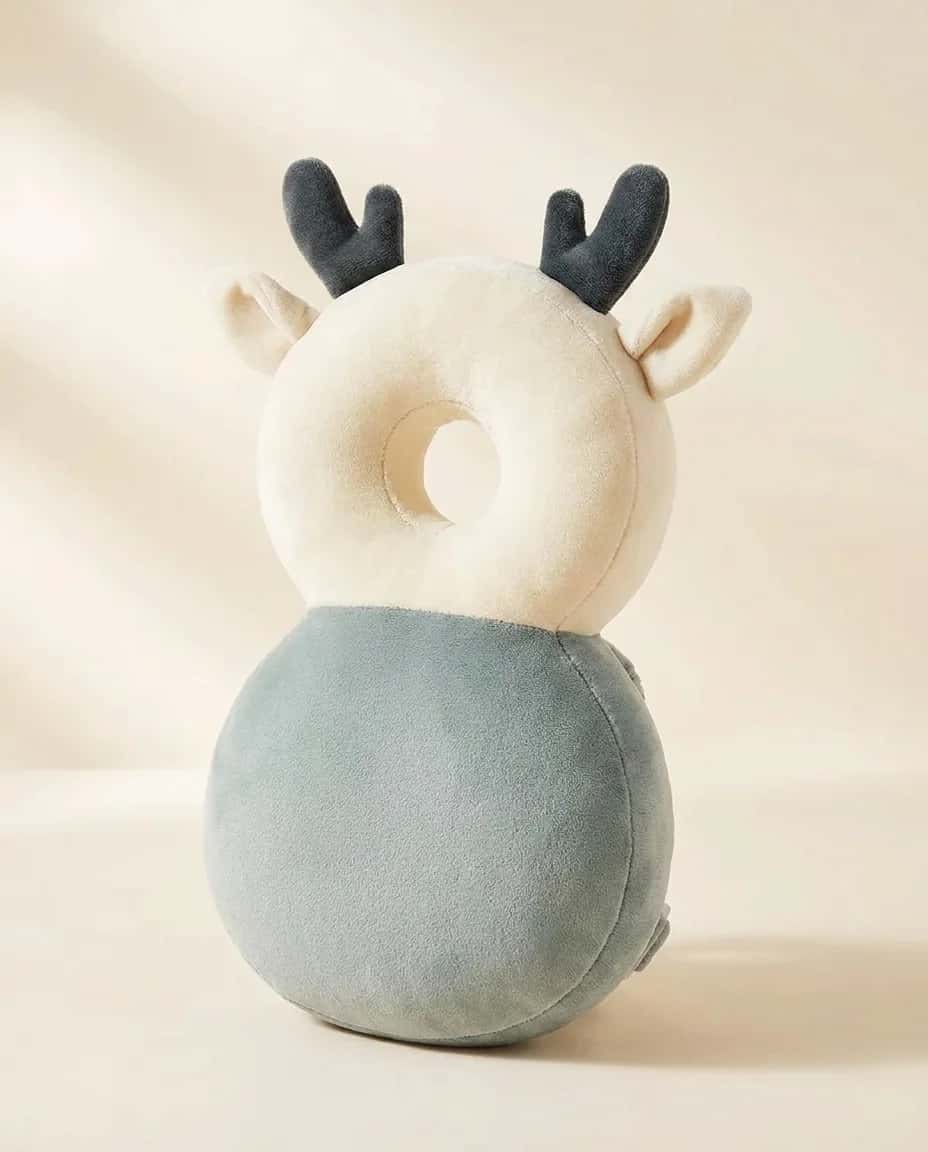
A firm, flat play mat softens the whole practice area without adding anything to the body. A light fall cushion can add comfort in a straight backward plop during awake, supervised practice. It does not work in every direction and cannot prevent the fall itself.
Use only a fit that leaves movement free and remove it for sleep and travel. If the cushion makes an open stair or hard edge feel less urgent, it is being used in the wrong order.
Frequently asked questions
Is it normal for my baby to fall backwards often?
Small plops are common while learning to sit, pull up and walk. They should reduce as balance improves. Discuss marked one-sided movement or developmental concerns with your health visitor or doctor.
Should I catch every fall?
Prevent falls from height and onto hard hazards, but allow balance practice on a prepared floor. Stay close enough to block a dangerous route immediately.
When should I call after a head bump?
Call whenever you are unsure. Seek urgent help for loss of consciousness, a seizure, breathing problems, difficulty waking, repeated vomiting, weakness or strongly unusual behaviour.
Does a thick play mat make falling safe?
A firm, flat, non-slip mat may make an ordinary plop more comfortable. It cannot make stairs, hard edges or a fall from height safe.
Sources and review
Fall risks and room for development follow VeiligheidNL. The warning signs are a concise safety layer based on NHS first-aid information and do not replace clinical assessment. Last content review: 22 July 2026.