Babyproof before crawling starts if possible. Begin with stairs and heights, water and heat, choking and poisoning, heavy furniture and windows. Then inspect each room from your knees, store small and sharp objects, secure cords and repeat the check when your baby starts pulling up or climbing.
What to remember
- Prioritise severity and access: stairs, water, heat, poisons and heavy furniture first.
- View every room from crawling height and gently pull anything a baby could grab.
- Install protection before the milestone, not after your baby demonstrates the skill.
- Babyproofing grows with the child: crawling, standing and climbing each need a new check.
Start with the route, not a basket of plastic covers
Walk the daily route through the play area, sofa, kitchen, stairs, bedroom and bathroom. Which hazards could cause serious harm and which are reachable in seconds? A fitted stair gate and anchored cabinet usually deserve attention before padding every low corner.
VeiligheidNL recommends checking from your knees. Cords, small pieces, sockets, plants and projecting edges become obvious from that height. Gently test anything your baby may soon pull.
Stairs, windows and furniture come first
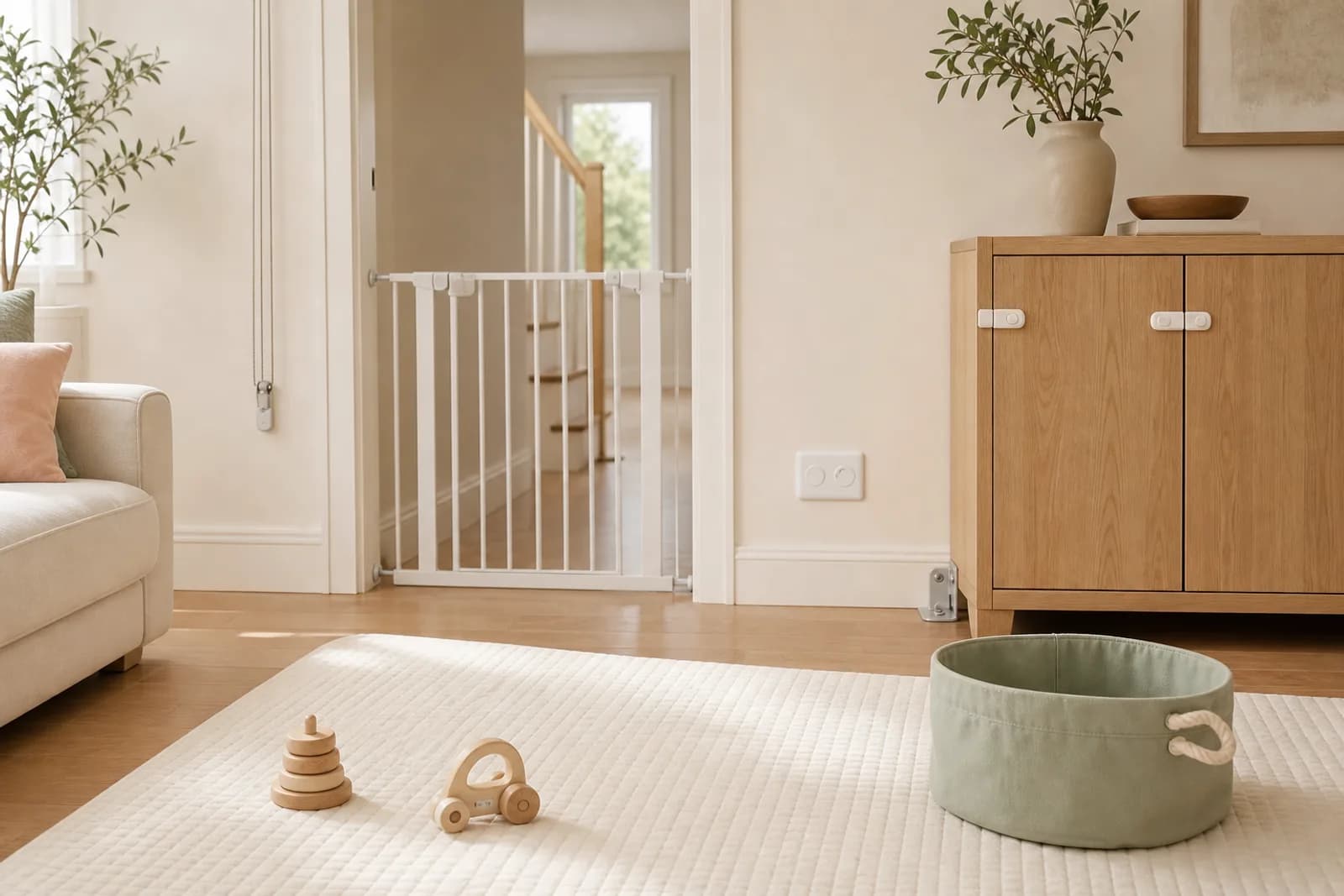
Fit suitable gates at the top and bottom before crawling starts and follow the instructions. Keep chairs and boxes away from windows and balcony edges. Anchor tall or heavy cabinets and televisions to a suitable wall or fixed structure.
Look for hidden climbing routes too: a toy chest under a window, a dining chair beside a counter or drawers that form steps. One new motor skill can make yesterday's unreachable place accessible.
- Correctly fitted stair gates that are closed after every use.
- Restricted windows with no climbable furniture beneath them.
- Anchored cabinets and television, with drawers not usable as steps.
- No practice on a bed, sofa or changing table.
Living room and kitchen: pull, touch and test
Hide cords, keep hot drinks well back and remove tablecloths that can bring everything down. Keep button batteries, magnets, coins and other small pieces completely out of reach. Store medicines, cleaning products, laundry capsules and alcohol both high and locked.
In the kitchen, heat and contents matter more than tidy doors. Turn pan handles inward, favour rear burners and make a fixed safe place away from the oven, boiling water and an open dishwasher.
Bathroom and bedroom: water, cords and sleep
Never leave a baby alone near a bath or any water, even to fetch something. Empty tubs and buckets immediately, close the bathroom when it is not in use and put hair tools, razors and medicine away.
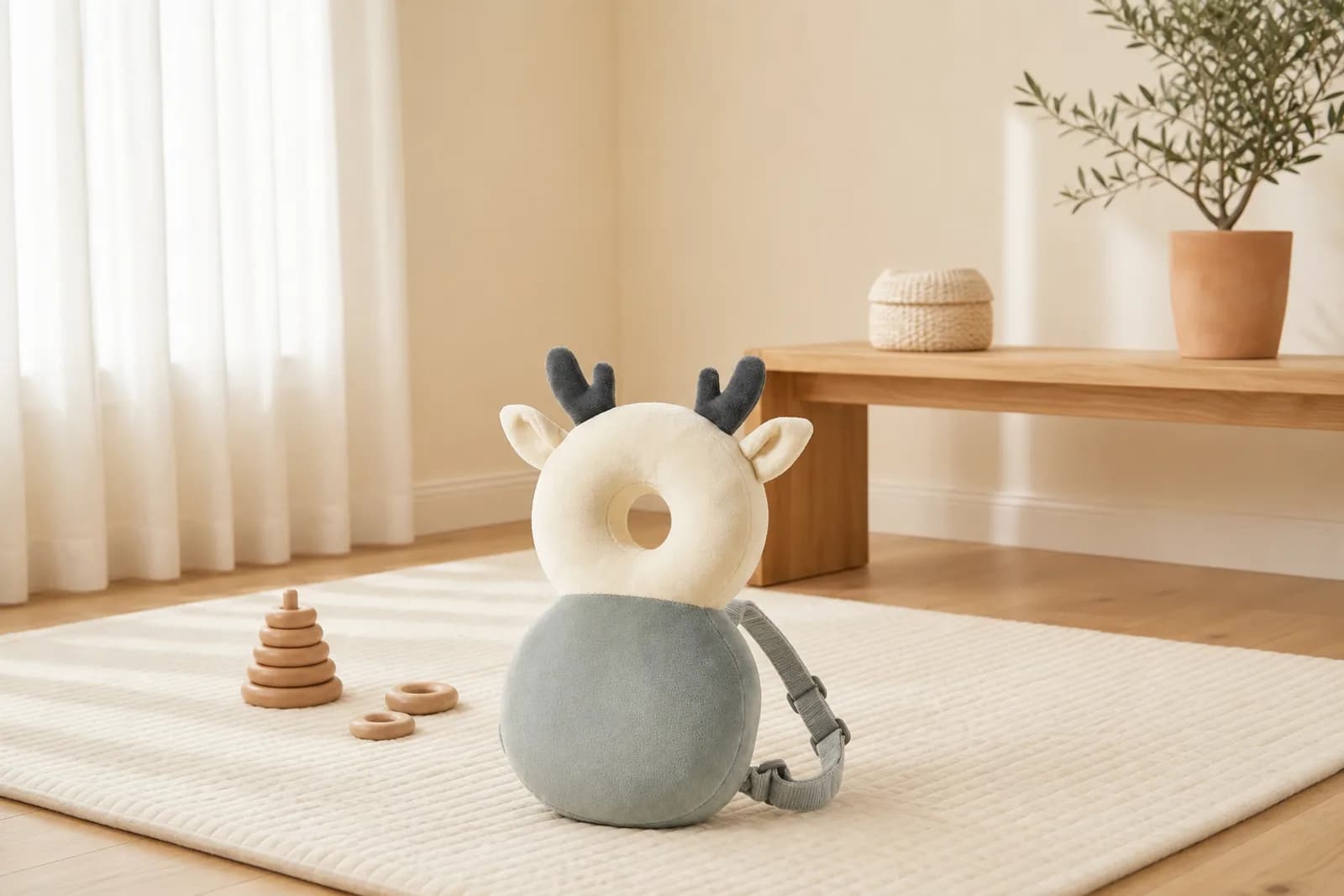
Secure blind cords high and tight. Keep the sleep space clear of cushions, padded bumpers, straps and toys. MoshiGuard and every other fall cushion is for awake floor practice and comes off before sleep.
Create one practice corner where you can often say yes
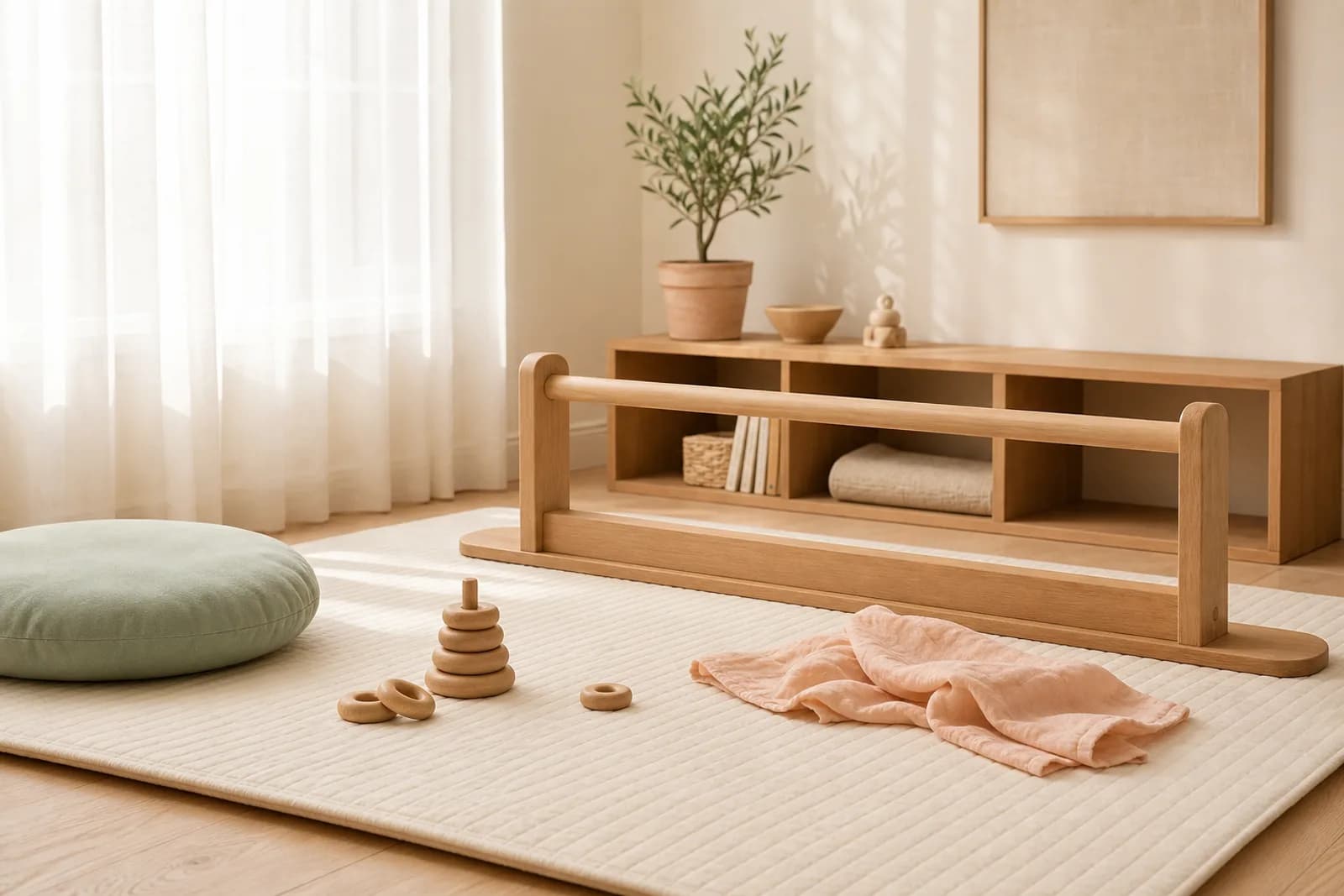
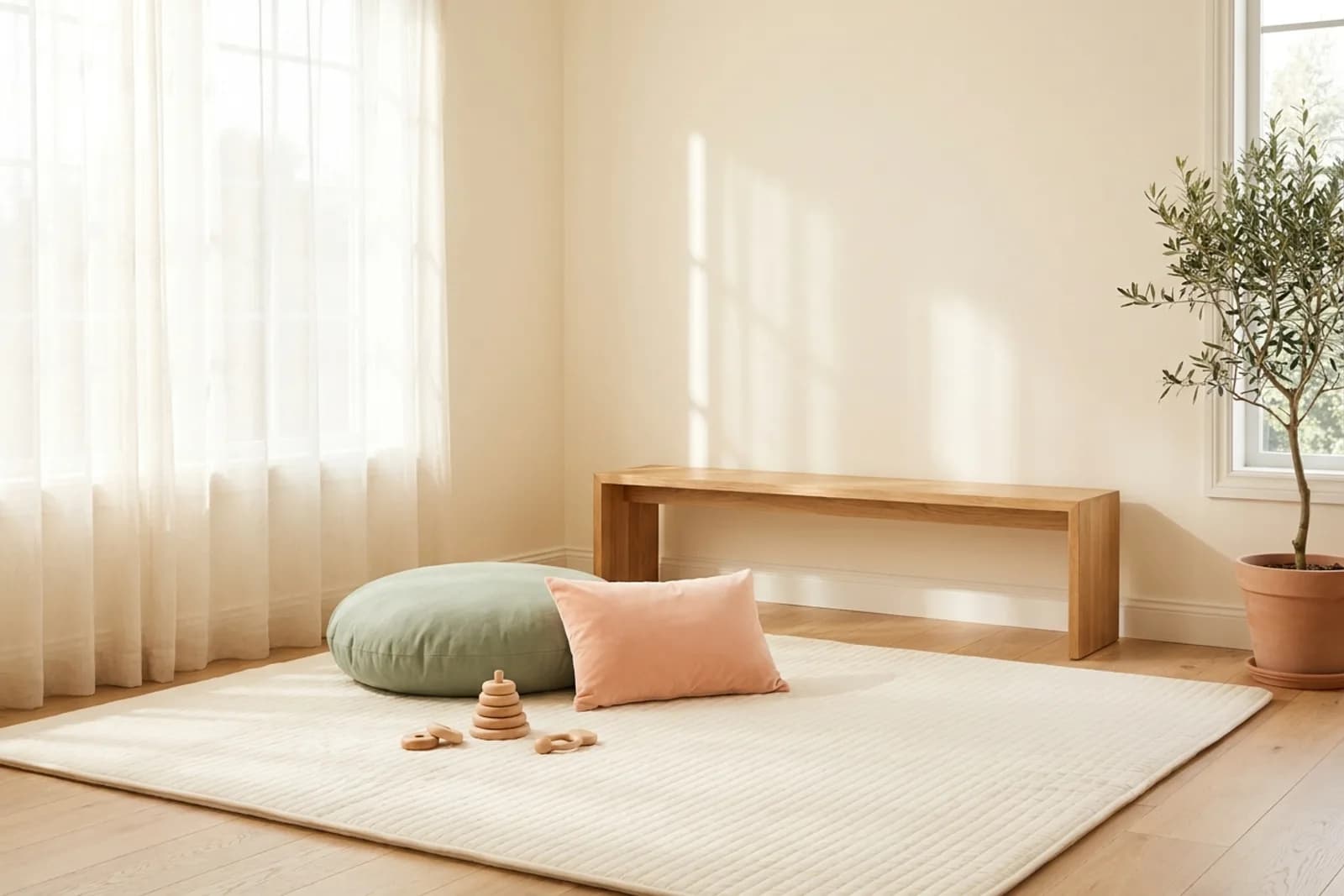
Babyproofing is also about making room. WHO guidance encourages active, interactive floor play. Set up one visible zone with a firm surface, a few suitable toys and a stable low support for future pulling up.
Extra cushioning can be pleasant there, but keep the order clear: prepare the room first and add a comfort accessory only afterwards. No mat or cushion makes an open stair, loose cabinet or unsupervised moment safe.
Repeat the check with every new skill
Check again when your baby commando crawls, crawls, pulls up and climbs. Test gates and anchors monthly and after moving furniture. A short scan also helps at grandparents' homes and holiday accommodation.
A practical home remains liveable. Choose a few reliably safe zones, store hazards consistently and agree on the same rules with every caregiver. Calm comes from a predictable environment, not a hundred gadgets.
Frequently asked questions
When should I babyproof my home?
Start before commando crawling or crawling. Stair gates, furniture anchors and safe storage are better installed weeks early than a day late.
What should I babyproof first?
Start with stairs and heights, water and heat, medicines and cleaners, button batteries and magnets, heavy furniture and windows. Then work through smaller room-specific risks.
Are socket covers enough for a safe living room?
No. Check cords, hot drinks, unstable furniture, small objects, plants, blind cords and access to stairs or balconies too.
Does a babyproof home need to be soft everywhere?
No. Free movement on a firm, level surface supports development. Focus on preventing serious falls, burns, drowning, poisoning and choking.
Sources and review
Priorities and the room check follow VeiligheidNL; active floor play follows WHO guidance for children under five. Install every safety product according to its own instructions. Last content review: 22 July 2026.