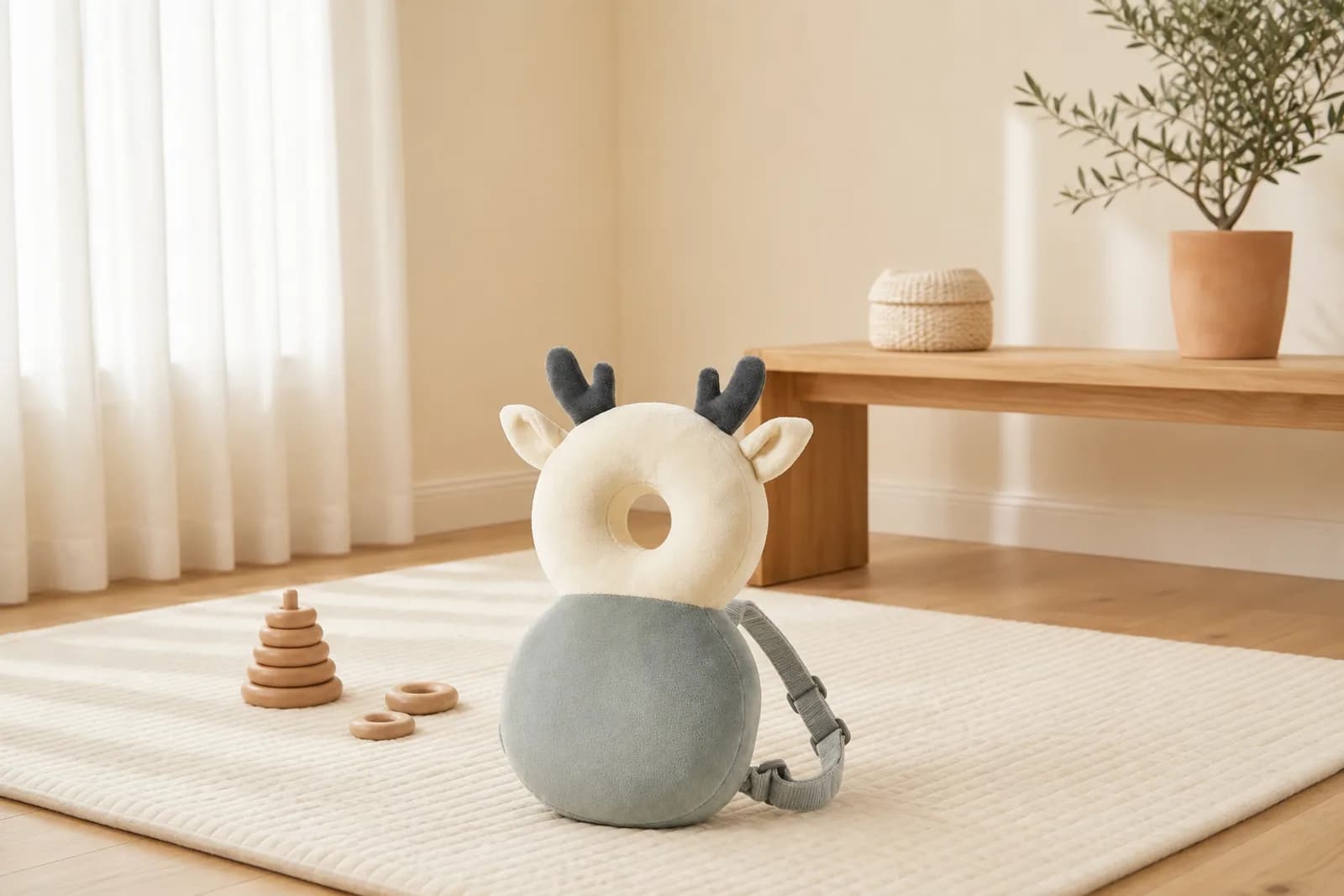
A baby fall cushion is a lightweight back cushion that can add soft padding behind the upper back and head in some backward tumbles. It does not prevent falls or guarantee protection from injury. Use it only for awake, closely supervised floor practice, check the fit and remove it for sleep, travel and any play you cannot watch directly.
What to remember
- Treat a fall cushion as a comfort accessory, not a helmet, medical device or safety guarantee.
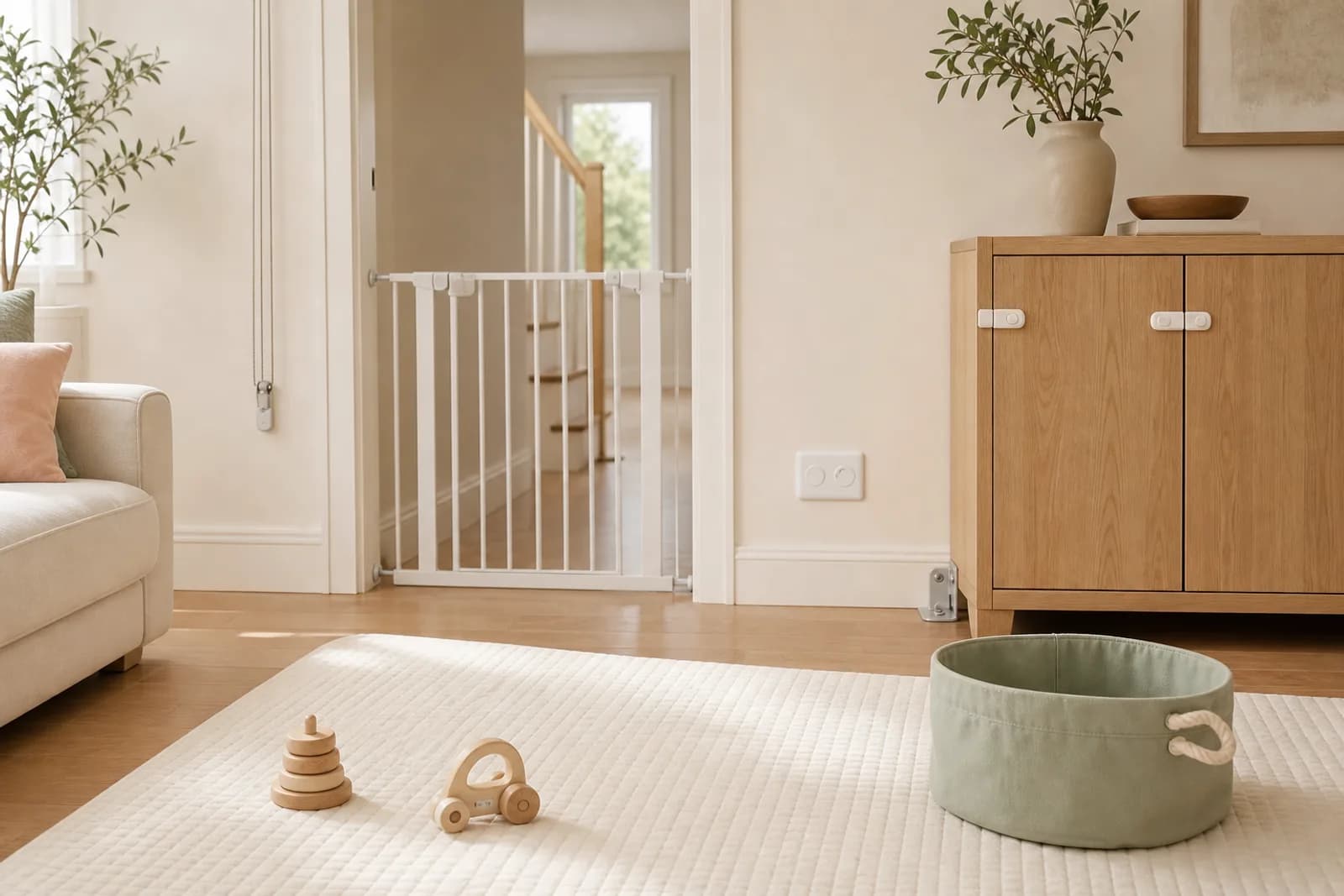
- Start with the room: clear the floor, gate the stairs, secure furniture and stay close.
- Straps should lie flat without restricting the neck, arms, breathing or natural movement.
- Never use it for sleep or inside a car seat, bike seat, carrier or pushchair harness.
What is a baby fall cushion?
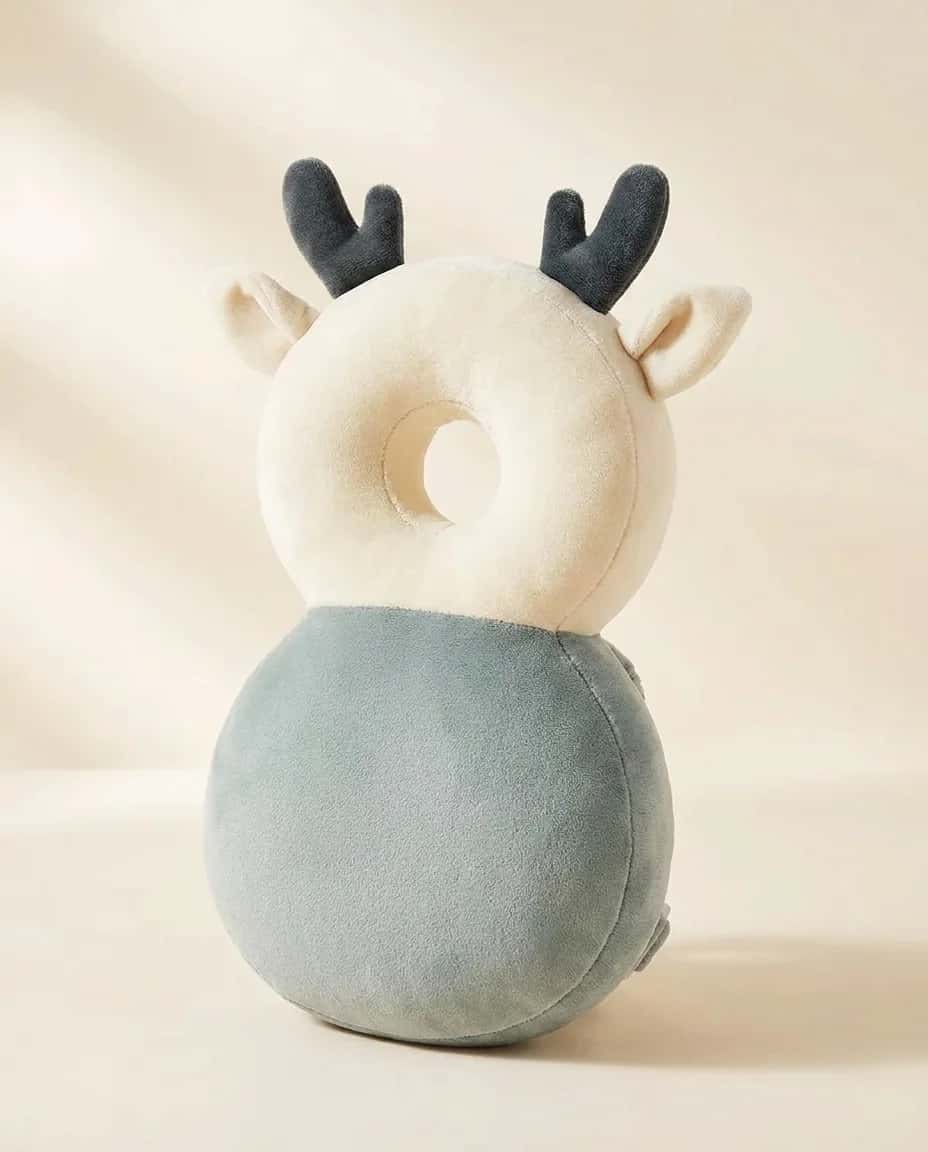
It is a small padded accessory worn on the back with adjustable shoulder straps. The upper pad sits behind the back of the head and the lower pad behind the upper back. During an ordinary backward plop from floor level, the soft filling may make direct contact feel less abrupt.
That is a modest job. It cannot stop a fall, cover the sides or front of the head, or make stairs, raised surfaces and hard edges safe. Extra cushioning is a more accurate description than total fall protection.
When might a baby wear one?
The relevant stage is when a baby sits independently, crawls, pulls to stand or practises first steps and regularly drops straight back. Development matters more than a date on the calendar. Your baby should be awake, moving freely and within your direct reach.
MoshiGuard uses roughly 6 to 24 months as a guide, but bodies and skills vary. Stop if the cushion catches, makes your baby hot, changes normal movement or lets a strap migrate toward the neck or face.
A sixty-second fit check
Lay both straps flat over clothing and adjust them evenly. The round upper pad should sit behind the head without pushing it forward or pressing into the neck. Both arms, the chest and the waist must move as naturally as they do without the cushion.
Check again after a growth spurt, a thicker top or washing. Do not keep tightening just to stop every small shift. If an accessory only stays in place by pinching, it does not fit well at that moment.
- Both straps lie flat and are adjusted to a similar length.
- Nothing crosses the throat, mouth or armpit and no long loop hangs loose.
- The cushion follows the back without forcing the head forwards.
- Your baby moves normally and remains in sight at all times.
What it never replaces
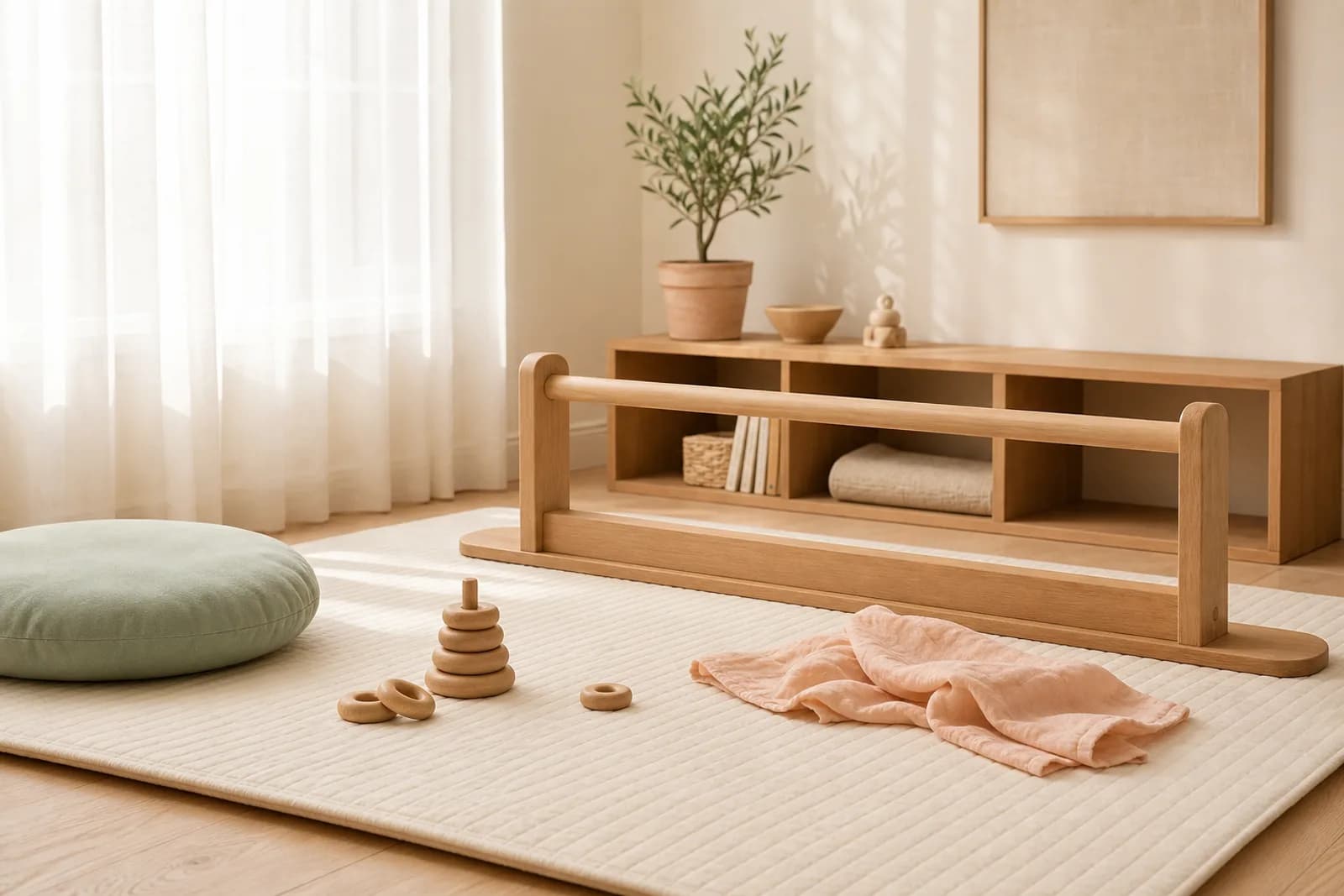
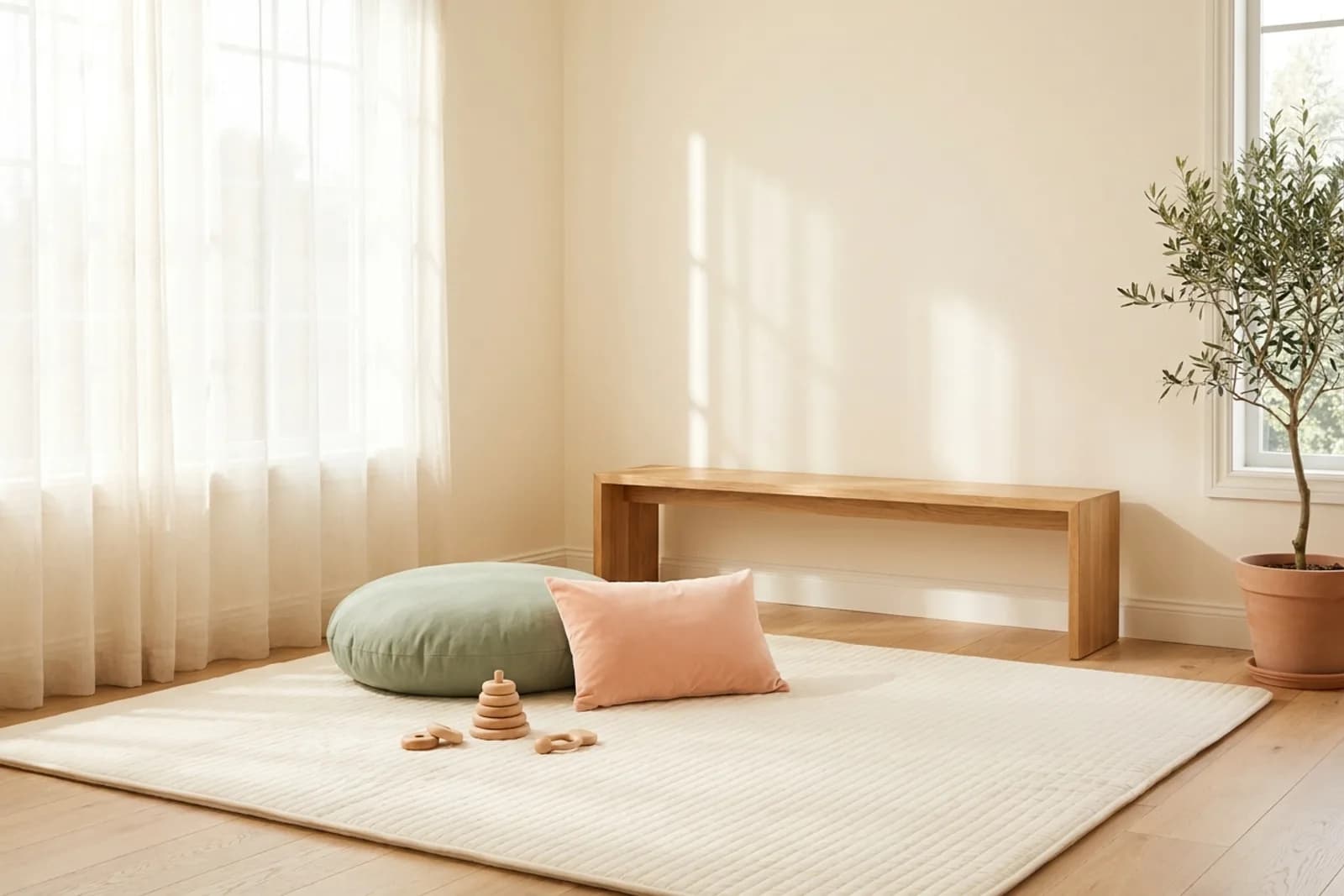
A clear practice zone matters more than a wearable cushion. Gate stairs before crawling starts, anchor tall furniture, remove sharp objects at tumble height and practise on the floor rather than on a sofa or bed. Safety guidance consistently combines free movement with removing the risks that can cause serious harm.
A cushion also never replaces supervision. Remove it for every sleep and do not place it between a child and a car or bike-seat harness. Those restraint systems are designed to fit without an extra soft layer underneath.
MoshiGuard, honestly: who may find it useful?
MoshiGuard may suit a family that gives plenty of supervised floor time and wants a little more softness behind the back and head during the brief wobbly stage. Its deer-shaped cushion is lightweight, has broad adjustable straps and is intended for supervised indoor practice.
It may not suit a baby who dislikes straps, mostly tips sideways, already practises on a forgiving surface or moves differently while wearing it. Choosing no cushion is completely valid. A parent's care is not measured by the number of safety products in the house.
Four questions before you choose
Ask what problem you are solving. Is it an ordinary backward plop on a level floor, can your baby keep moving freely, will you stay close and are you comfortable with cushioning rather than a guarantee? Four yes answers mean a fall cushion may be a useful comfort choice.
If the actual problem is an open staircase, loose cabinet, hard edge or practice at height, fix that first. An accessory is the final layer, never the foundation.
Frequently asked questions
Does a fall cushion protect a baby's head?
It may add padding in an ordinary backward plop, but it cannot prevent injury or cover every fall direction and hard edge. It is not a helmet or a safety guarantee.
What age is a baby fall cushion for?
Look at the stage rather than age alone: independent sitting, crawling, pulling up and first steps. MoshiGuard suggests roughly 6 to 24 months, with a good fit and direct awake supervision.
Can a baby sleep in a fall cushion?
No. Remove it before every sleep. A baby's sleep space should not contain cushions, straps or loose soft items.
Can it be used in a car seat or bike seat?
No. Do not add a strapped cushion between your child and a safety harness. Use it only away from transport, during supervised floor practice.
Sources and review
Movement guidance follows VeiligheidNL, WHO and current CDC milestones. MoshiGuard is described as a comfort accessory without medical or absolute protection claims. Last content review: 22 July 2026.