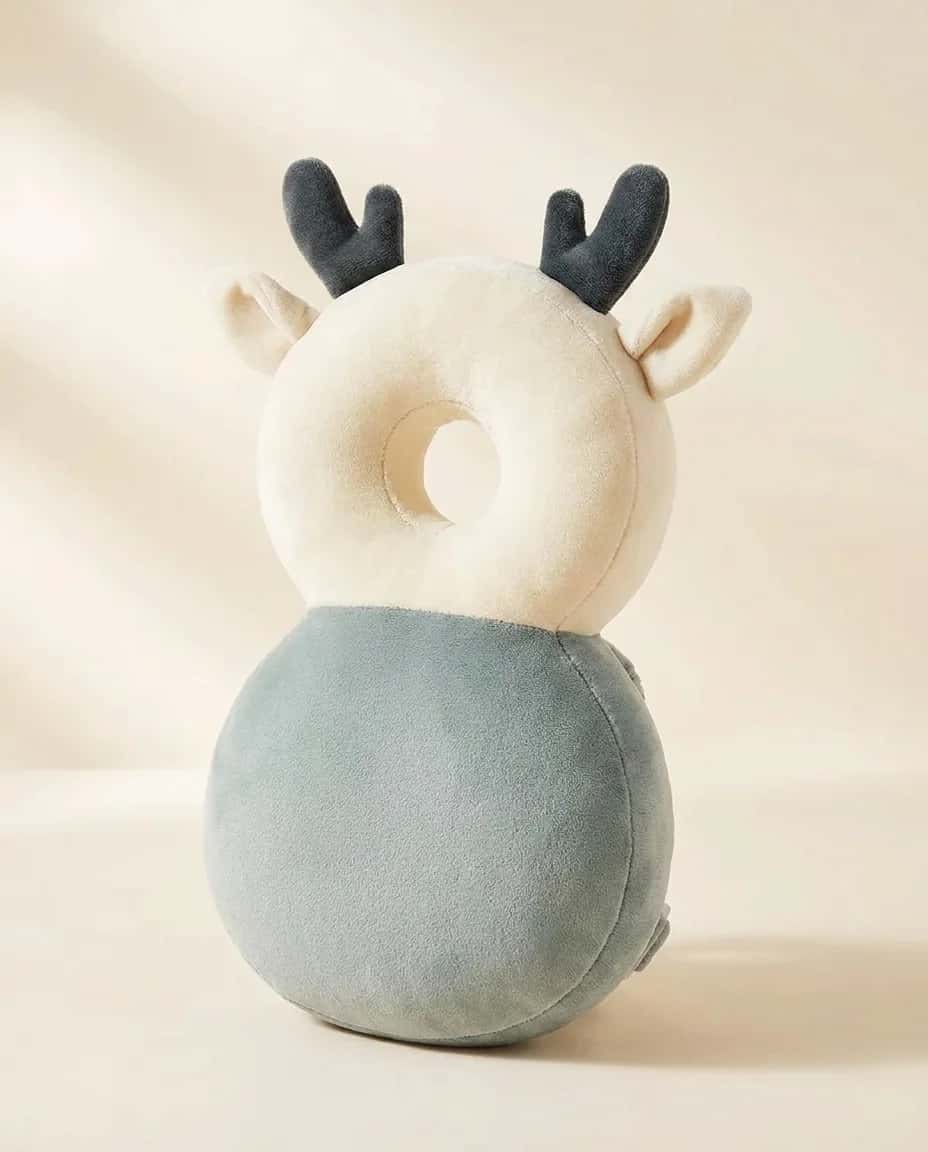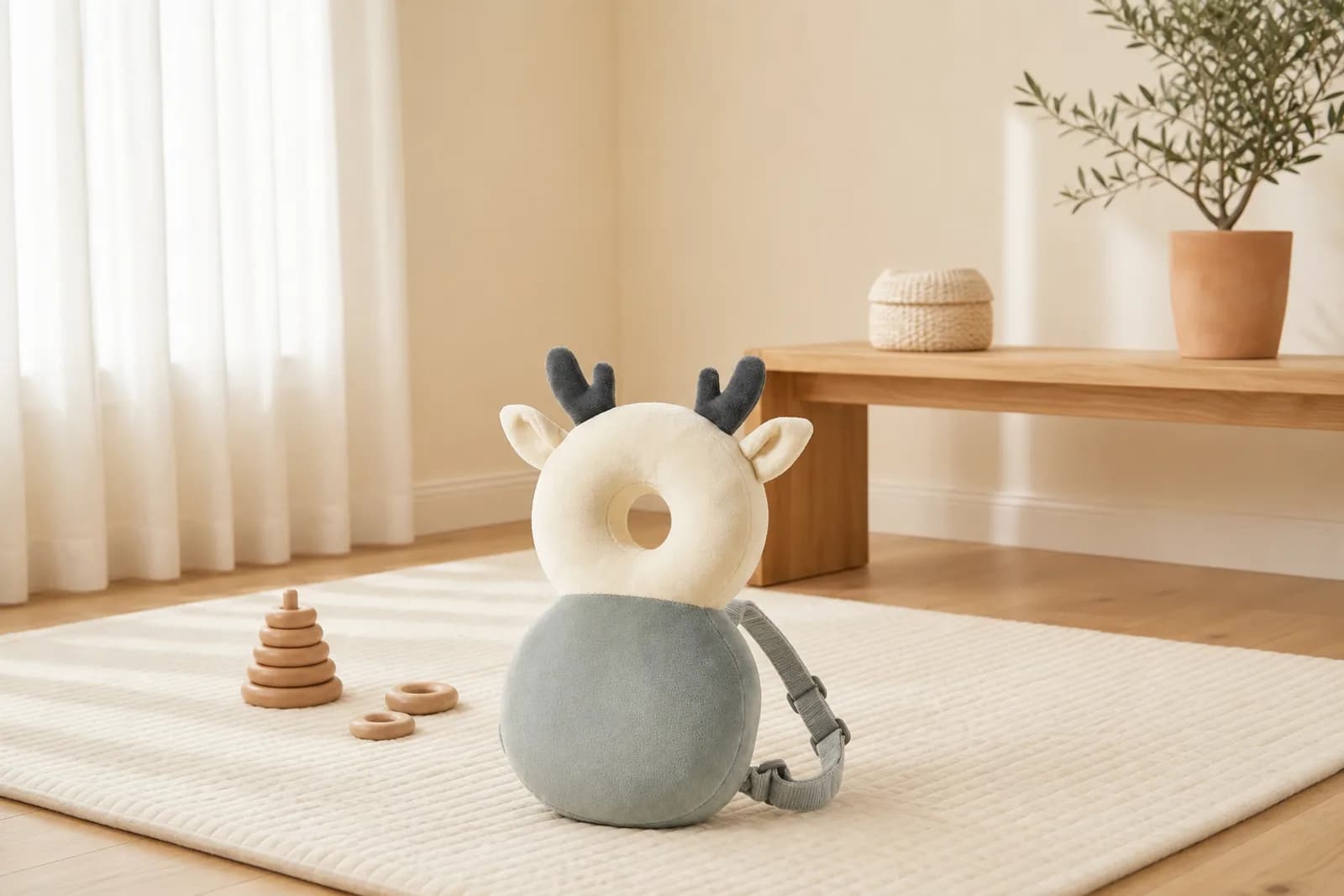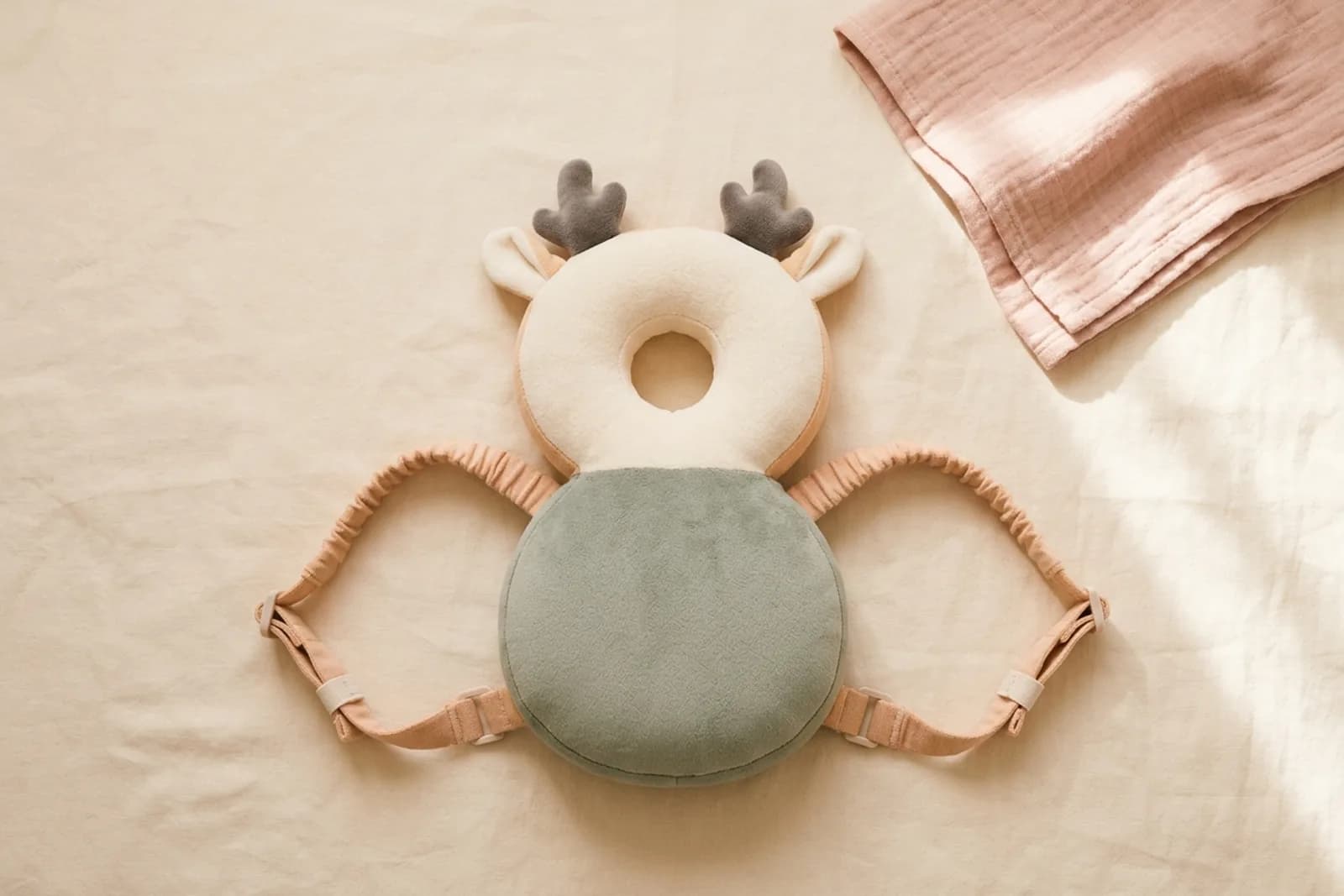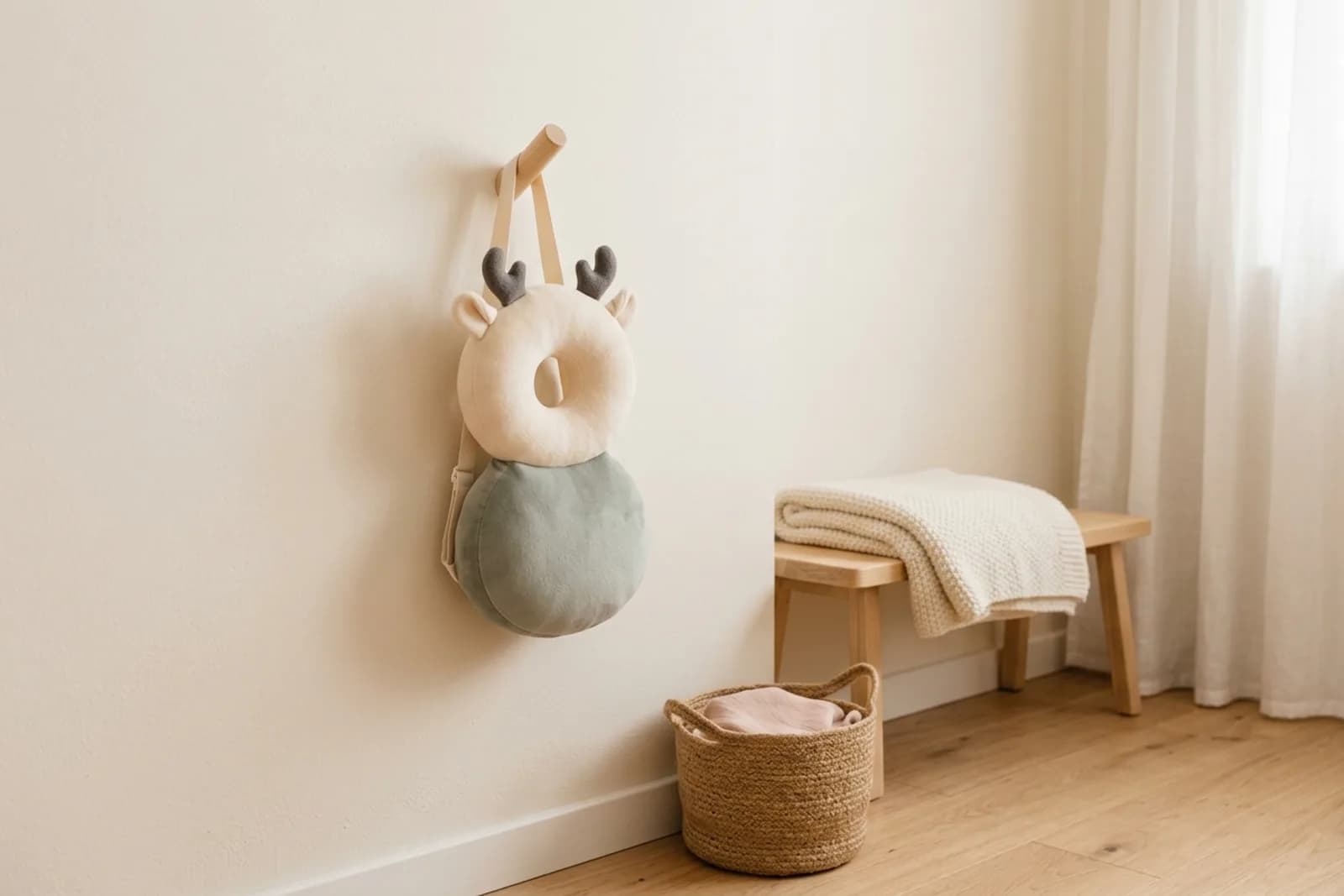
A fall cushion only becomes relevant once your baby sits unsupported, crawls or pulls to stand and plops backwards while doing so. That is a developmental step, not an age. For MoshiGuard, 6 to 24 months is the guide from the manufacturer. You stop as soon as your child walks steadily or the cushion is visibly in the way.
What to remember
- It is not the calendar that decides the moment, but what your child can do: sit, crawl, pull up, plop.
- The 6 to 24 month guide is a window from the manufacturer, not advice to wear it that whole period.
- If the cushion does not fit comfortably or hinders movement, this child is not ready yet or is already past it.
- If you have doubts about motor development, your health visitor or GP is the first place to ask.
Why does development matter more than age?
The WHO followed thousands of healthy children and saw wide, completely normal margins for each milestone. Sitting unsupported, crawling and first steps come months earlier in one child than in another, without anything being wrong. One age number cannot possibly capture that spread.
So for a fall cushion it is not how many months old your child is that counts, but which movement he makes. The cushion is meant for the backward plop from sitting or standing. If your baby still sits propped against you, there is nothing to cushion yet. If your toddler already walks steadily through the room, the stage is over. The months in between differ per child.
So look at behaviour. Can your child sit unsupported, does he roll over, pull up on the sofa and plop straight back regularly while doing it? That is the signal, not the date on the calendar.
Does the cushion fit your baby yet?
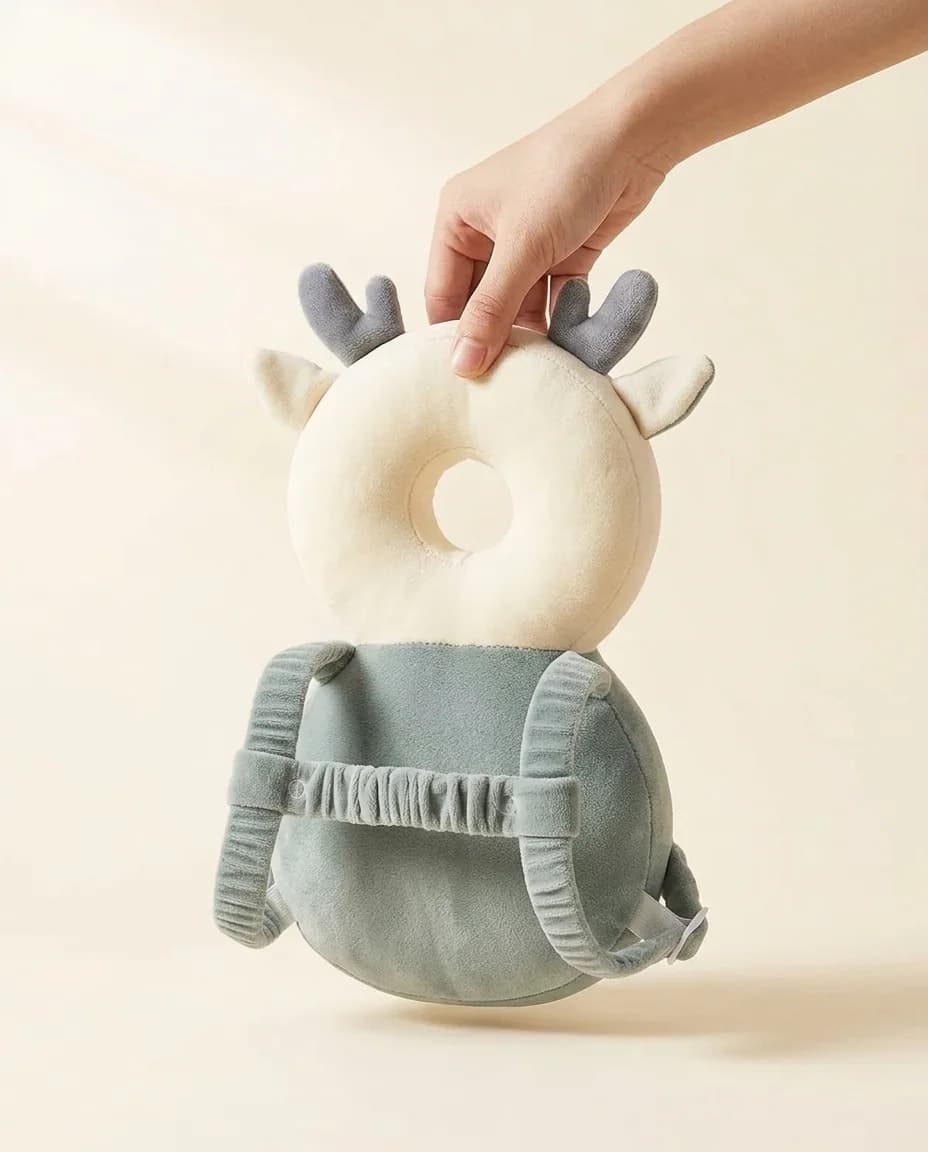
Besides the stage there is the simpler question: does it fit? A cushion that is too big for a small baby sags, turns away and gets in the way rather than doing anything. The straps have to be able to lie flat on the shoulders without running along the neck or armpit, and the round head pad belongs behind the back of the head.
The best proof is behaviour again. Put your baby on the floor with the cushion on and watch for a minute. Does he crawl like always, sit down without hesitating, reach equally far with both arms? Then it fits. Does he clearly move differently, keep catching on something or lift his shoulders, then it is too early, whatever the age guide says. The guide on putting it on and checking the fit goes through that check in more detail.
In which period do parents usually use it?
MoshiGuard uses 6 to 24 months as a guide. That is the window the product is meant for, not advice to wear it all that time. In practice the heaviest use often falls in a much shorter period: the weeks in which a child learns to sit unsupported and starts pulling up, and later the weeks of the first loose steps.
In between there is usually a quieter stretch. A child who sits firmly and crawls nimbly plops backwards unexpectedly far less often than a child who has just learned to sit. Many parents simply put the cushion away in that in-between phase and get it out again when standing starts. That is not waste but exactly the idea: use it when it fits.
Either way the window runs by the day, not by the month. The cushion goes on just before a practice session on the floor and comes off again when play stops.
When does your child no longer need it?
The clearest reason to stop is that the plop disappears. Once your toddler stands steadily, lowers himself through the knees in a controlled way and uses his hands when he loses balance instead of falling straight back, the reason is gone. In many children that happens somewhere in the second year, with a wide margin.
There are three more signals. Your child pulls the cushion off himself or protests when you put it on. He clearly moves differently with the cushion than without. Or the fit no longer works and you have to pull tighter to keep it in place. In all three cases you simply stop. Stopping is not a step backwards but the end of a short stage.
And then the honest version: plenty of children never needed one. Free movement on a safe floor does most of the work. If the cushion mostly lives in the cupboard at your house, that does not mean you are missing something.
Short video of the cushion itself. How long you use it is decided by your child, not by the age on the packaging.
When do you never use it?
There are moments where age and development do not matter, because the cushion simply does not belong there. Sleep is the most important one: a cot has no place for cushions, straps or other loose soft materials, and that does not change as your child gets older.
And the most important thing of all: a cushion does not replace babyproofing. A gated stairway, an anchored cupboard and a clear floor lower the risk that really counts. VeiligheidNL stresses exactly that combination of room to move and removing the big dangers. The accessory is the last layer, never the first. Below are the moments when the cushion stays off regardless.
- During sleep, including a short nap on the sofa or in the pushchair.
- In a car seat, bike seat, carrier or pushchair, where a belt or harness determines the fit.
- During climbing, sliding or jumping, where a strap could catch on something.
- Without direct adult supervision, however calmly your child is playing.
What if you have doubts about your child's motor skills?
This guide cannot assess your child's development and does not try to. What we can say: the margins are wide, and later than the child next door is usually just normal. Your own feeling counts in that too, because parents often notice something before any checklist does.
If you are worried, talk to your health visitor or GP. That is what they are there for, and one conversation gives more clarity than ten searches. Reasons to ask can be: not being able to sit unsupported at all around nine to ten months, a clear preference for one side of the body, losing skills that were already learned, or a child who feels noticeably stiffer or floppier than you are used to. A fall cushion plays no part in that conversation: it is a comfort accessory and not an aid for development.
Frequently asked questions
From what month can a baby wear a fall cushion?
There is no fixed month. The cushion only becomes relevant once your baby sits unsupported, crawls or pulls to stand and regularly plops backwards while doing so. For MoshiGuard the manufacturer gives 6 to 24 months as a guide, but development and build vary. If it does not fit comfortably or hinders movement, your child is not ready yet.
Can a fall cushion be used too early?
Yes. With a baby who cannot sit unsupported yet there is nothing to cushion, and the cushion mostly gets in the way. The fit is usually not right yet either: the straps are too wide and the cushion slips down. Wait until your child sits unsupported, crawls or pulls up and regularly drops straight back while doing so.
When do children stop using a fall cushion?
As soon as the reason disappears. A toddler who stands steadily, lowers himself through the knees in a controlled way and uses his hands when he loses balance hardly plops straight back any more. In many children that happens somewhere in the second year, with a wide margin. If your child protests or the cushion is in the way, you simply stop sooner.
Is a fall cushion needed to learn to walk?
No. Children learn to walk by moving on a safe, flat surface, not through an accessory. During awake, supervised practice a fall cushion can add a little extra soft padding for a backward plop, and no more than that. If it stays in the cupboard at your house, your child is missing nothing.
My child is 18 months and still falls a lot. Is that normal?
Falling is part of learning to walk and the margins per child are wide. The frequency should decrease as balance and catching reflexes grow. If you see no progress at all, a clear preference for one side of the body or the loss of skills already learned, discuss that with your health visitor or GP.
Can my toddler wear the cushion while sleeping or in the car?
No, at no age. A bed has no place for cushions, straps or other loose soft materials. In a car or bike seat the harness determines the fit, and no extra soft layer belongs in between. Use the cushion separately from that, during awake practice on the floor with you nearby.
Sources and review
The developmental margins follow the WHO motor development milestones and the CDC milestones around the first year; the importance of room to move follows VeiligheidNL. The 6 to 24 month guide comes from the MoshiGuard product information. This is general information and not individual medical advice: if you are worried about development, your health visitor or GP is the first place to ask. Last content review: 1 August 2026.