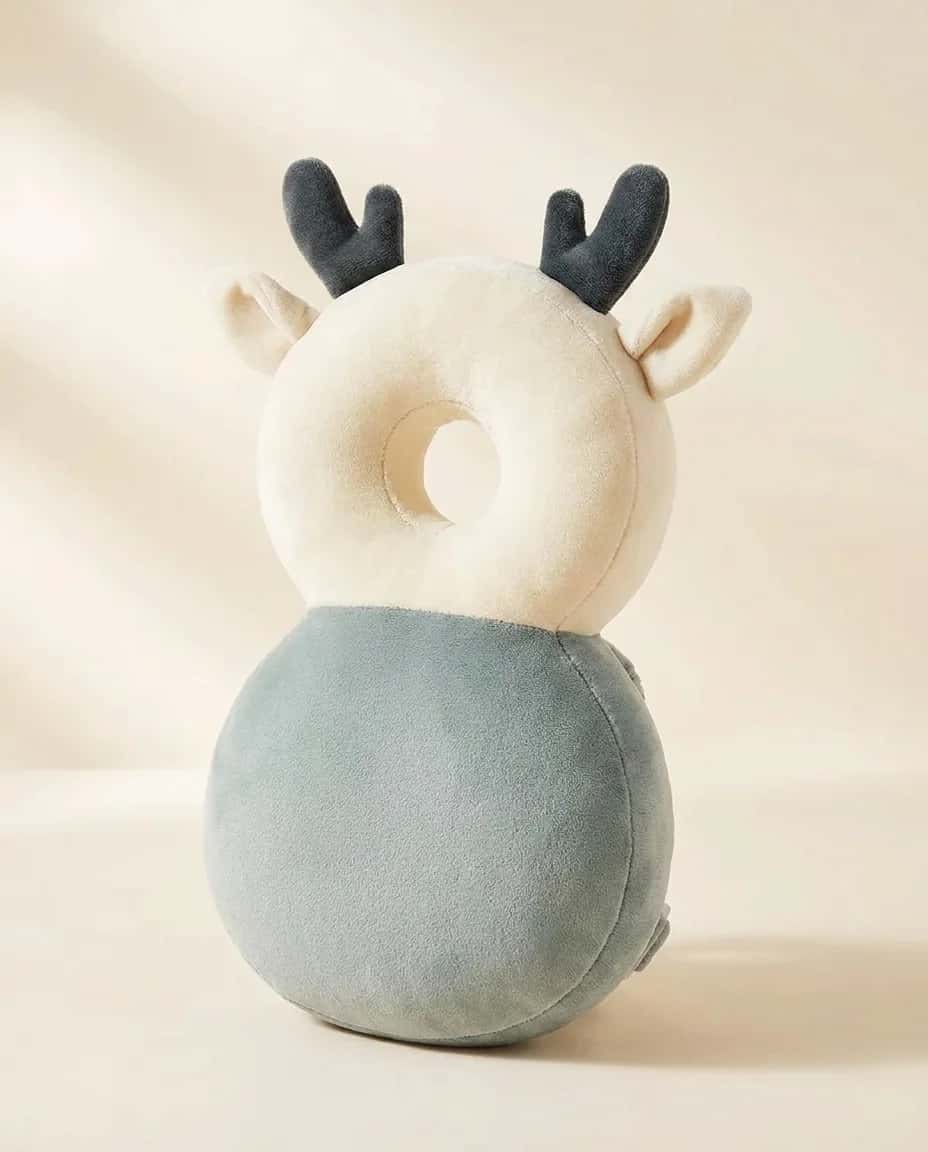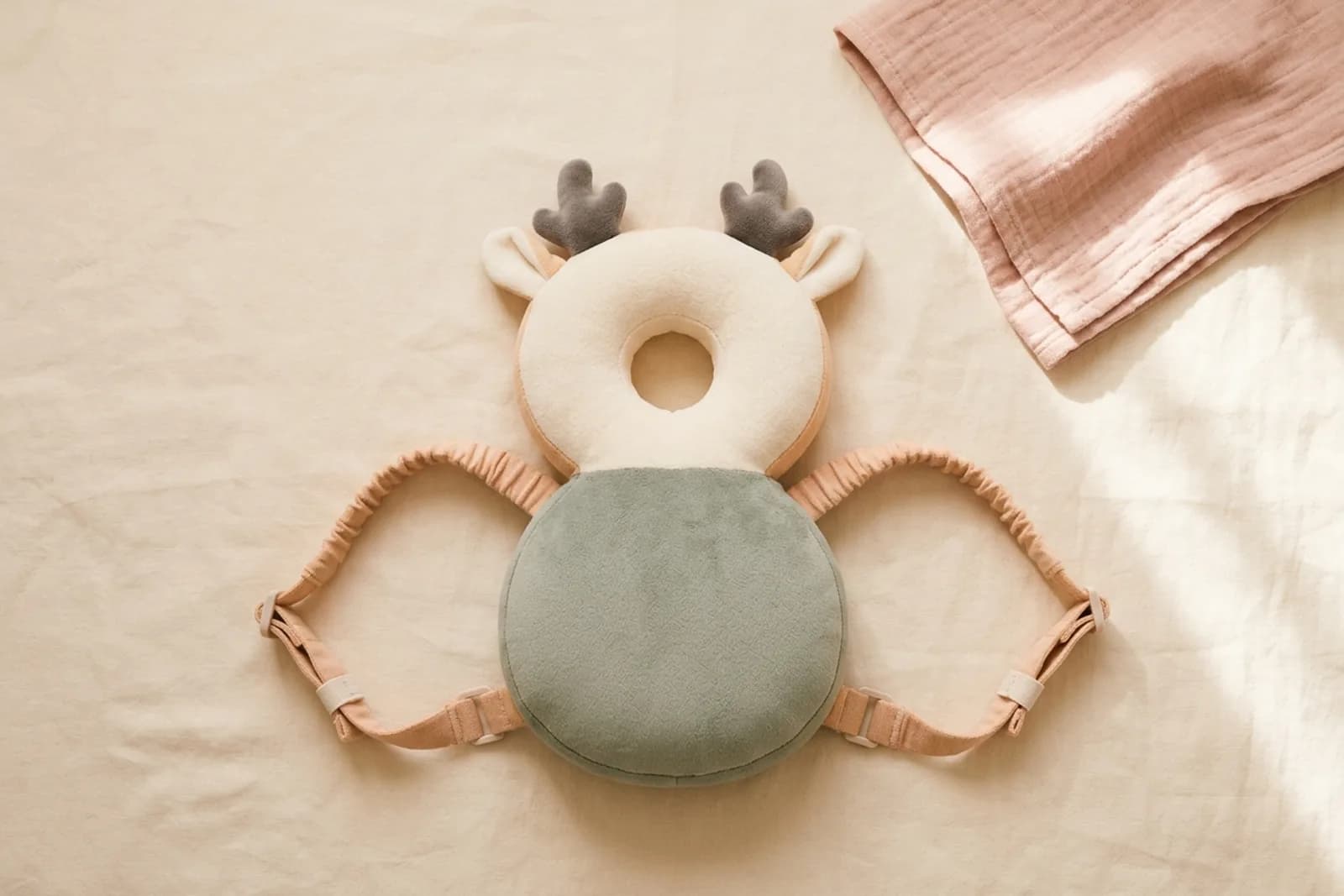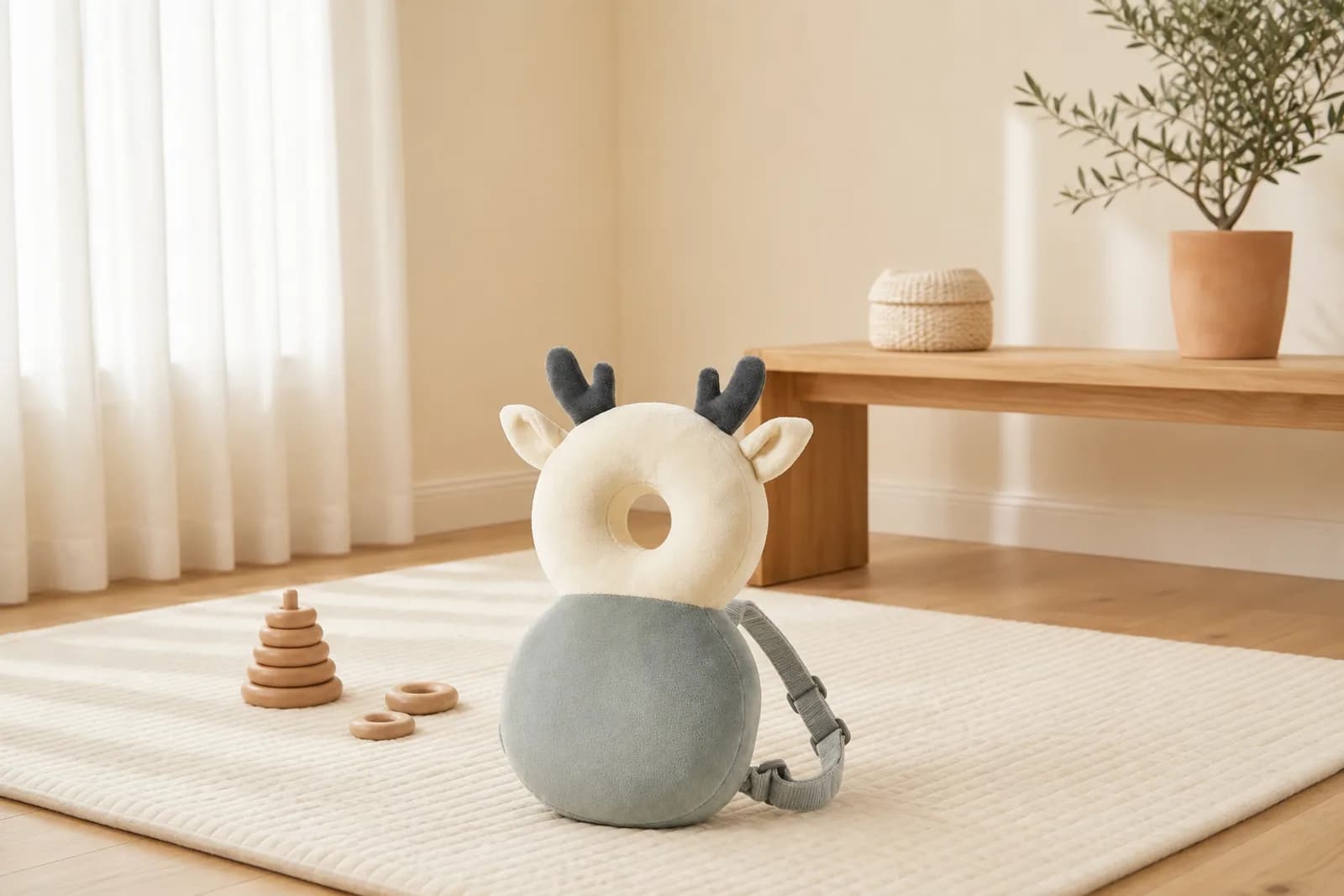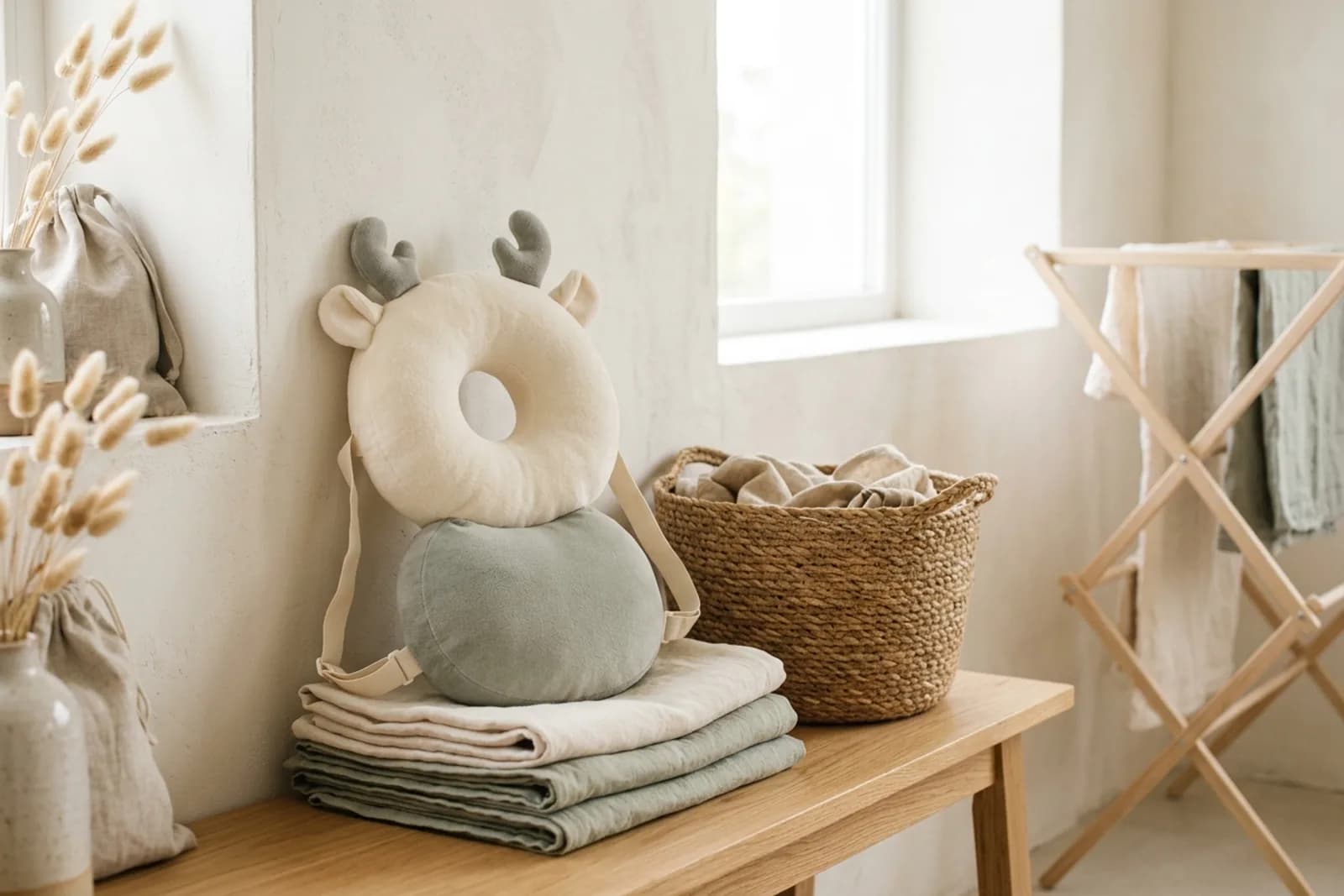
Wash a fall cushion as soon as it is visibly dirty or smells musty, and deal with stains on the spot as early as you can. How you may wash and dry it is on the care label inside the cushion: that label is leading, and we publish no temperature or programme of our own. Always check the seams, filling and straps after drying.
What to remember
- The care label inside the cushion is the only instruction that counts. What is not on it, we do not invent.
- Spot cleaning is the safest first step: less water, less chance of lumps.
- A filled cushion dries slowly. Lay it flat and give it time instead of wringing it out.
- After every wash you check the seams, straps and filling before the cushion goes back on.
How often does a fall cushion need washing?
There is no fixed schedule, and that is not a dodge. How often a fall cushion needs cleaning depends on where your child practises, how much he drools and whether the cushion also lives at nursery or at grandma's. The practical rule: wash it as soon as it is visibly dirty, smells musty or has landed in something you would rather not have near a face.
In between you mostly do small things. Shake the cushion out after a practice session, leave it in the open air instead of in a closed bag and wipe visible dirt away before it dries in. A cushion that gets air regularly needs the full wash cycle far less often. That saves wear, and wear is exactly what you want to postpone with a filled cushion.
- Deal with straight away: visible stains, spit-up, food or anything sticky.
- Do regularly: shake it out, let it air and do not store it in a closed bag.
- Rarely needed: the full wash, as long as you keep up with the rest.
Can the fall cushion go in the washing machine?
We cannot decide that for you, and we are not going to guess either. The care label inside the cushion says whether machine washing is allowed, at what temperature and on which programme. That instruction comes from the manufacturer and always outranks what you read online, including what is on this page.
The MoshiGuard product information says the cushion is washable and that you wash it according to the care label. A temperature, programme or drying method we deliberately do not fix in this guide: that specification belongs with the product itself and not with a blog article. If the label has become unreadable or is gone, take the most careful route and clean the spot instead of soaking the whole cushion.
Spot cleaning means: lukewarm water, a mild soap, a clean cloth and only the dirty patch. You use as little water as possible, because everything that soaks into the filling has to come out again.
How do you dry it without the filling clumping?
A filled cushion holds far more moisture than it looks. The outside feels dry after a couple of hours while the core is still wet, and that is exactly where a musty smell starts. So give it more time than you would think and check the core by squeezing the cushion in the middle.
Wringing is the fastest way to move filling around. Instead, press the moisture out gently between two towels, lay the cushion flat and pull it back into its original shape while it is still damp. Shake it up a few times during drying so the filling stays airy instead of sinking into one corner. Whether a tumble dryer is allowed is, once again, on the care label.
- Do not wring or twist: that pushes the filling to one side.
- Lay it flat and push the shape back while the cushion is still damp.
- Shake it up in between so the filling stays loose and airy.
- Only use it again when it is really dry, right through the core.
What do you do about spit-up stains and food?
Speed makes the biggest difference. Fresh spit-up, milk or fruit usually comes out with lukewarm water and a clean cloth, while a dried-in stain costs a lot more water and rubbing. Dab from the outer edge towards the middle so you do not make the stain bigger, and do not use boiling water on milk or other protein stains: heat sets them.
Go easy on stain removers. Anything left behind on the cushion ends up near your baby's face and hands. Choose a mild, unscented product if you use one, test it on an inconspicuous spot first and rinse the area well with clean water afterwards. Leave bleach and strongly perfumed products on the shelf.
What do you check after washing?
Washing is not finished when the cushion is dry. Do a short round of the parts afterwards: seams closed, fabric intact, filling spread evenly, straps still the same length and the buckles still firm. A seam that has opened can let filling through, and small parts that have come loose do not belong near a baby who puts everything in his mouth.
Feel whether the filling has settled into lumps as well. Lumps mean uneven padding and a cushion that hangs crooked on the back. If you can spread them out again by shaking, fine. If they stay, that is a signal the cushion has had its best time. Finally, check the fit once more: after a wash the straps often sit slightly differently than you were used to.
- Seams closed and fabric intact, no filling coming out.
- Straps the same length, buckles firm, nothing frayed or stretched.
- Filling spread evenly, without hard lumps.
- The cushion completely dry, including the middle.
When is it time to replace it?
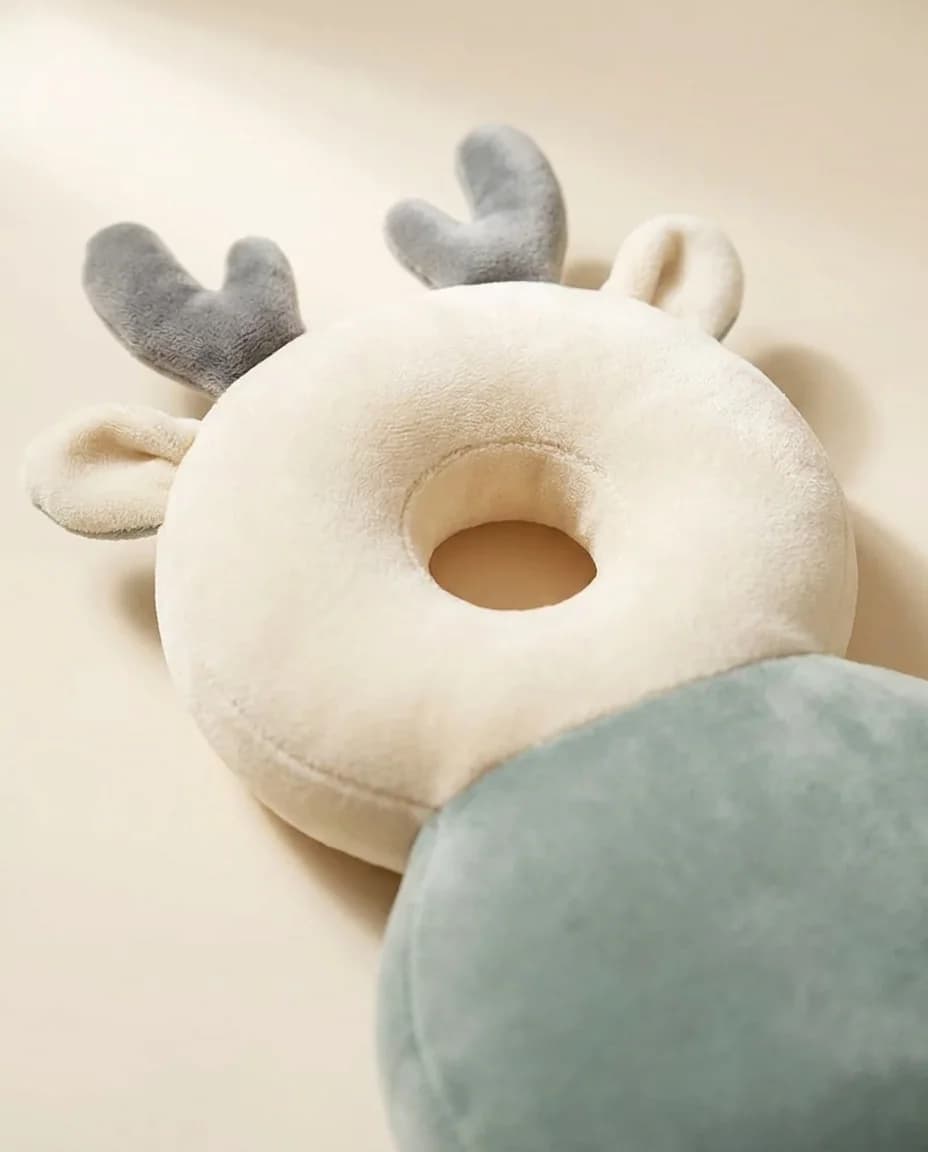
Filled textiles do not last forever, certainly not when they are washed regularly. Replace the cushion when the filling stays flat or lumpy, a seam keeps opening, the fabric gets thin or frayed, or a strap has stretched and no longer stays in place. Repairing it with a safety pin or tape is not an option: that adds exactly the loose, hard parts you do not want.
There is a second reason to stop, and it has nothing to do with wear: your child is done with it. If your toddler walks steadily, hardly plops backwards any more and mostly finds the cushion in the way, wearing nothing is the better choice. Put it away or pass it on, as long as it is complete and undamaged.
Frequently asked questions
Can a fall cushion go in the washing machine?
That depends on the care label inside the cushion. It says whether machine washing is allowed and under what conditions. We publish no temperature or programme of our own for MoshiGuard, because that specification belongs with the product and not with a blog article. If the label is unreadable, clean the spot with lukewarm water and a mild soap.
How often should I wash the fall cushion?
As soon as it is visibly dirty or smells musty, and otherwise as little as possible. Every full wash is wear. Stains are better tackled on the spot straight away, and between practice sessions shaking it out and airing it helps enormously. A cushion kept in a closed bag starts to smell far sooner than one lying out in the open.
How long does a fall cushion take to dry?
Longer than the outside tells you. The fabric often feels dry after a few hours while the filling in the core still holds moisture. Squeeze the cushion in the middle to check and only use it once nothing there feels cold or clammy any more. Putting it back on half dry means a musty smell within a day.
What do I do if the filling clumps after washing?
Shake the cushion firmly while it is still damp and push the filling evenly apart again with your hands. Repeat that a few times during drying. If the lumps stay once the cushion is dry, the padding has become uneven and it is time to replace the cushion.
Which cleaning product can I use?
As little as possible. Lukewarm water and a mild, unscented soap are enough for most stains. Test any product on an inconspicuous spot first, rinse well afterwards and leave nothing behind in the fabric: the cushion sits close to your baby's face and hands. Leave bleach and strongly perfumed products on the shelf.
When should I replace a fall cushion?
When the filling stays flat or lumpy, a seam opens, the fabric frays or a strap has stretched and no longer stays in place. Do not repair it with pins or tape, because that adds hard loose parts. If you are unsure whether it still sits right, leave it off: the safe practice space does the real work anyway.
Sources and review
The care advice on this page is general and concerns filled baby textiles. The care label and manual of your own cushion are always leading: for MoshiGuard, BabyMoshi deliberately fixes no temperature or wash programme in editorial copy. The points about loose parts and an empty cot follow VeiligheidNL. Last content review: 1 August 2026.