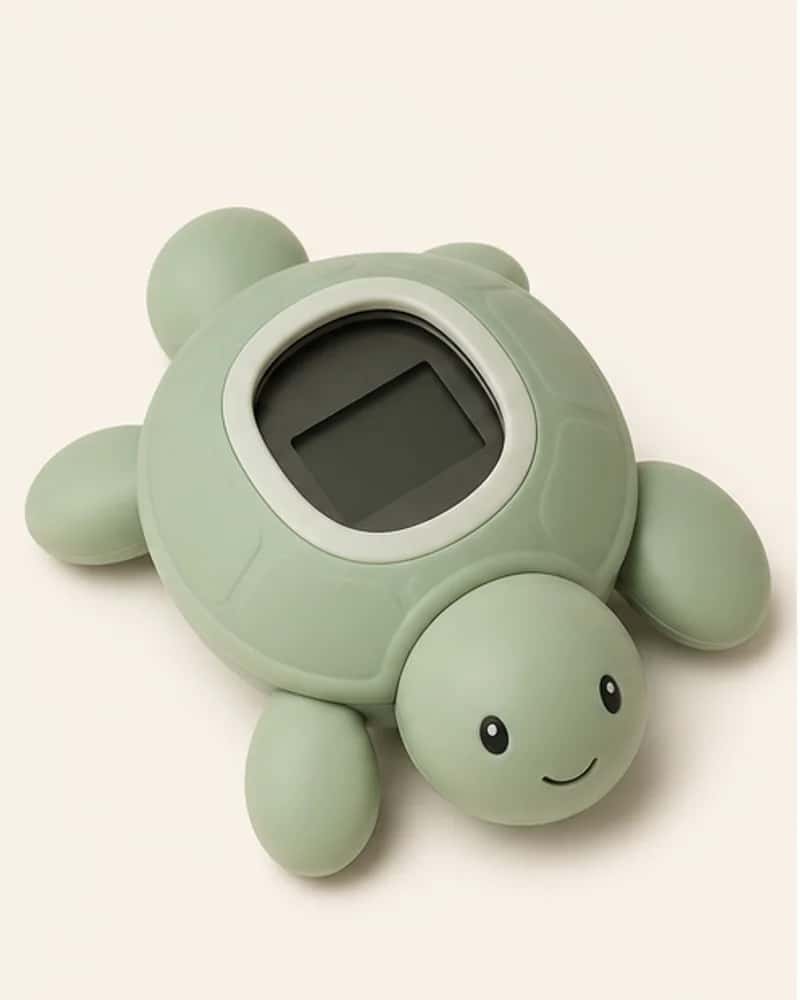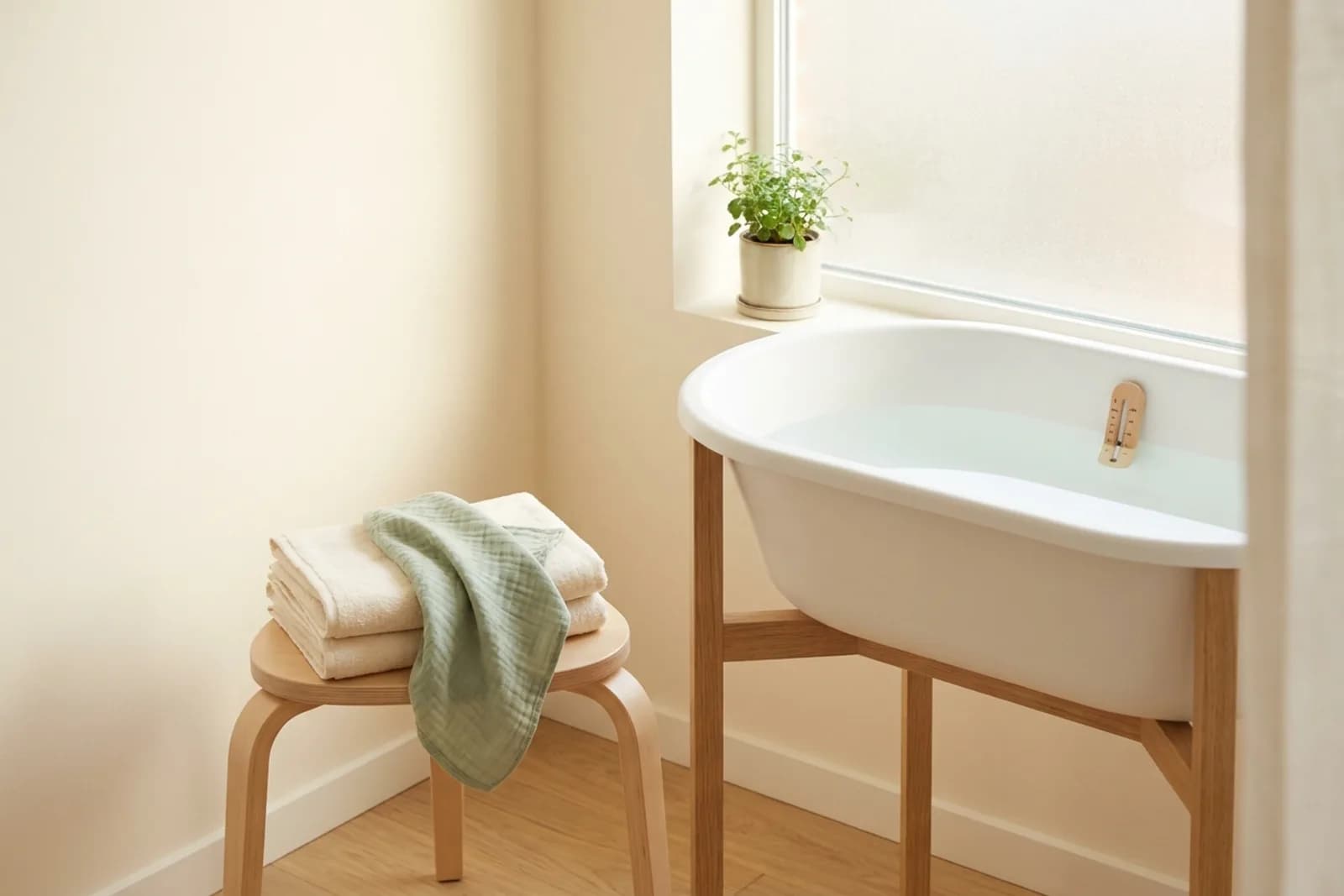
Two to three baths a week are enough for a baby; on other days a washcloth does the job. Fill the tub with water of around 37 degrees Celsius and check it with a bath thermometer or your elbow. Stay with your baby with at least one hand and your full attention at all times: a baby can drown in a few centimetres of water.
What to remember
- Two to three baths a week are enough. More is allowed, but not needed.
- Aim for water around 37 degrees: check with a thermometer or your elbow.
- Lay out everything you need beforehand, so you never have to walk away.
- Never leave your baby alone in the bath, not even for a second. The phone and doorbell can wait.
How often does a baby actually need a bath?
Less often than many parents think. A baby does not get dirty from a day of simply living; two to three baths a week are plenty. In between, you keep the bottom, face, hands and skin folds clean with a washcloth and lukewarm water.
Daily baths are fine too, especially if your baby enjoys them and they are part of your evening rhythm. Keep the bath short and the approach gentle, because lots of long, warm water can dry out young skin. For newborns, the NHS also advises being sparing with bath products and mostly using plain water.
Which temperature is safe, for the water and the room?
The reference point for bath water is around 37 degrees Celsius, close to your baby's own body temperature. A bath thermometer makes this measurable and repeatable; the classic elbow test remains a good second check. The water should feel warm, never hot.
Run cold water first and then hot, and stir the water briefly so no warm layers remain. Think about the room as well: a bathroom around 22 to 24 degrees without draughts makes undressing and drying much friendlier.
- Measure the temperature just before your baby enters the water, not only while filling.
- Fill the tub to roughly hip height of your seated baby: enough to stay warm, low enough to support calmly.
- Put the towel ready in a warm, safe spot before the bath starts.
The safety rules that allow no exceptions
One rule stands above everything: never leave your baby alone in the bath, not even briefly. A baby can drown silently and in a few centimetres of water. If the phone or doorbell rings, your baby comes along in a towel or the moment simply waits.
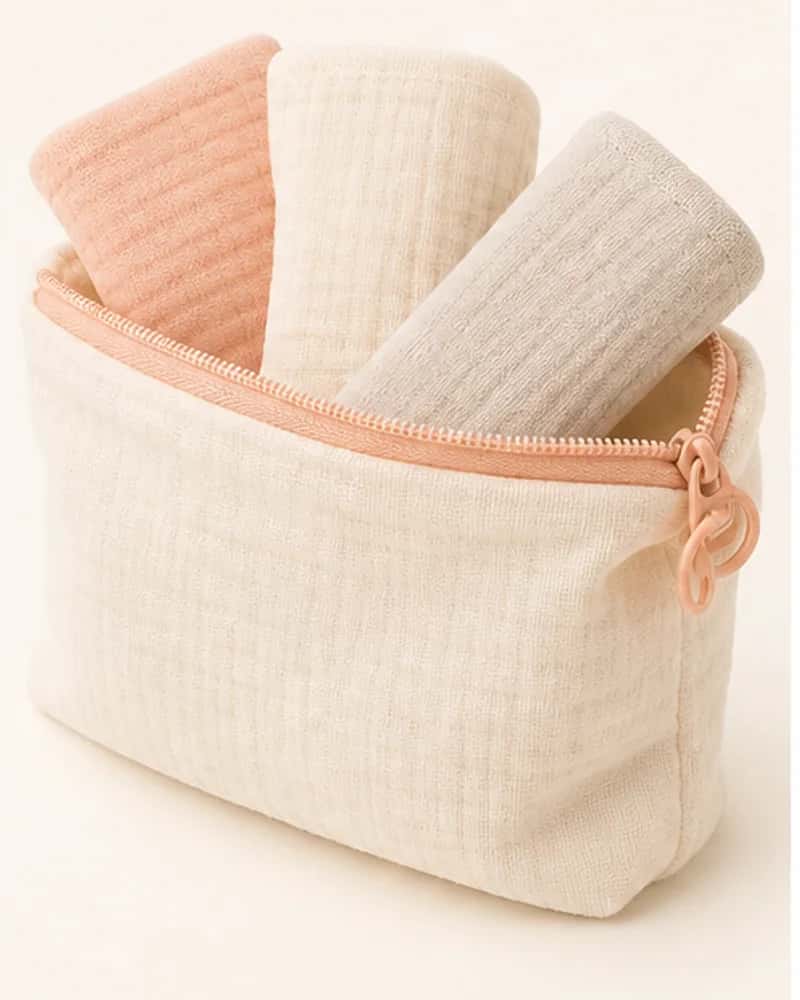
Support the head and neck as long as your baby cannot sit steadily, and always keep one hand on your child. Lay everything within reach beforehand: washcloth, cloth, towel, clean nappy and clothes. That way you never have to reach or turn away.
A bath ritual in six calm steps
Babies love familiarity. When the bath follows roughly the same course every time, the water itself becomes a cue: now comes the soft part of the day.
- Step 1: room at temperature, supplies ready, water measured.
- Step 2: undress calmly and enjoy a little skin-to-skin if your baby likes that.
- Step 3: slowly into the water, feet first, with your hand behind the head and neck.
- Step 4: wash from clean to less clean: face first, then the body, the bottom last.
- Step 5: a short play, soft talking or singing. Five to ten minutes is plenty.
- Step 6: straight into the towel, pat the skin folds dry and dress in a warm room.
After the bath: less is more for baby skin
Pat your baby dry instead of rubbing, and give extra attention to the skin folds at the neck, armpits and groin. A dry fold is the best protection against soreness.
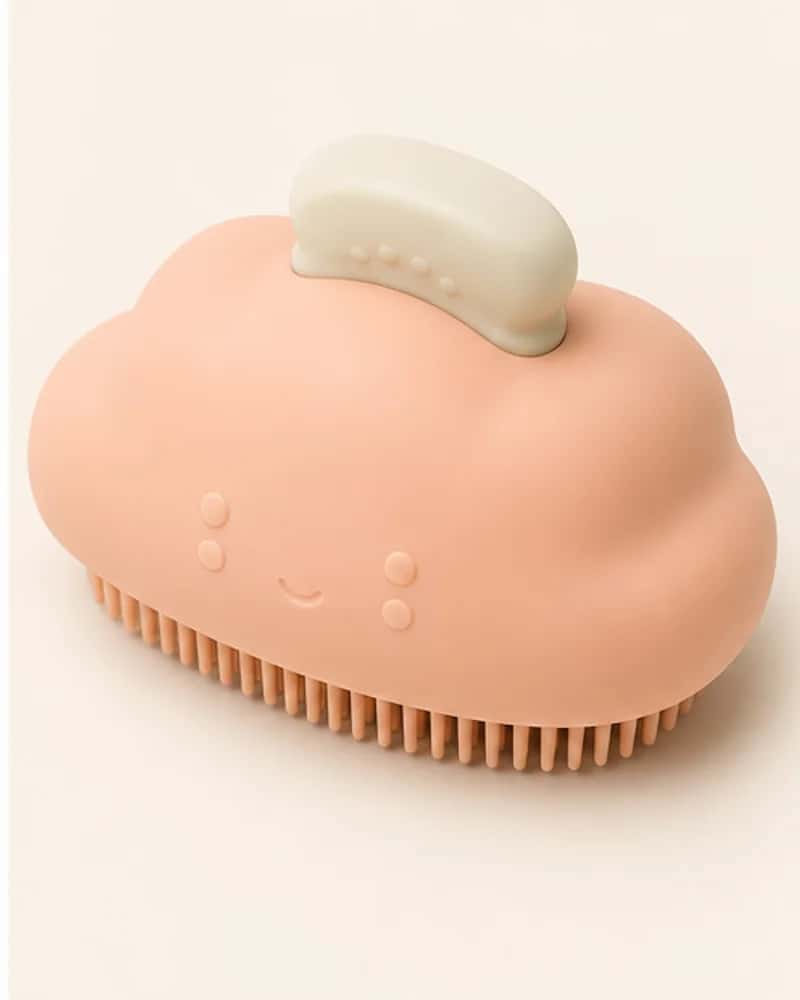
Baby skin needs very few products. If you use anything, choose mild and unperfumed, and keep it simple. For dry patches a thin layer of baby cream or oil can help; for persistent skin complaints or eczema, talk to your health visitor or doctor.
What if your baby cries at bath time?
Some babies need time to get used to the feeling of water, and that is normal. Try a different moment of the day, slightly warmer water within the safe range, or bathe together with your baby on your forearms in a big bath while a second adult helps with getting in and out.
If bathing stays genuinely stressful, there is nothing wrong with a period of washcloth washing only. The goal is a clean, relaxed baby. The love is in the attention, not in the number of litres.
Frequently asked questions
How warm should a baby's bath water be?
Around 37 degrees Celsius, close to body temperature. Check with a bath thermometer or your elbow, just before your baby enters the water. It should feel warm, never hot.
How often should I bathe my baby?
Two to three times a week is enough. In between, keep the face, hands, skin folds and bottom clean with a washcloth and lukewarm water.
How long may a baby stay in the bath?
Five to ten minutes is plenty. The water stays comfortably warm and the skin does not dry out.
May I use bubble bath or soap on a newborn?
In the first weeks plain water is gentlest. If you use a product later, choose a mild, unperfumed baby variant and use it sparingly.
What do I do if the phone rings during the bath?
Do not answer, or take your baby along in a towel. A baby is never left alone in the bath, not even for a few seconds.
Sources and review
This guide follows current public advice from Stichting Opvoeden and the NHS on bathing and skin care. It is general information, not individual medical advice. Last content review: 15 July 2026.