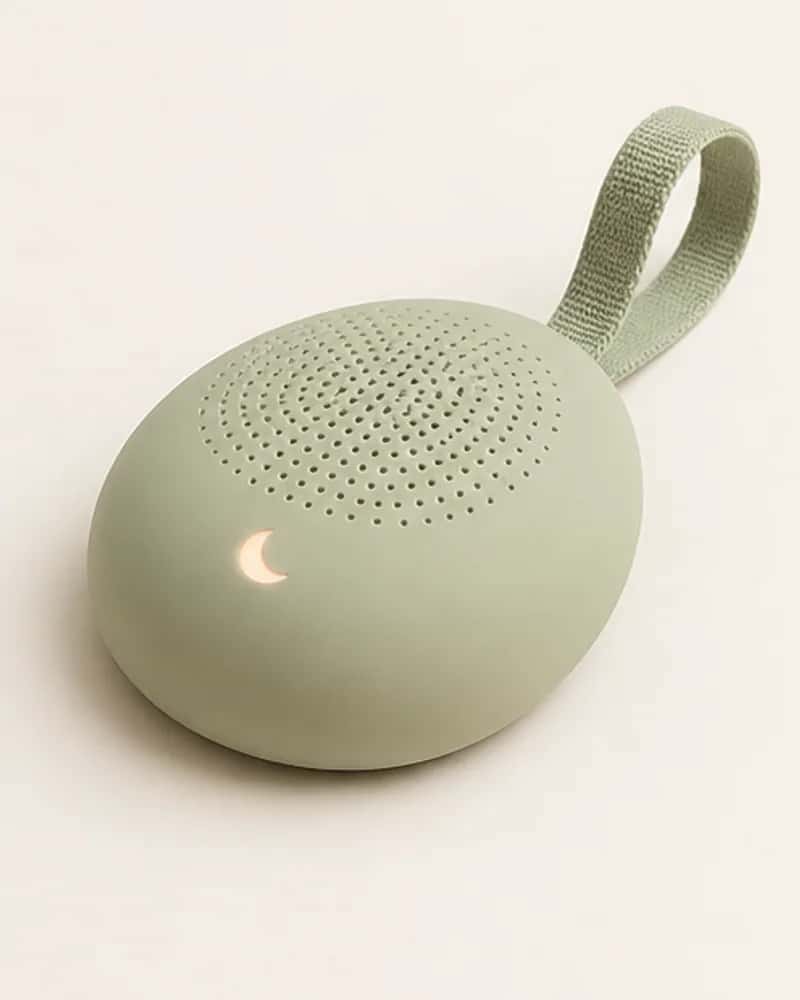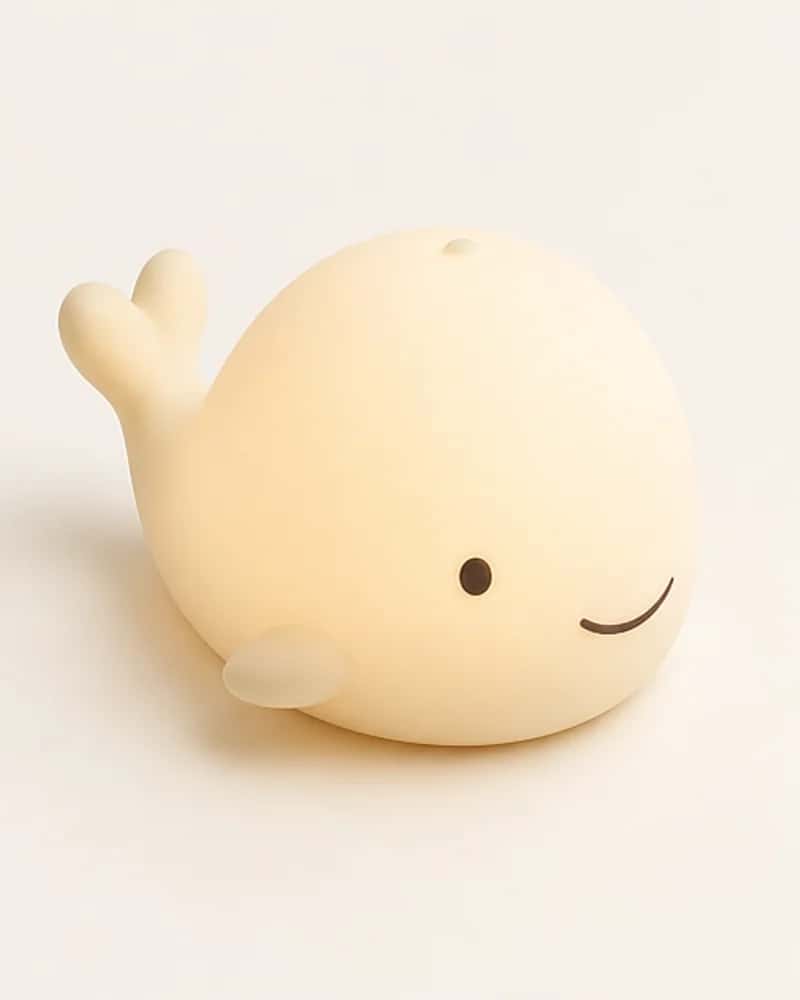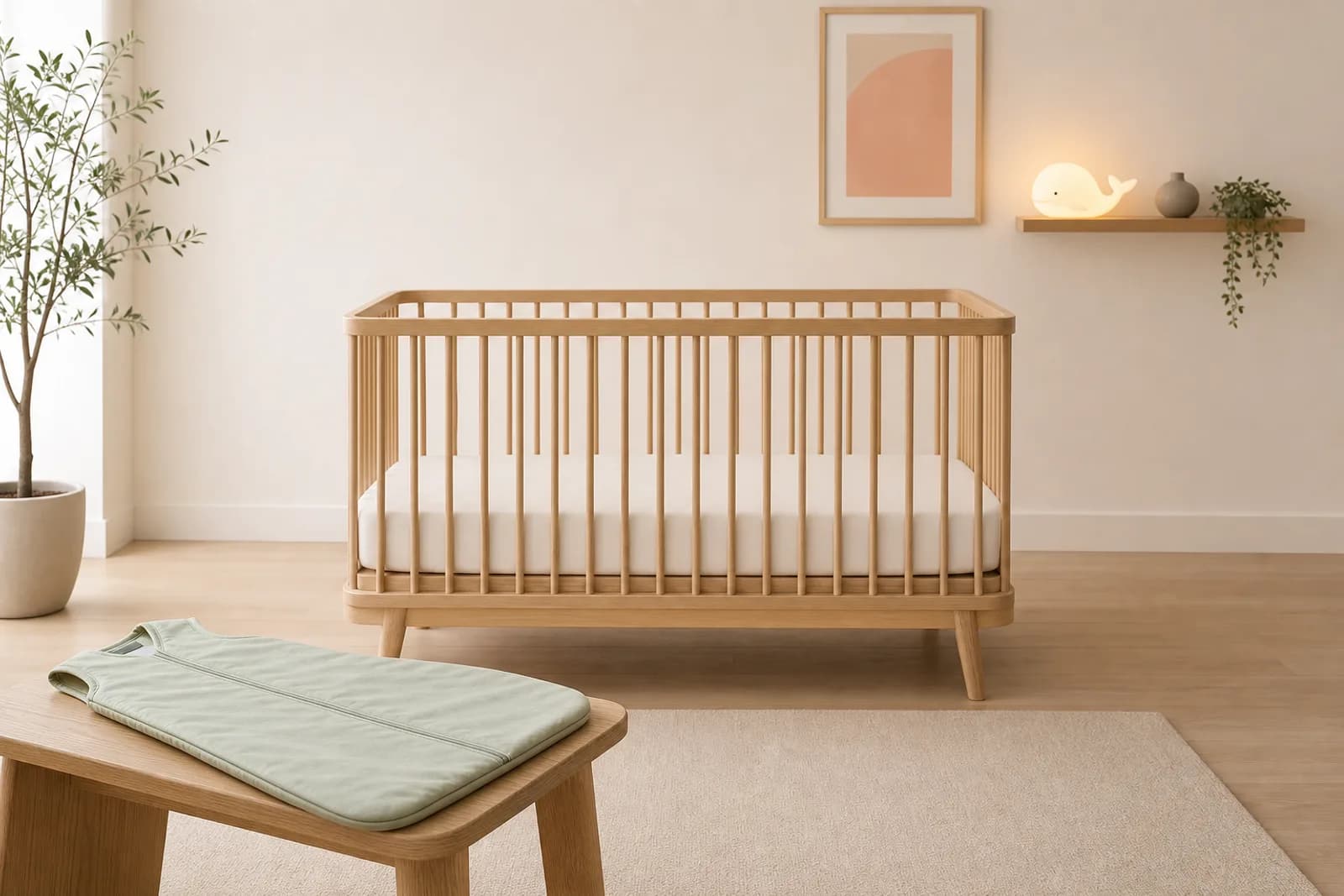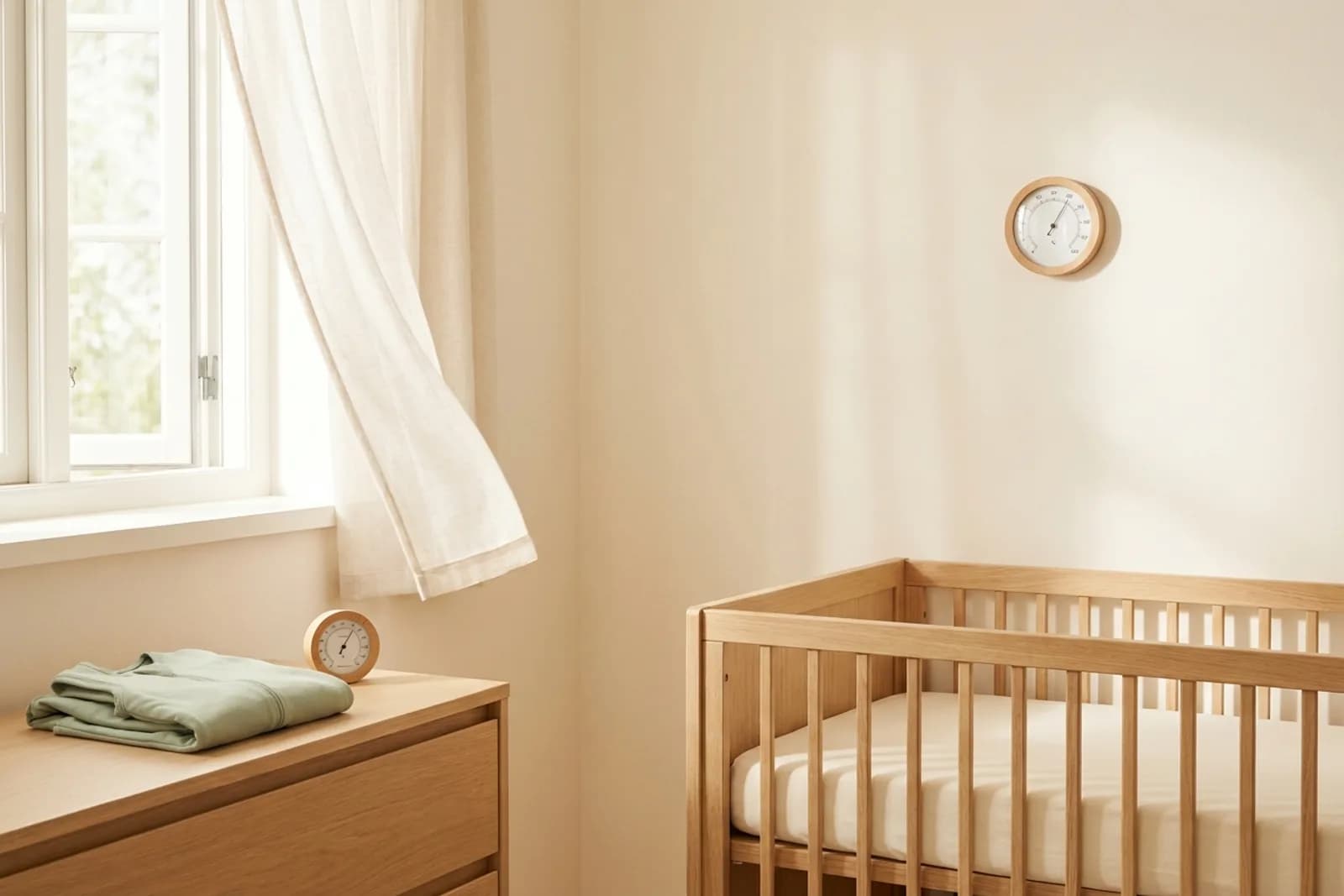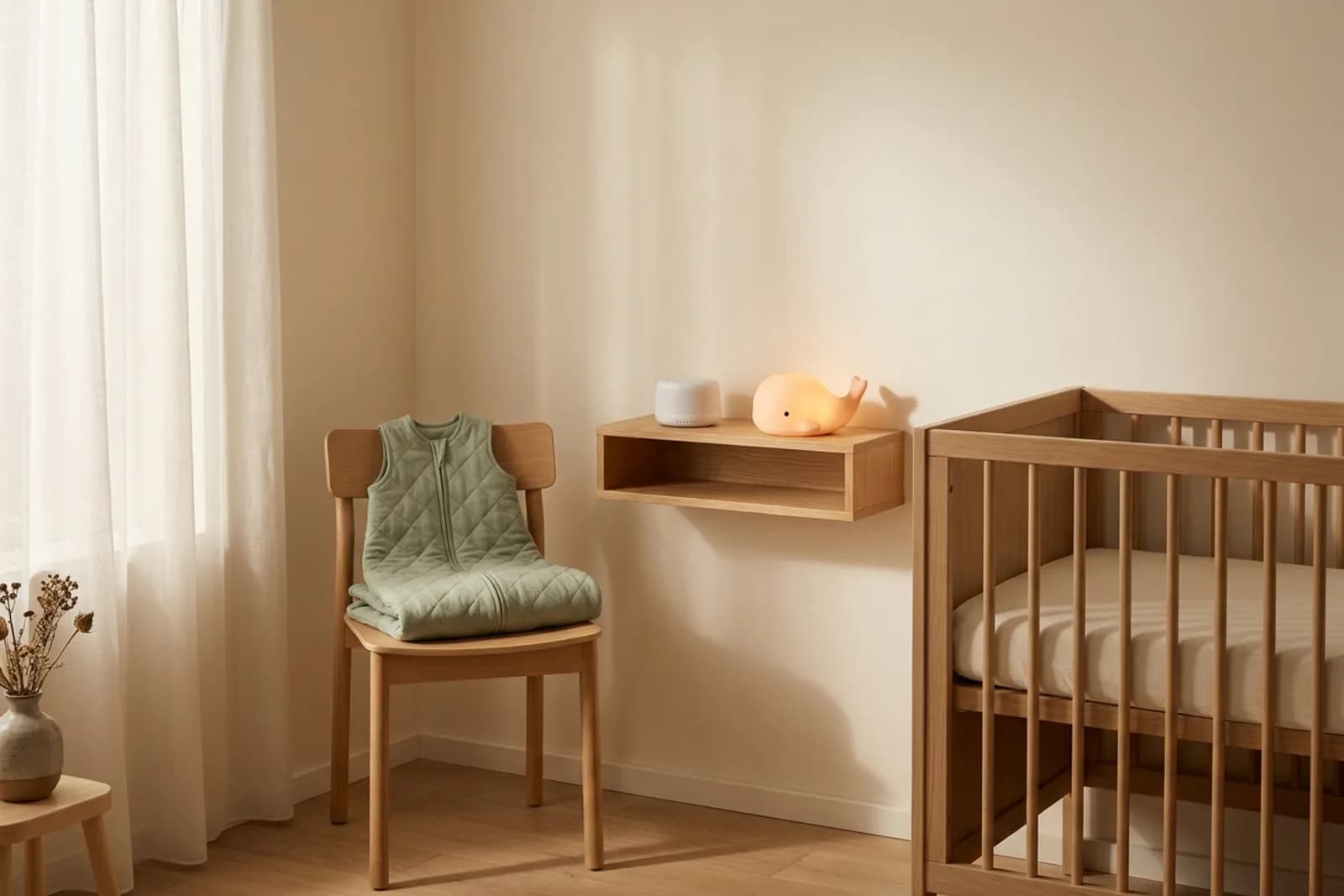
Soft, even sound can help some babies relax, especially while falling asleep in a restless environment. Use it quietly, about as soft as a calm speaking voice, place the device far from the cot and never in the bed, and switch it off once your baby sleeps. Noise is a tool, not a requirement for sleep and no replacement for the safe sleep basics.
What to remember
- White noise can calm, but it is a tool. Not a miracle cure and not an obligation.
- Volume low: think of a calm speaking voice, not a vacuum cleaner next to the cot.
- The device stands at a distance from the bed, out of reach, and never in the cot.
- The four safe sleep rules always come first: on the back, own cot, sleep sack, empty bed.
Why noise calms some babies
In the womb it was never quiet: blood flow, heartbeat and muffled voices formed a constant blanket of sound. An even, rushing sound resembles that and can therefore feel familiar to a young baby. Noise also masks sudden sounds, like a slamming door or an older sibling playing just a little too enthusiastically.
The NHS lists monotonous soft sound as one of the things that can help a baby relax. Note the word can: some babies respond well to it, others do nothing with it, and both are fine. Noise is an option in your toolbox, not a mandatory part of modern parenting.
How loud may it be? Softer than you think
Baby ears are under construction and more sensitive than adult ears. The World Health Organization points out that prolonged exposure to loud sound can permanently damage hearing, and that applies all the more to a vulnerable ear. The honest answer to the volume question is therefore: softer than you are inclined to.
A practical rule of thumb: standing next to the cot, you should be able to talk over it effortlessly in a normal voice. If the noise sounds like a calm conversation in the background, you are fine. If it sounds like a vacuum cleaner, it is far too loud.
- Place the device as far from the cot as possible, for instance across the room.
- Choose the lowest volume that has the desired effect, not the highest that feels acceptable.
- Use noise specifically for falling asleep and switch it off afterwards; a timer makes that easy.
- Check now and then at your baby's ear height how loud it really is there.
Safe placement: the cot stays empty
For the sleep space itself, nothing changes about the four safe sleep rules: on the back, in an own cot, in a well-fitting sleep sack and in an empty bed. A sound device, however soft and cute, never belongs in the cot and not on its edge either.
Place the device stably, out of reach of small hands, with the cord fully tucked away. A battery-powered device or a tightly routed cable prevents a cord from ever dangling within reach.
Prevent noise from becoming a requirement
Whatever is on every night automatically becomes part of the falling-asleep ritual. That is not a problem, until you spend a night somewhere without the device. If you want to stay flexible, use noise deliberately: while falling asleep, during a restless evening or when the surroundings are loud, and leave it off on calm evenings too.
See noise as one soft cue within a larger whole of familiar steps: feeding, changing, dimming the lights, a song. The ritual as a whole does the work; the noise is at most the background music.
What white noise does not do
Noise does not make a baby sleep through, does not solve hunger or cramps and does not turn a restless evening into a silent night. Babies wake at night because they are built that way: small stomach, short sleep cycles, lots of development. That is healthy, however tiring it is.
Be level-headed about apps and devices with big sleep promises too. A device that needs to be louder because it does not seem to work is a signal to stop, not to turn up. Discuss persistent worries about sleep or restlessness with your health clinic or doctor.
Frequently asked questions
Is white noise safe for my baby?
Used softly and at a distance, yes. Keep the volume around a calm speaking voice, place the device far from the cot and never in the bed, and use it deliberately rather than all night.
How loud may white noise be?
As soft as possible while still effective. Rule of thumb: next to the cot you should be able to talk over it in a normal voice. Check occasionally how loud it is at your baby's ear height.
May white noise stay on all night?
Preferably not. Use noise for falling asleep and switch it off afterwards, for instance with a timer. That limits sound exposure and keeps your baby flexible at falling asleep.
Does white noise work for every baby?
No. Some babies visibly relax with it, others do not respond at all. Both are normal. See noise as an option, not as a fixed part of good parenting.
Can my baby get addicted to white noise?
Addicted is a big word, but whatever is on every night becomes a habit. Use noise deliberately and leave it off regularly, and falling asleep will keep working without it too.
Does white noise replace the safe sleep rules?
Never. On the back, in an own cot, in a sleep sack and in an empty bed remain the foundation. Noise is at most an addition to that.
Sources and review
This guide combines the Dutch safe sleep advice from VeiligheidNL with NHS information on settling to sleep and WHO insights on hearing and sound exposure. It is general information, not individual medical advice. Last content review: 15 July 2026.