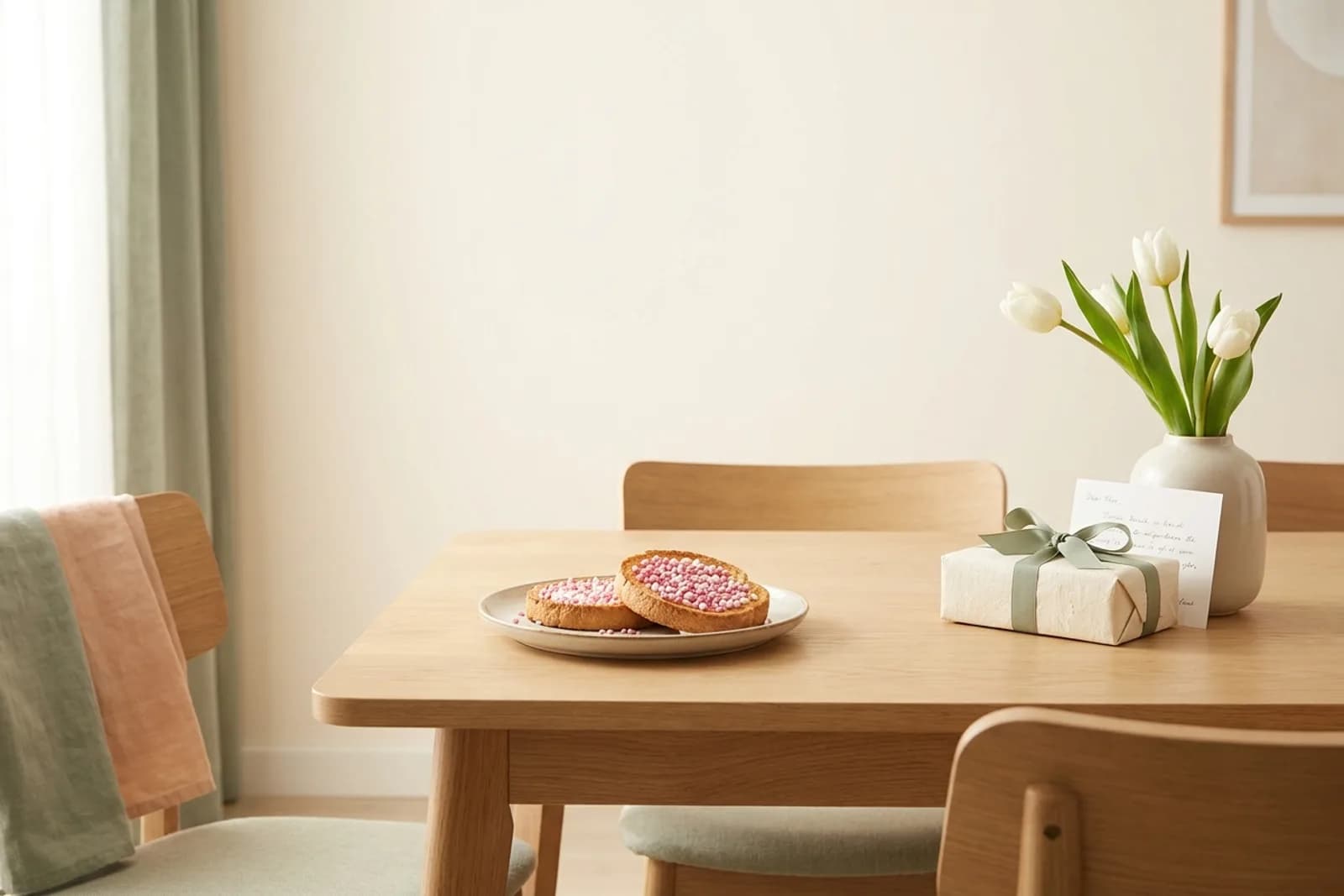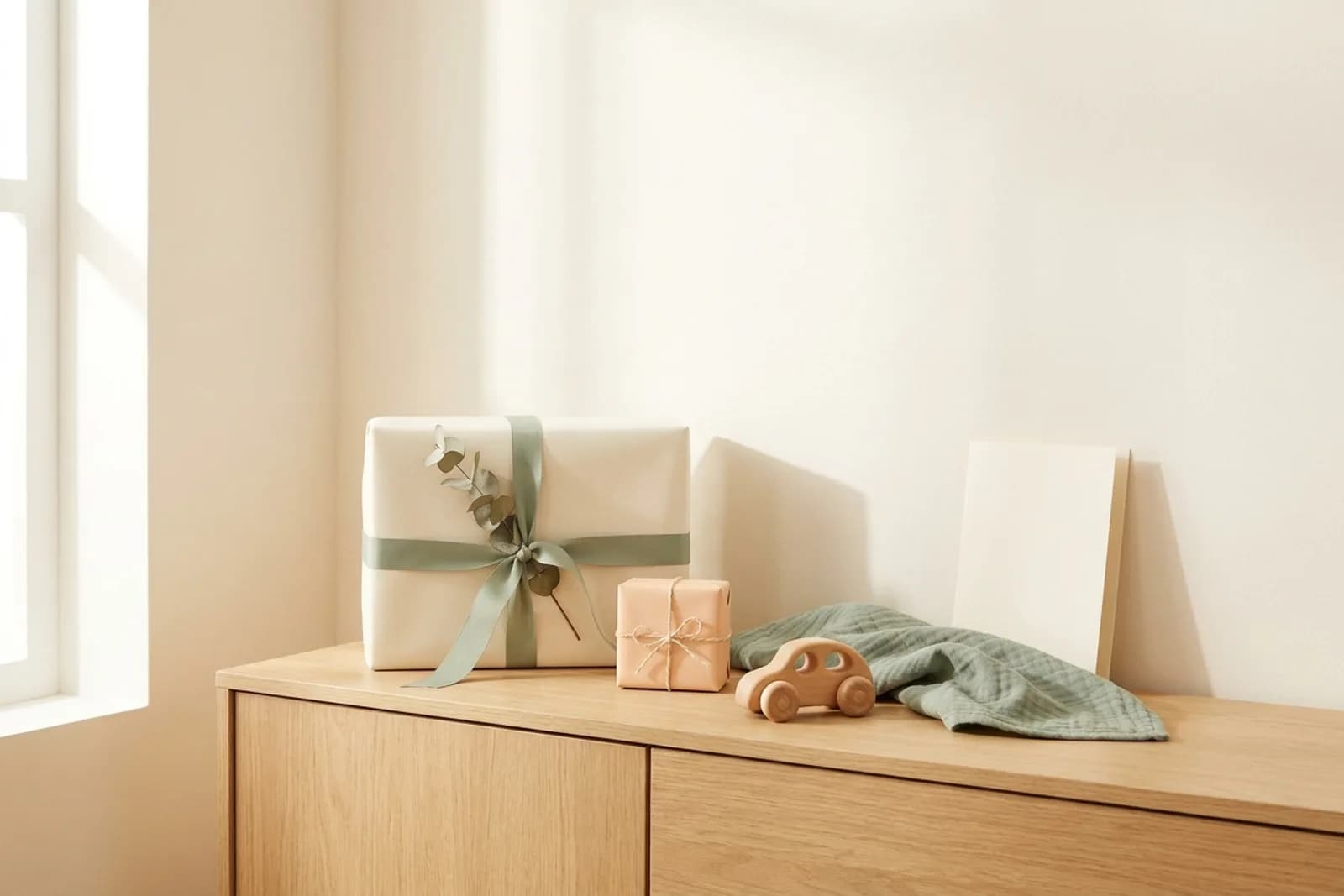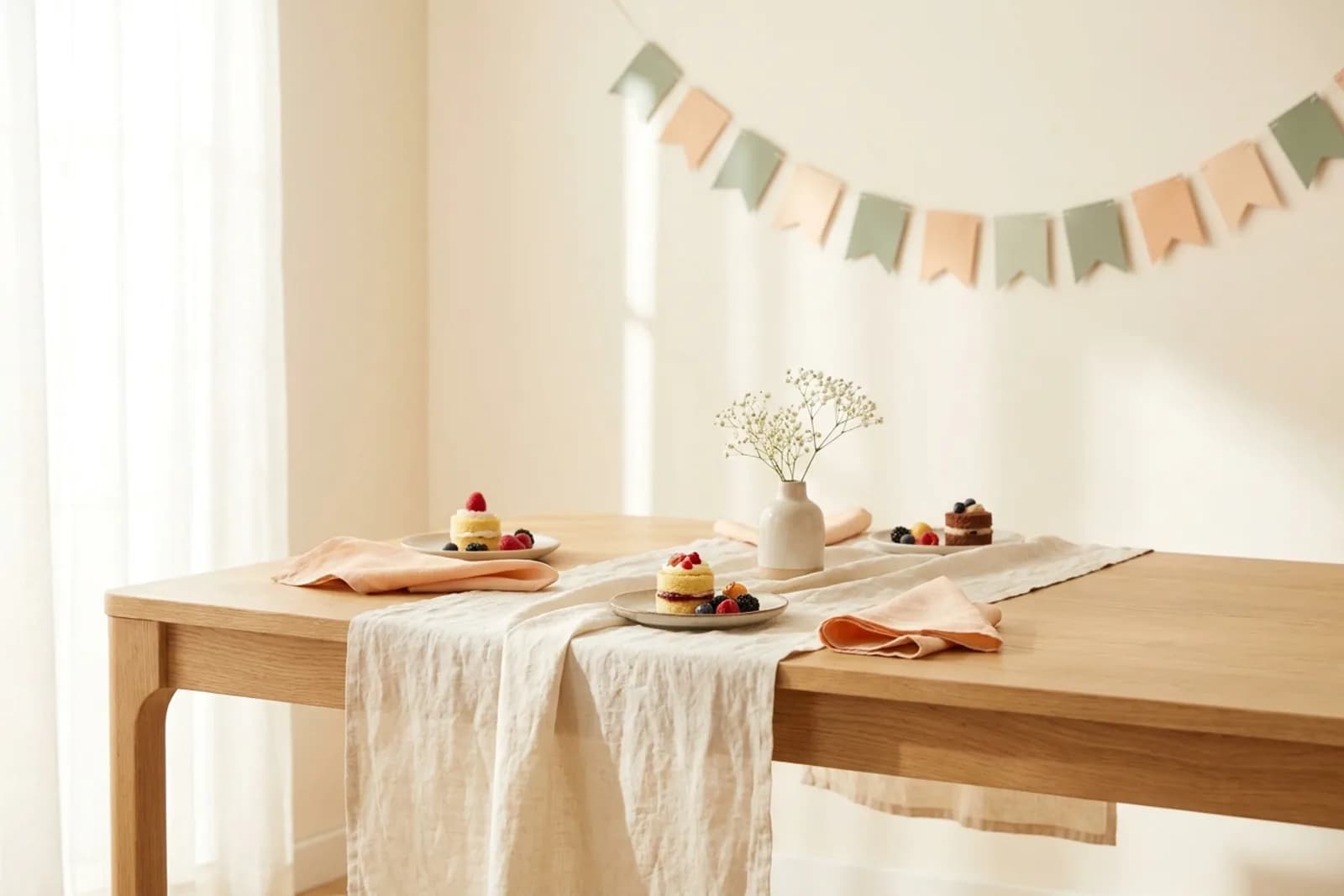
Plan the baby shower around week 30 to 34 of the pregnancy, organised by a friend, sister or colleague rather than the mum-to-be herself. Ask for the guest list and wishes in advance, choose food that is safe during pregnancy, keep the programme to two or three hours and stop at three games at most.
What to remember
- Week 30 to 34 is the sweet spot: the bump is festive and the energy usually still there.
- A friend or family member organises; the mum-to-be only supplies the guest list.
- Serve food the mum-to-be can eat too, so no raw fish or raw-milk cheeses.
- Two to three hours and at most three games keeps the afternoon light for everyone.
Who organises the baby shower, and who pays?
Tradition is clear: not the mum-to-be herself. Usually a close friend, sister or mother takes it on, sometimes together with colleagues. The organisers split the costs or ask a small contribution per guest, and the mum-to-be only supplies a guest list and any wishes.
Do quietly align on the date though. A total surprise sounds lovely, but late in pregnancy midwife appointments and work make planning tricky. A surprise with a pre-agreed date is the practical middle ground.
When in the pregnancy do you plan a baby shower?
Week 30 to 34 works best for most. Earlier can feel premature, later makes standing and sitting for hours heavy, and the baby may beat you to it. In the Netherlands maternity leave starts four to six weeks before the due date: a shower just after the last working day is often the nicest moment for colleagues.
Pick an afternoon, keep it to two or three hours and agree a clear end time. That keeps it festive without the guest of honour needing three days to recover.
What does a week-by-week checklist look like?
Six weeks of preparation is plenty for a shower at home. This schedule prevents last-minute stress:
- 6 weeks ahead: set the date with the mum-to-be, choose the venue, request the guest list.
- 4 weeks ahead: send invitations with an end time and any gift hint or theme.
- 2 weeks ahead: plan food and drinks, gather decorations and games.
- 1 week ahead: divide tasks (who brings what, who takes photos), make a playlist.
- The day itself: set up two hours ahead, one person welcomes, one person runs drinks.
Which party food is safe for the mum-to-be?
Nothing is more awkward than a party table where the guest of honour must skip half the dishes. Standard pregnancy advice, in the Netherlands from the Voedingscentrum, is to avoid raw or cold-smoked fish, raw-milk cheeses, raw meat and raw sprouts, and to be careful with liver products.
Safe and festive: cakes and bakes, fresh fruit, well-cooked quiches and savoury tarts, hard and pasteurised cheeses, sandwiches with cooked fillings, and mocktails or fruit spritzers. Label anything borderline with a little card, so nobody has to ask.
Which baby shower games are actually fun?
The best games need little explanation and never make anyone the unwilling centre of attention. Two or three is enough, with room to simply catch up in between.
- Guess the baby photo: every guest sends a baby picture in advance, who recognises the most?
- The due-date pool: guests predict date, weight and length on a card.
- Advice cards: every guest writes one golden tip or wish for the first year.
- Who knows the parents best: ten questions about the parents-to-be, teams against each other.
- Nappy messages: funny notes written on nappies for the night shifts to come.
How do you handle the gifts without hassle?
Ask the parents-to-be whether there is a wish list and share it with the invitation. That prevents five identical cuddly toys and gets the family things that are genuinely on their list. For bigger wishes a group gift works well: one envelope passed around is arranged in minutes.
Schedule the unwrapping halfway through, not at the end. Energy is still high, and guests who leave early do not miss the highlight. Have one person note who gave what: it makes thank-you messages much easier.
Frequently asked questions
What does organising a baby shower cost?
A homely shower for ten to fifteen guests is perfectly doable for 75 to 150 euros: food, drinks and simple decorations. Split the costs between two or three organisers or ask a small contribution per guest.
Is a baby shower the same as a gender reveal?
No. A gender reveal centres on announcing the sex and usually happens earlier. A baby shower celebrates the parent-to-be and the baby, typically between week 30 and 34, with gifts, food and games.
Who do you invite to a baby shower?
The mum-to-be decides the guest list. Traditionally it was a women's party, but mixed and co-ed showers with both partners are just as normal now. Ten to fifteen guests keeps it personal.
What do you wear to a baby shower?
Smart casual is nearly always right. Follow the theme or colour hint on the invitation if there is one, and remember the party is for the mum-to-be: let her shine.
Can you hold a baby shower after the birth?
Absolutely, often called a sip and see: guests meet the baby at one agreed moment. It saves separate visits and the parents set the pace. Plan it only once the family says they are ready.
Which gifts do you bring to a baby shower?
Follow the wish list if there is one. Otherwise practical gifts for the first months, such as grooming items, muslins or a blanket, or one lasting gift from a group. Guide amount: 15 to 30 euros per guest.
Sources and review
The food guidance in this article follows the Dutch Voedingscentrum; the leave information comes from the Dutch government. Traditions and amounts reflect common practice, not rules. Last content review: 16 July 2026.