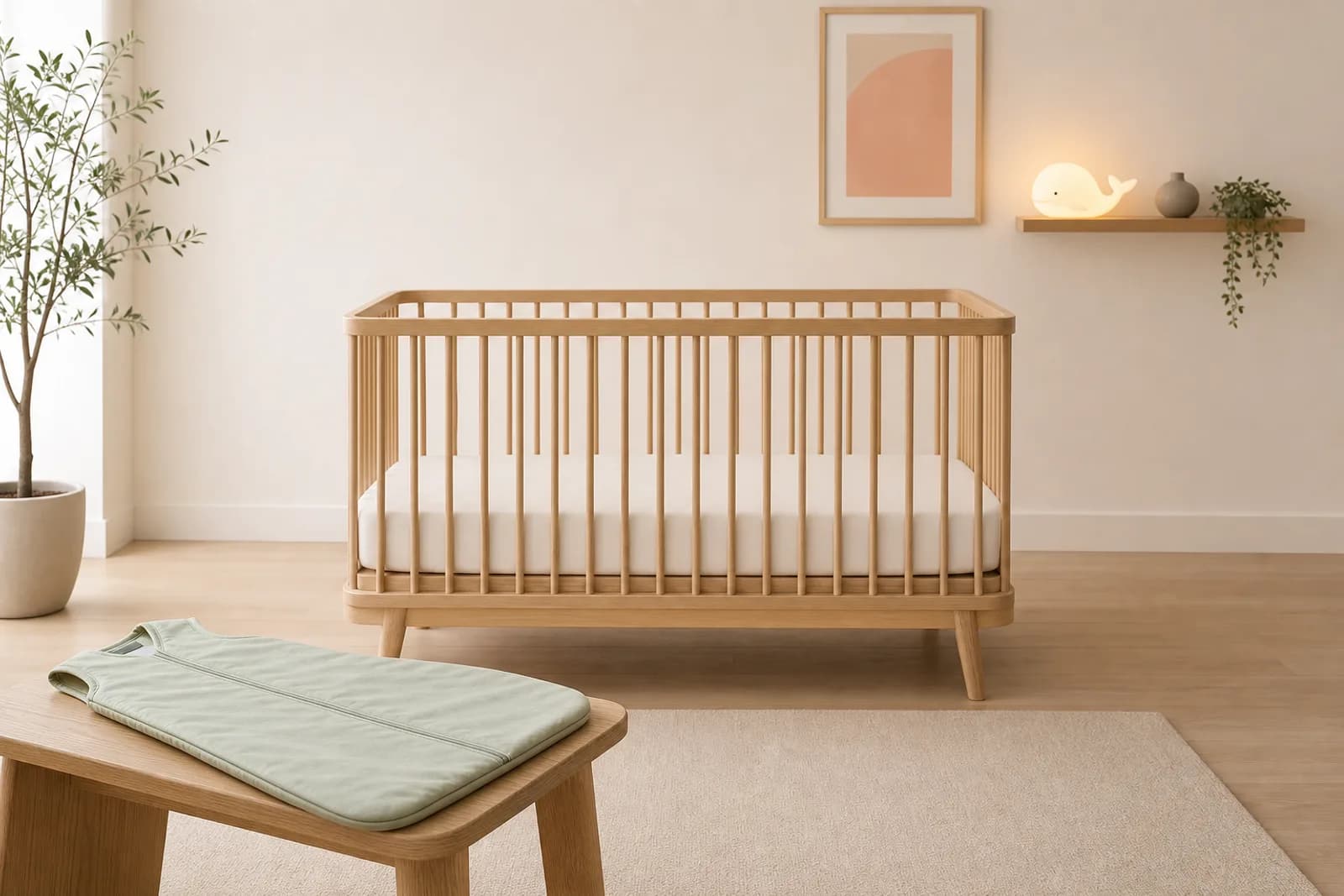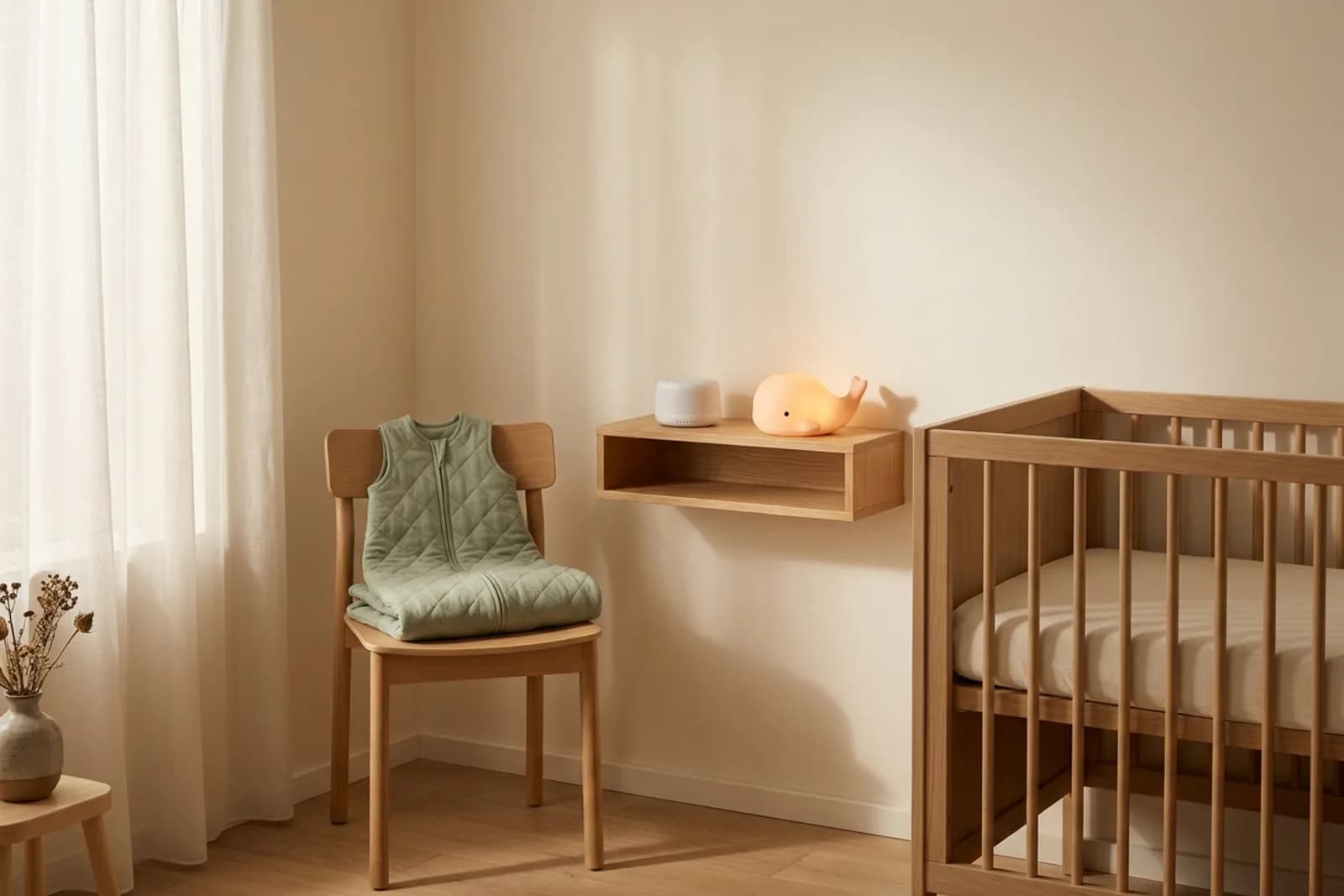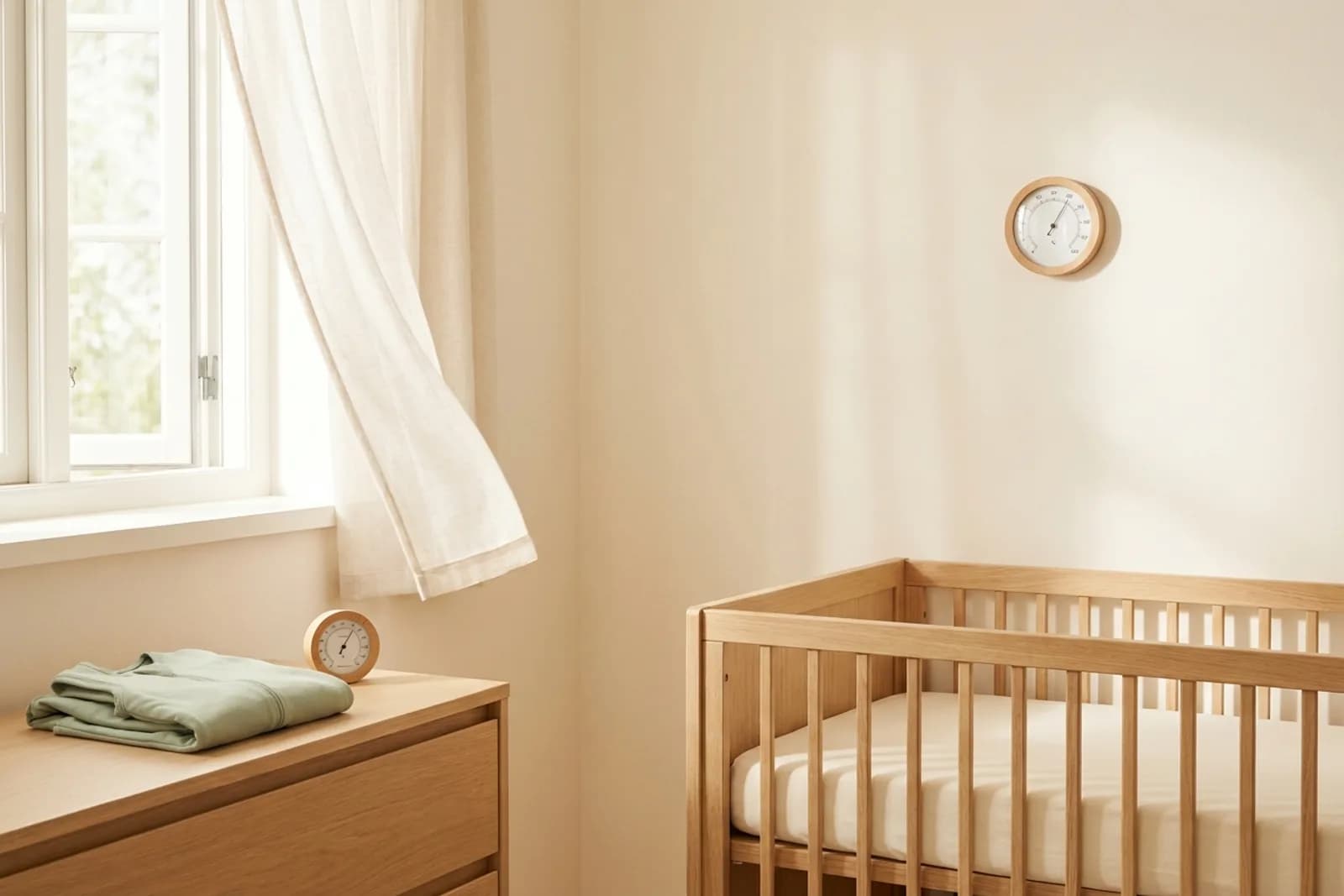
A nursery of 16 to 20 degrees Celsius is suitable for sleep, as advised by the NHS among others. More important than the exact number: dress your baby in a well-fitting sleep sack without loose blankets, and feel the neck to check comfort. Sweating or clammy hair means too warm.
What to remember
- Guideline: 16 to 20 degrees in the sleep space, better slightly cool than too warm.
- The neck check is your best thermometer: warm and dry is good, clammy is too warm.
- Match the sleep sack thickness to the temperature instead of stacking blankets.
- Never place the cot right next to a radiator or in direct sunlight.
What is the ideal temperature for a baby's room?
The NHS names 16 to 20 degrees Celsius as a comfortable and safe sleeping temperature for a baby's room. That feels cool to many adults, and that is exactly the point: overheating is a bigger risk for babies than slight coolness, and is explicitly mentioned in safe sleep advice from both VeiligheidNL and the NHS.
A room thermometer gives a reference, but do not stare at it. Room temperature, sleep sack thickness and clothing together determine how warm your baby actually is.
How do you check whether your baby is too warm or too cold?
Feel with two fingers in the neck or on the chest, not the hands or feet: those are often cool on babies while the rest is fine. If the neck feels warm and dry, all is well. Clammy, sweaty or flushed cheeks without reason: remove a layer.
Other signs of too warm: restless sleep, fast breathing and damp hair. Too cold shows as a cold chest or neck. If you are structurally unsure or worried about fever, contact your health clinic or doctor. This guide does not replace medical advice.
What do you dress your baby in at which temperature?
Think in layers and use the sleep sack as the fixed base. Manufacturers usually state a thickness or TOG value with a temperature range on sleep sacks: follow that indication and adjust the clothing underneath.
- Warmer than 24 degrees: just a nappy with a bodysuit, or a very thin summer sleep sack.
- 20 to 24 degrees: thin summer sleep sack with a short-sleeved bodysuit.
- 16 to 20 degrees: standard sleep sack with a bodysuit or thin pyjamas underneath.
- Below 16 degrees: winter sleep sack with pyjamas; consider gently heating the room.
- Never: stacking loose blankets, a hat indoors or a hot water bottle without advice.
How do you keep the nursery cool in summer?
In a heatwave, reverse the logic: windows, curtains and shutters closed on the sunny side during the day, and air the room once it is cooler outside than inside. A fan may move the air around the room, but do not point it directly at the cot.
Dress your baby lightly, offer feeds a little more often within your usual rhythm and bathe lukewarm rather than cold. If the room stays above roughly 25 degrees, let the baby sleep in the coolest room of the house, even if that is temporarily not the nursery.
And how do you handle cold winter nights?
Heat the room into the comfortable range and keep the heating low and steady overnight rather than high and fluctuating. Place the cot away from the radiator, cold outer walls and window draughts.
A thicker winter sleep sack with pyjamas underneath is almost always enough. Electric blankets, hot water bottles against the body and hats in bed do not belong in a baby's bed: a baby regulates heat largely through the head and must be able to lose it.
Do humidity and fresh air matter?
A humidity between roughly 40 and 60 percent feels comfortable and prevents both dry air and a clammy room. Airing the room properly every day, simply ten minutes with the window open while the baby is not in it, often does more than any appliance.
Never smoke indoors: a smoke-free environment is a fixed part of safe sleep advice. And keep the bedroom simple: a tidy, cool and dark room is the best sleep environment there is.
Frequently asked questions
Is 22 degrees too warm for a baby's room?
Not necessarily, but it is above the 16 to 20 degree guideline. Choose a thinner sleep sack and less clothing underneath, and do the neck check. Structurally above 24 degrees calls for more active cooling.
How do I know the room is right without a thermometer?
Feel your baby's neck: warm and dry is good. A room that feels fresh but pleasant to you as an adult wearing a light jumper is usually within the right range.
Can a fan or air conditioning run in the nursery?
Yes, as long as it is not aimed directly at the baby and runs on a quiet setting. Preferably ventilate while the baby is not in the room and check regularly that your baby is not getting cold.
Should my baby wear a hat in bed?
No. Indoors and in bed, no hat: babies lose excess heat mainly through the head. A hat is for outdoors in cold weather.
Which sleep sack thickness do I need when?
Follow the temperature range the manufacturer states on the sleep sack, often as a TOG value. As a rule of thumb: thin summer sack above 20 degrees, standard thickness at 16 to 20 degrees and a winter version below that.
What if my baby wakes up sweaty at night?
Remove a layer, check the room temperature and consider whether the sleep sack is too thick for the season. If your baby stays sweaty, unusually warm or seems unwell, contact your doctor or health clinic.
Sources and review
This guide follows the VeiligheidNL safe sleep advice and the NHS guideline on room temperature and overheating. It is general information, not individual medical advice. Last content review: 16 July 2026.