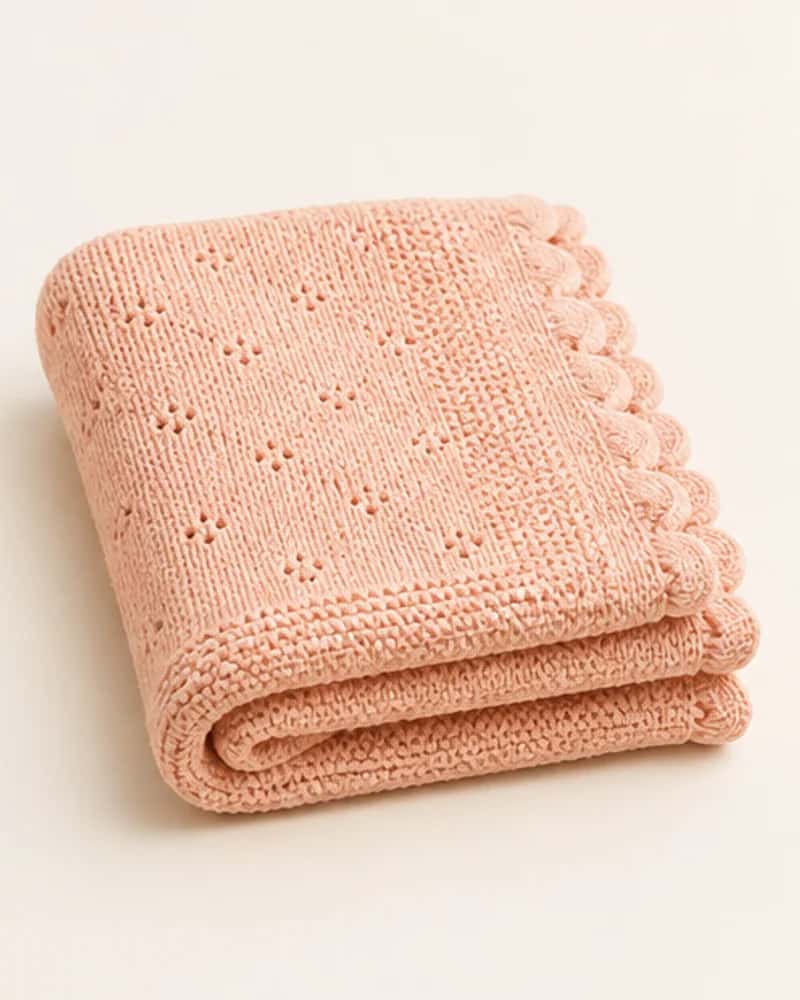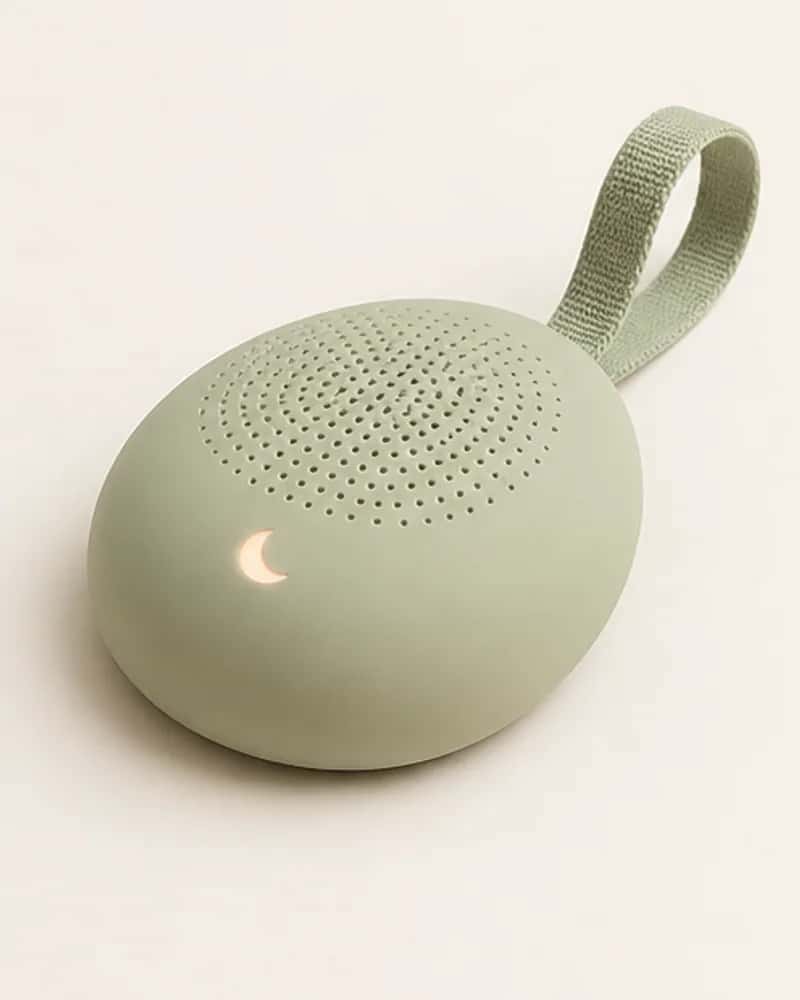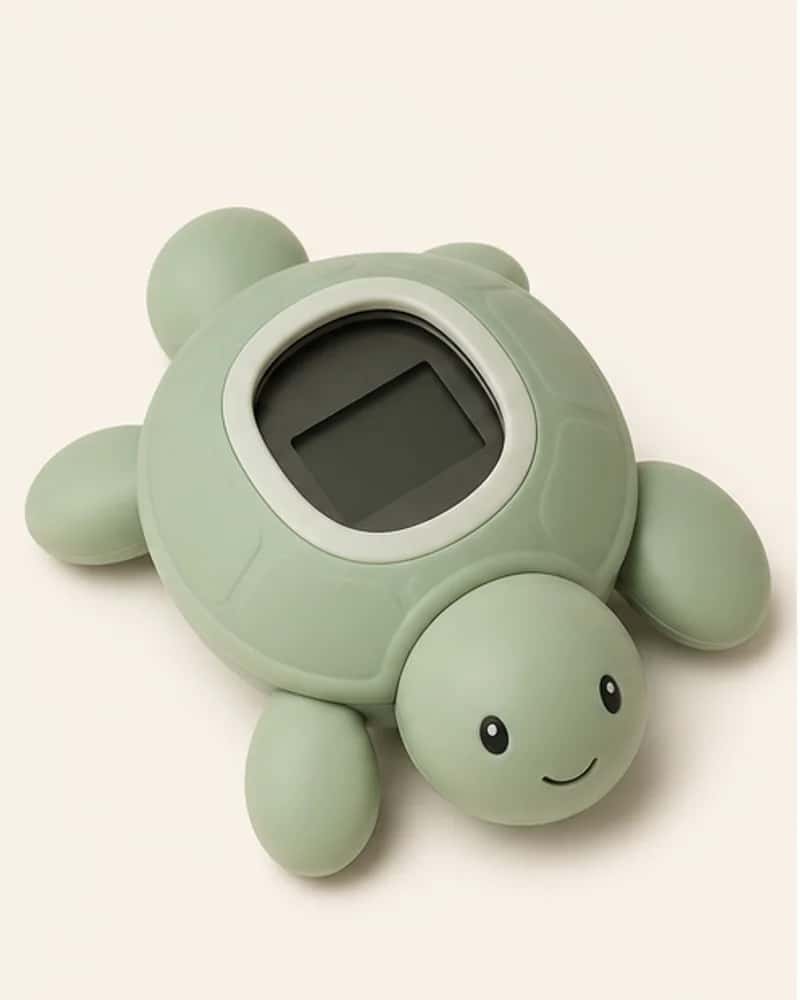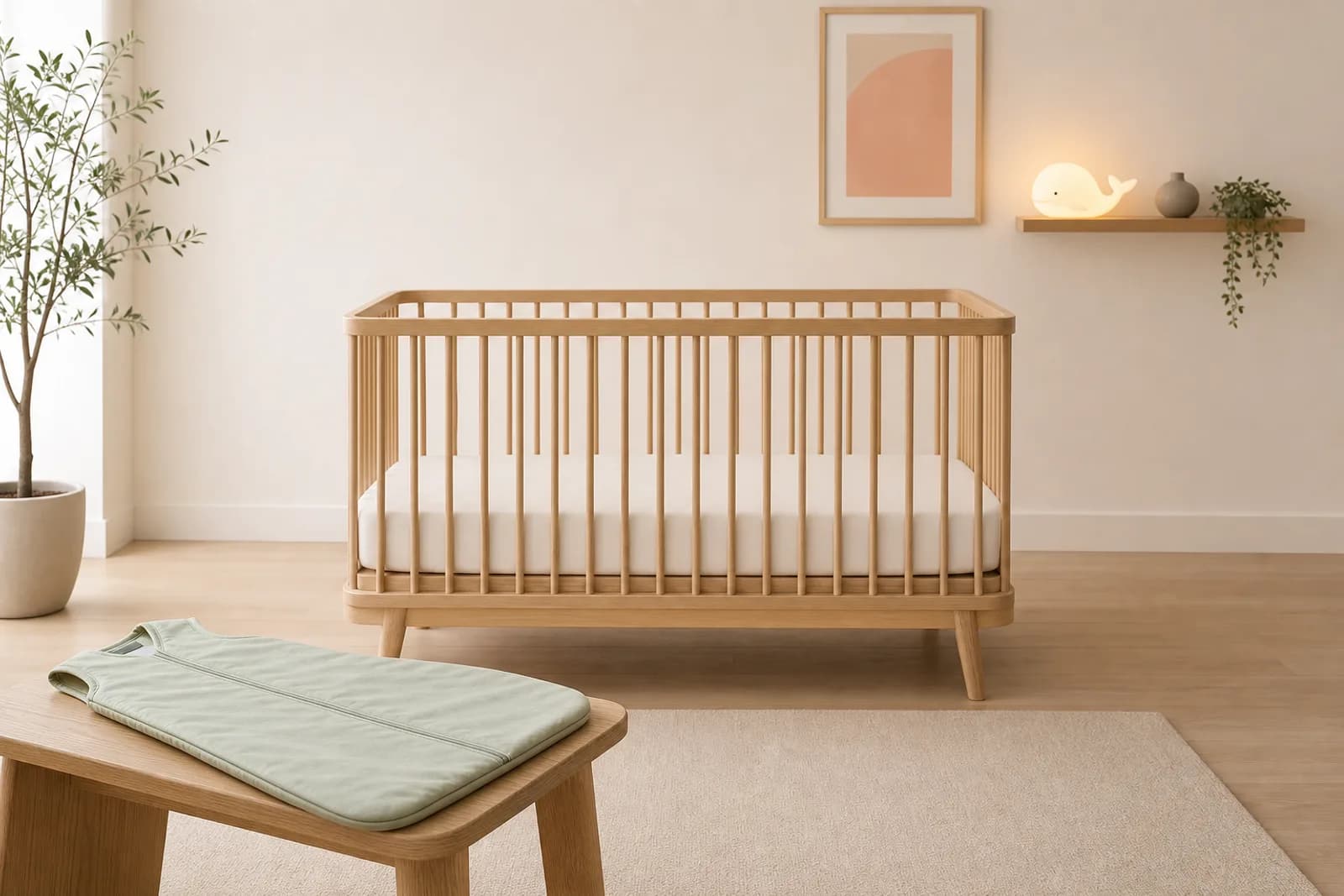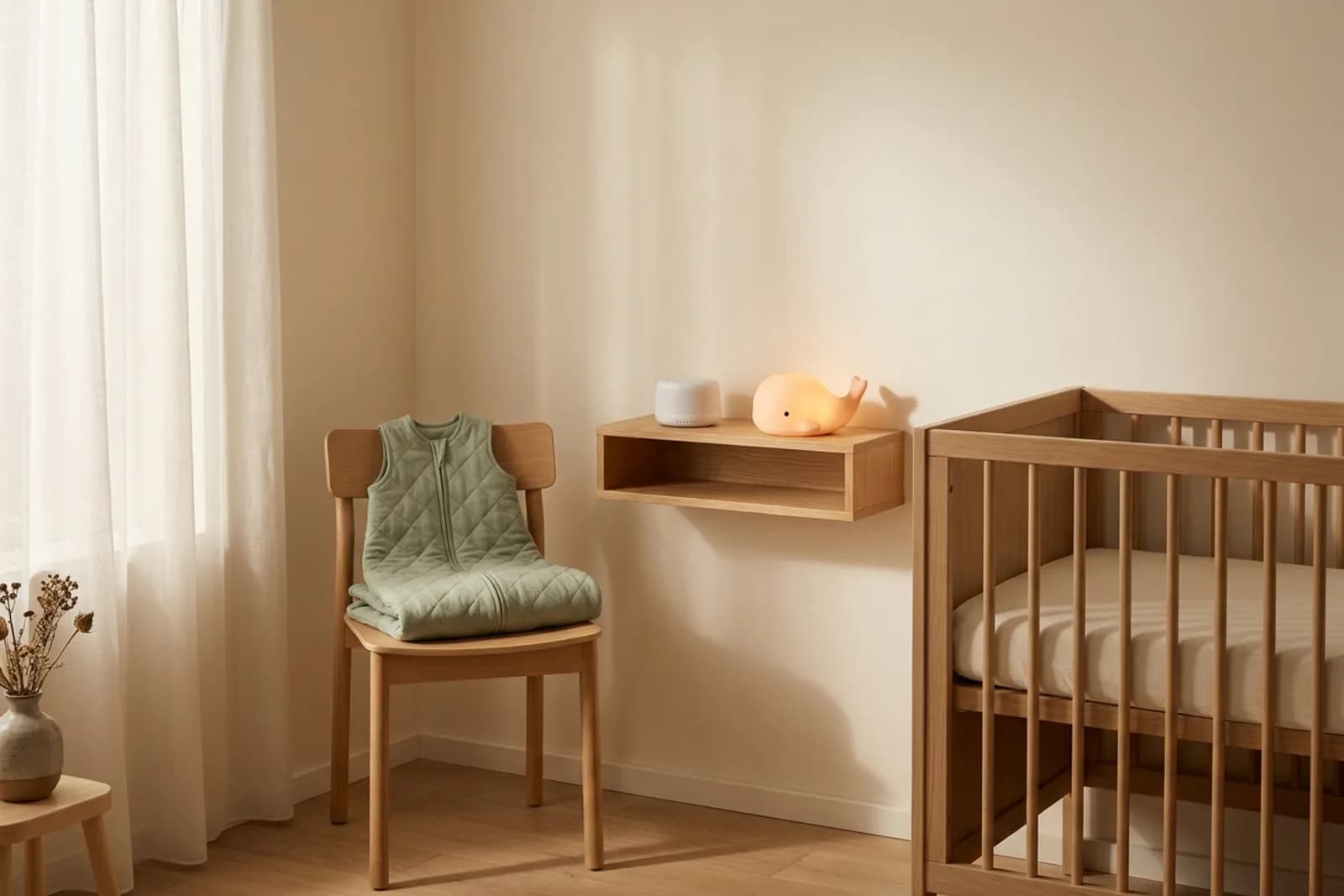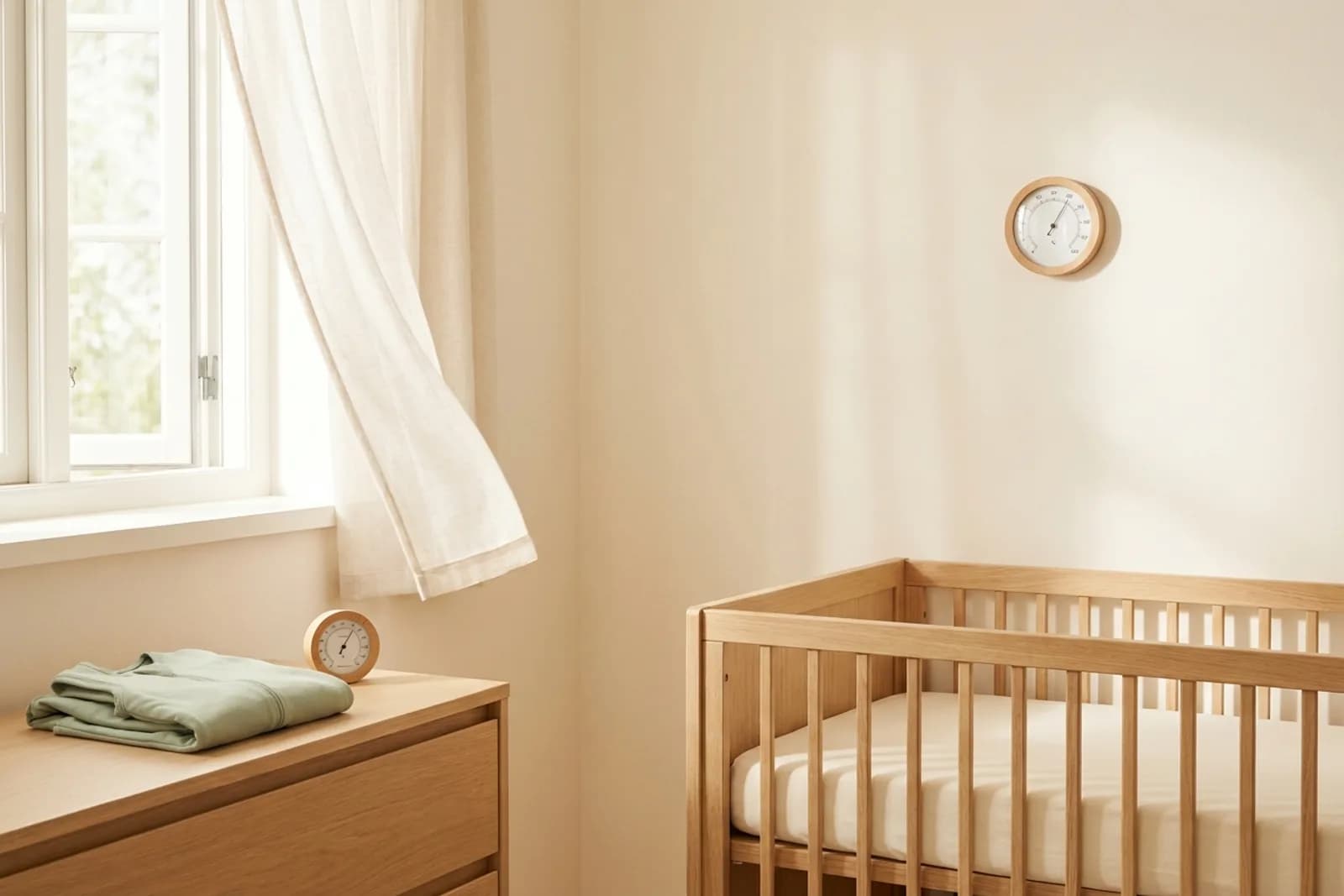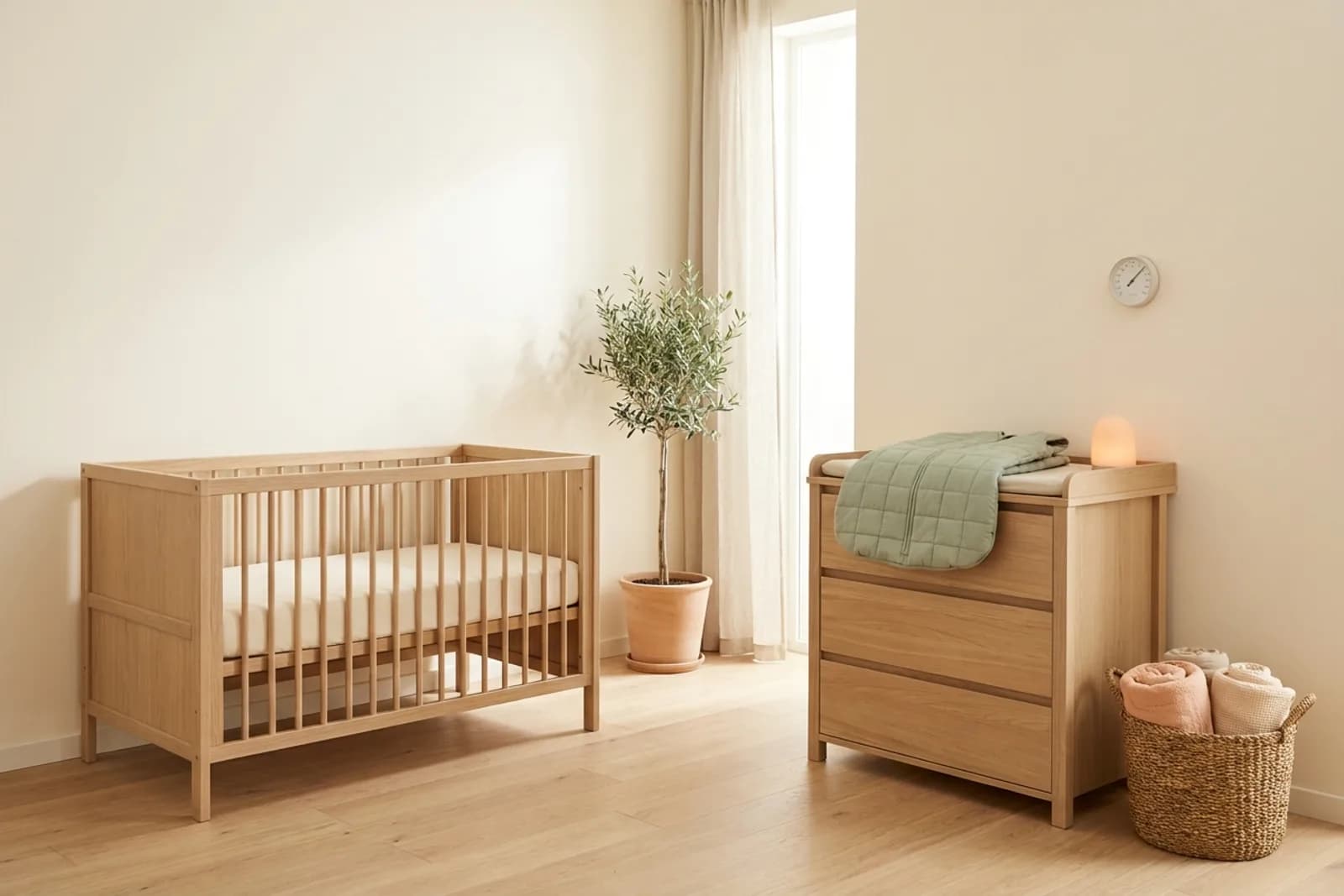
Set up the nursery around a safe sleep space: a firm, flat mattress in an own, empty cot, away from cords, blind pulls and the window. Keep the room easy to darken and at a comfortable temperature, between roughly 16 and 20 degrees. Then choose practical storage, soft light and calm materials. Start small and add what you actually use.
What to remember
- The safe sleep space is the core. Every other choice comes after it.
- Place the cot away from cords, blind pulls, curtains and the radiator.
- Make the room easy to darken and keep the temperature around 16 to 20 degrees.
- Start with a short basic list and add what you miss in practice.
Start with the safe sleep space
The most important choice in the nursery is the cot. Choose a firm, flat mattress with a tightly fitting sheet and keep the cot empty: no pillows, bumpers, nests or large soft toys. Safe sleep advice sums this up as on the back, in their own cot, in a sleeping bag and in an empty cot.
Place the cot away from blind cords, cables from lamps or devices and not right next to the heater. That keeps the sleep space safe and at temperature.
- Firm, flat mattress with a fitted sheet, otherwise an empty cot.
- Cot away from cords, cables, curtains and the radiator.
- A well fitting sleeping bag instead of loose blankets.
Temperature, air and light
A comfortable bedroom is not too warm. As a guide, 16 to 20 degrees is often mentioned. A simple room thermometer helps you keep an eye on this and match the thickness of the sleeping bag.
For daytime naps and early summer mornings it helps to be able to darken the room. Soft, indirect light is pleasant for night feeds, without waking your baby fully.
Furniture and smart storage
Beside the cot, a changing unit at working height and enough storage are the most useful. Keep care items within reach, so you never have to leave your baby alone on the changing unit.
Fix tall and heavy furniture firmly to the wall and keep cables out of reach. Calm and overview come mostly from fewer things, not from more.
- Changing unit at working height with care items within reach.
- Anchor tall cupboards to the wall against tipping.
- Baskets or drawers for clothes, cloths and spares.
A calm mood that grows with you
Calm colours, natural materials and a few soft accents make the room restful. Choose decoration that hangs safely on the wall and not in or above the cot, so nothing loose can end up in the sleep space.
Think about growing along: a neutral base with swappable accents fits for longer than a complete theme. That way you replace less later.
Setting priorities within your budget
A baby needs surprisingly little at the start. Invest first in a safe sleep space and practical care, then add based on what you truly use. The Dutch Nibud shows that costs rise sharply if you buy everything new at once.
Second hand furniture can be fine, as long as it is sturdy and safe. For a mattress the rule is to choose one that is firm, flat and well fitting.
Frequently asked questions
What temperature is comfortable for the nursery?
As a guide, 16 to 20 degrees is often mentioned. A room thermometer helps you follow this and match the thickness of the sleeping bag to it.
What belongs in the cot and what does not?
Only your baby, on the back, in a sleeping bag, on a firm and flat mattress. Pillows, bumpers, nests and large soft toys do not belong in it.
Where should I place the cot?
Away from blind cords, cables and the heater, and not in direct sun. A calm, easy to darken spot in the room works best.
What do I really need to start?
A safe sleep space, a place to change with items within reach, storage and soft light. You can add the rest calmly.
Sources and review
This guide combines safe sleep advice from VeiligheidNL, the NHS information on a safe sleep environment and the cost information from the Dutch Nibud. It does not replace individual advice. Last content review: 16 July 2026.