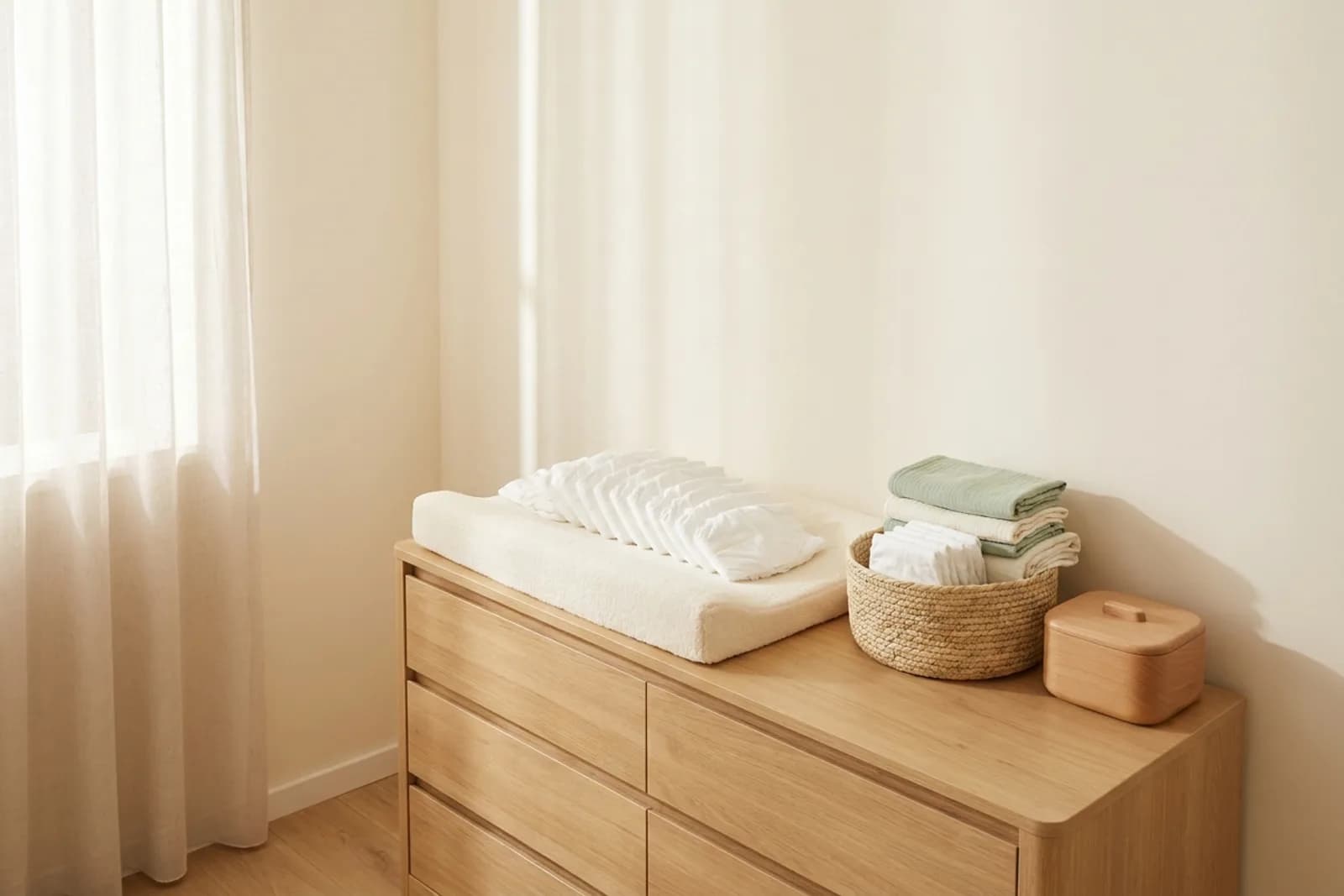
Nappy sizes run from size 0 for the smallest babies up to size 6 and beyond. Choose the size based on your baby's weight, not age, and go up a size as soon as the nappy starts to pinch or leaks more often. A good nappy sits smoothly around the legs and waist without leaving red marks.
What to remember
- Choose the nappy size by weight, not by your baby's age.
- Red marks or more frequent leaks mean it is time to try a larger size.
- Sizes overlap between brands, so calmly test what fits best.
- A good fit sits smoothly around the legs and waist.
The nappy sizing chart at a glance
Most brands use similar sizes, linked to weight in kilos. The chart below is a guideline: always check the range on the packaging, because there are small differences between brands.
- Size 0: up to about 3 kg, for the very smallest and premature babies.
- Size 1: about 2 to 5 kg, the first weeks.
- Size 2: about 3 to 6 kg.
- Size 3: about 5 to 9 kg, often the longest period.
- Size 4: about 9 to 14 kg.
- Size 5: about 11 to 16 kg.
- Size 6: about 13 kg and more.
Why you choose by weight, not age
Babies of the same age vary considerably in weight and build. Nappies are designed around weight, because that determines how the nappy sits and how much it can absorb. An age on the packaging is at most a rough indication.
So work from your baby's weight and pay attention to the fit. If you are between two sizes, look at comfort and leaks: if the smaller one pinches, choose the larger.
When to go up a size
A nappy is ready for a larger size when the fit starts to pinch or no longer closes properly. Your baby often shows this with small signals.
- Red marks around the waist or legs after wearing.
- The tabs almost reach the edge or no longer overlap neatly.
- More frequent leaks, especially at night, despite changing on time.
- The nappy leaves clear imprints or visibly sits tight.
How to recognise a good fit
A well-fitting nappy sits smoothly around the legs, without cutting in. The waist sits just below the navel and you can still get a finger between it. After putting the nappy on, turn the frills around the legs outward, which helps against leaks.
After an hour or so, check that the nappy leaves no deep imprints. If there are marks, go up a size. If the nappy sits loosely and leaks along the edges, a smaller size or a different model is sometimes better.
Preventing leaks and nappy rash
Most leaks come from the wrong size or a nappy left on too long. Change regularly, on average every two to three hours and straight after a poo, and turn the leg frills neatly outward.
Clean, dry skin prevents nappy rash. Let the bottom air now and then and use a protective cream on red skin. If irritation persists, talk it over with your health visitor or GP.
Frequently asked questions
Which nappy size suits which weight?
Roughly: size 1 for 2 to 5 kg, size 2 for 3 to 6 kg, size 3 for 5 to 9 kg, size 4 for 9 to 14 kg, size 5 for 11 to 16 kg and size 6 from about 13 kg. Always check the packaging.
How do I know if the nappy is too small?
Red marks, tabs that barely close any more or more frequent leaks mean the nappy is too small. In that case try a larger size.
How often should I change my baby?
On average every two to three hours and straight after a poo. A dry, clean nappy prevents leaks and nappy rash.
Sources and review
This guide follows the information from the Consumentenbond on nappies and Thuisarts.nl on nappy care. The sizing chart is a guideline, because sizes vary by brand. Last content review: 17 July 2026.