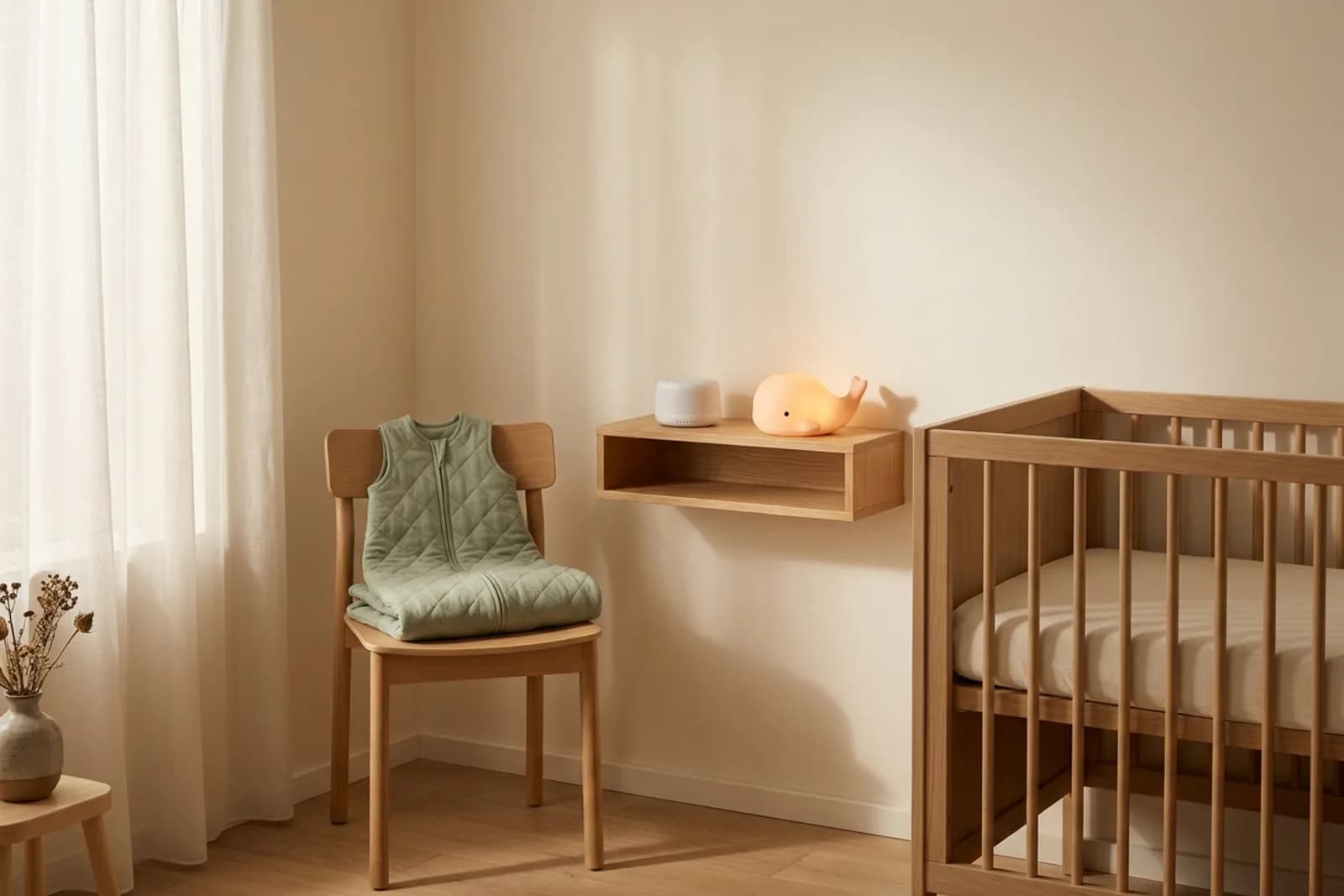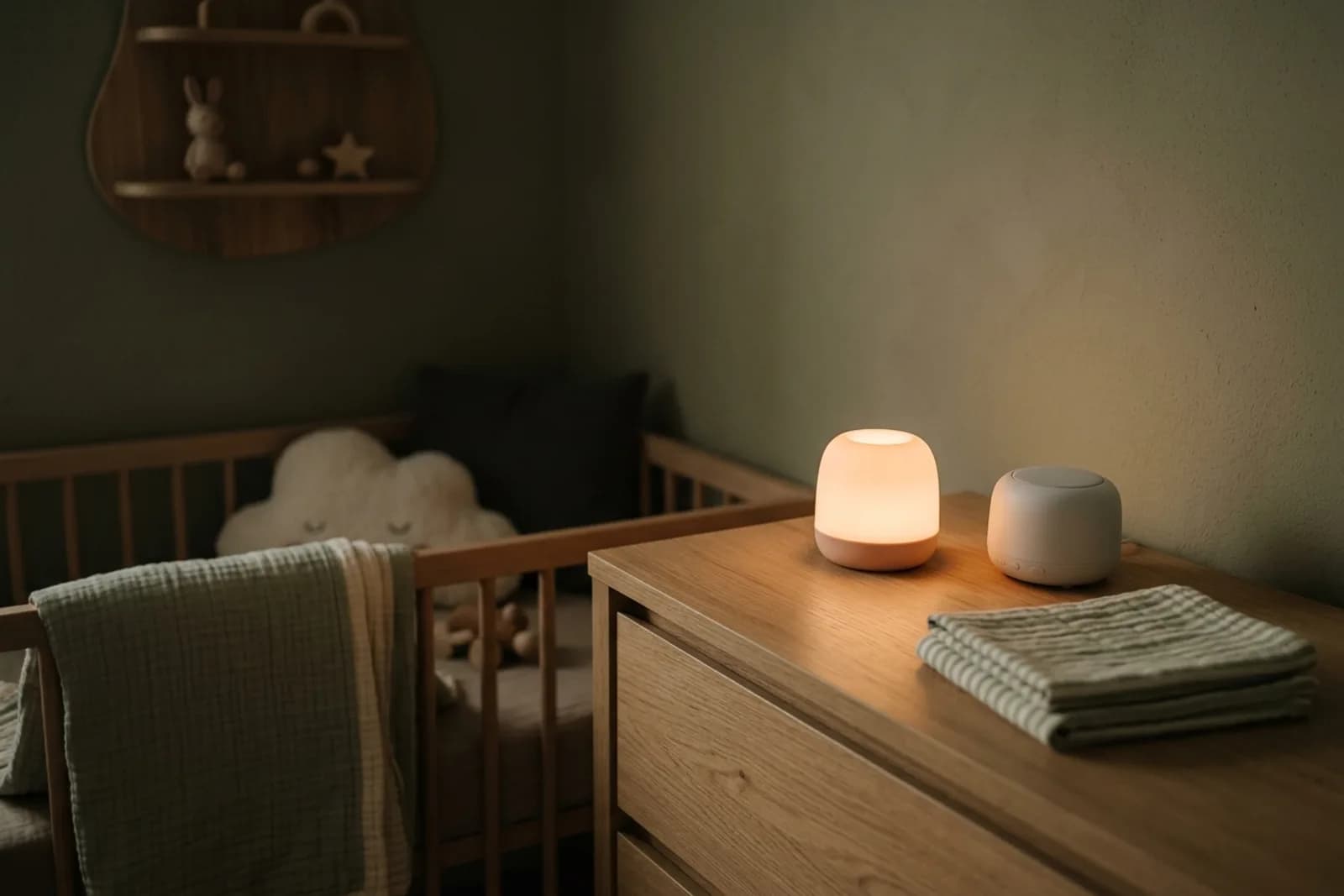
Sleep gadgets can support the atmosphere and the wind-down to rest, but no device makes sleep safe or guarantees longer nights. What helps most often: a warm, dimmed night light for the night feed, soothing sound at a low volume and a well-fitting sleep sack. Keep everything out of the cot and out of reach, and always put the safe-sleep rules first.
What to remember
- Sort the safe basics first: on the back, own empty cot, well-fitting sleep sack.
- White noise can help, but keep the volume low and the device at a distance.
- A warm, dimmed night light makes night feeds calmer without waking the baby fully.
- No gadget guarantees sleep: at most it supports the routine.
First the safe basics, then the gadget
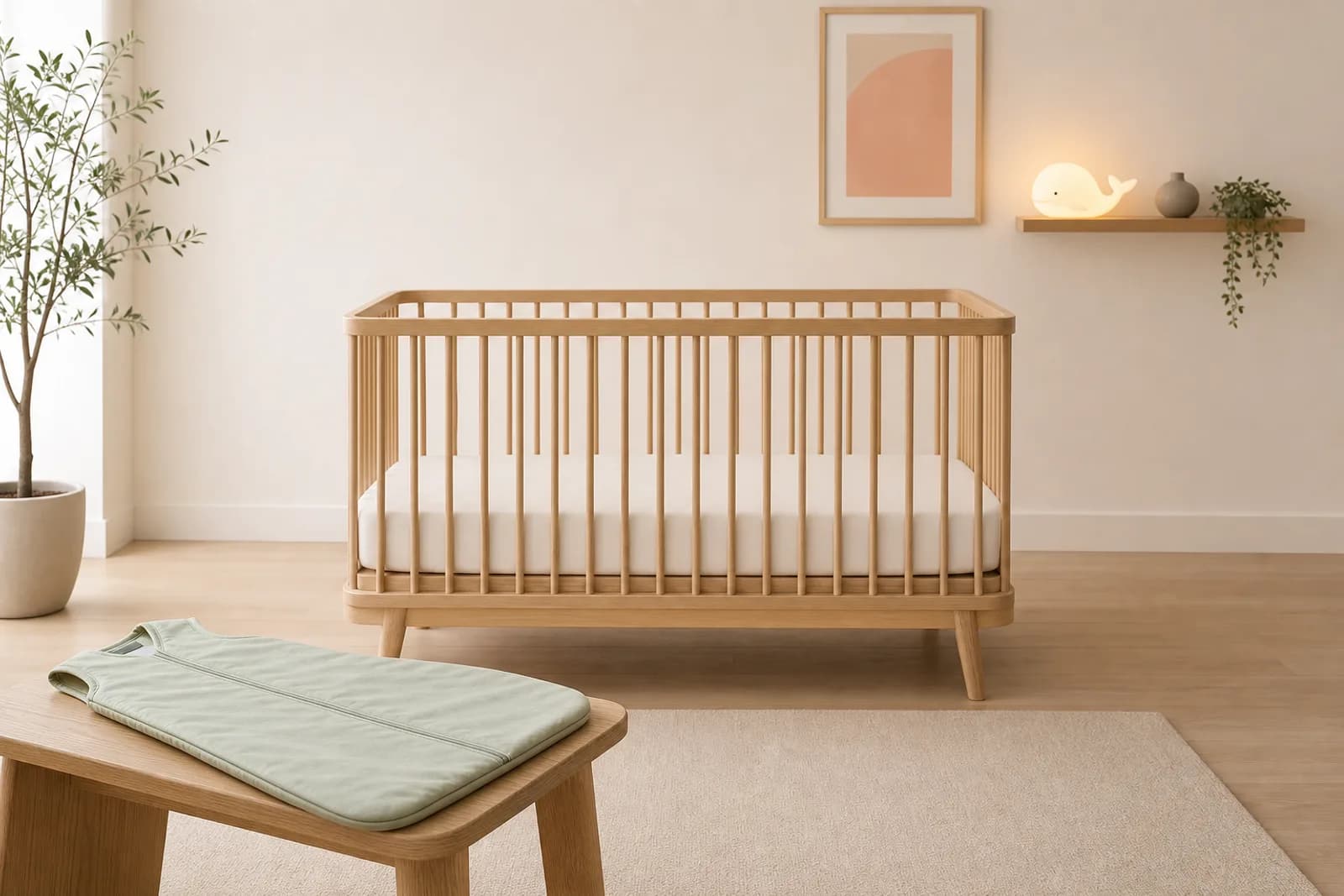
Before you buy anything: the most important sleep helper costs nothing. VeiligheidNL sums up safe sleep as on the back, in an own and empty cot, in a well-fitting sleep sack, on a firm flat mattress. Pillows, head guards, baby nests and loose blankets do not belong in the sleep space.
Any device you add stands stably outside the cot and out of reach, with cords kept well away. A gadget may support the routine, but it never replaces the safe basics. If you keep worrying about sleep, breathing or growth, talk to your health visitor or GP.
- On the back, own empty cot, well-fitting sleep sack, firm flat mattress.
- Devices and cords outside the cot and out of reach.
- Ongoing concerns are worth discussing with a qualified health professional.
White noise: does it really help?
For many babies, a constant, soft sound makes falling asleep more familiar. It mimics the whooshing a baby knows from the womb and masks sudden household noises. Parents often name it one of the few gadgets that makes a noticeable difference at bedtime and for short daytime naps.
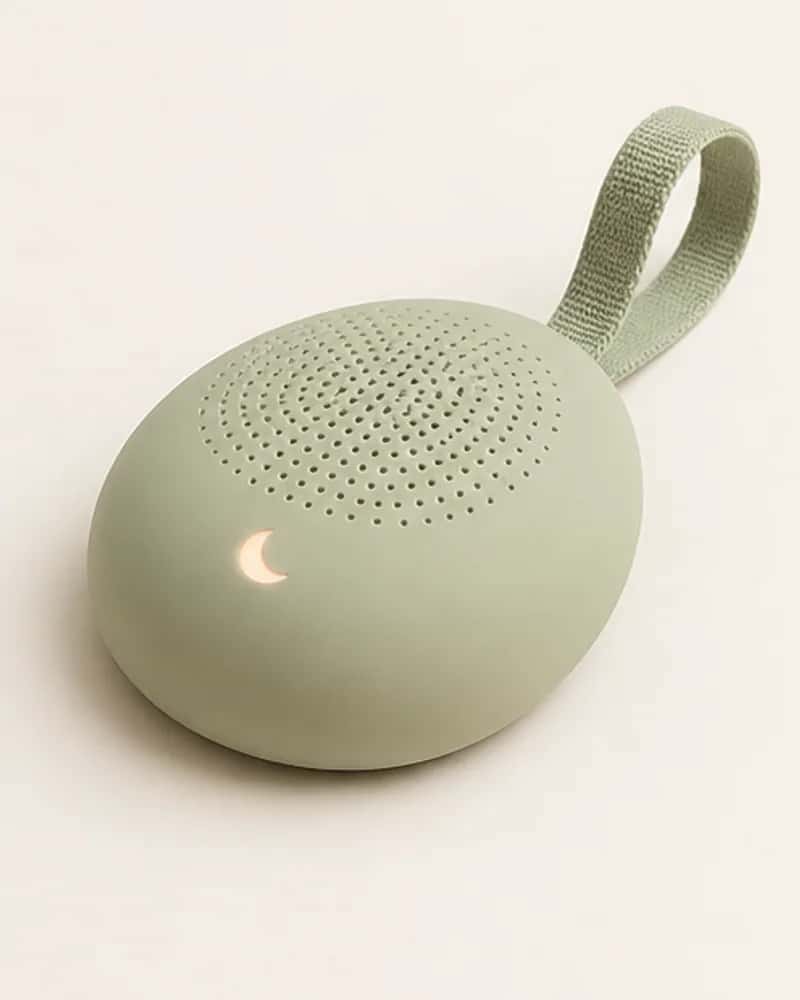
Volume is what matters. The WHO points out that long, loud sound exposure can strain hearing. So keep the sound soft, roughly the level of a quiet shower, place the device away from the cot and do not let it run at full volume all night. A compact device with a soft carry loop is handy out and about too.
- Keep the volume low and the device away from the head.
- Use it as an aid, not as an all-night wall of sound.
- A portable model helps hold the rhythm away from home.
The night light: small but indispensable
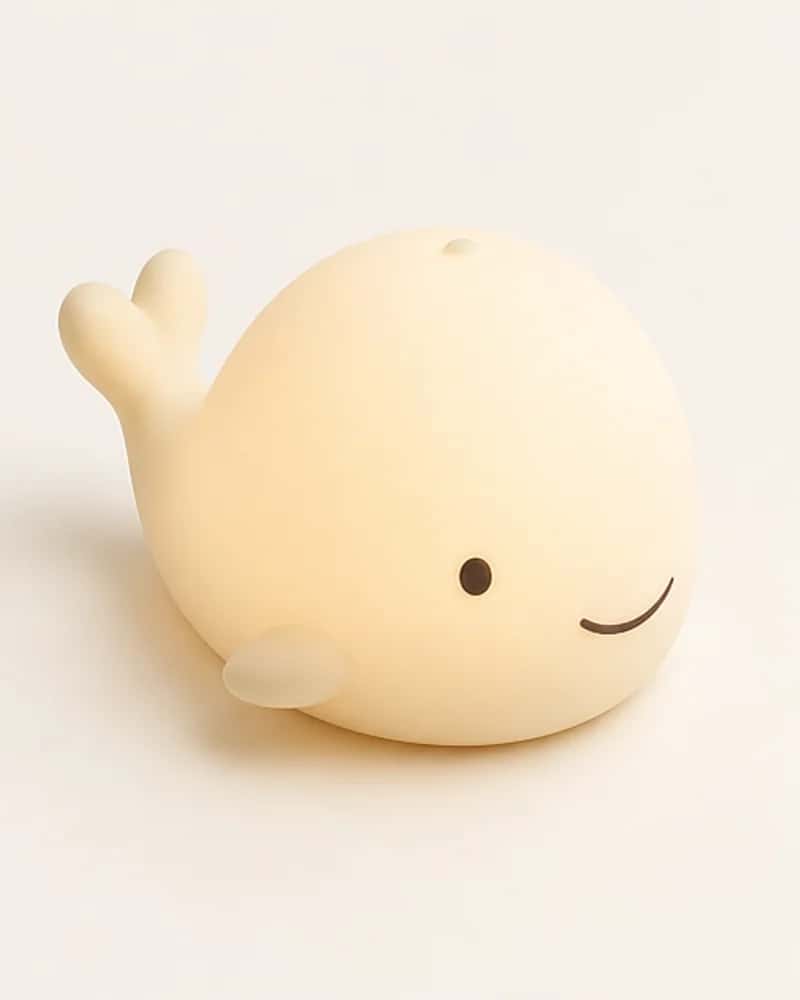
A warm, dimmable night light is one of the most underrated helpers. During the night feed and nappy changes you need enough light to see, but not so much that the baby wakes fully. Warm, muted light keeps everyone in sleep mode and makes the move back to bed easier.
Choose a light with a soft, warm glow rather than bright white light, and place it stably outside the cot. For older children, the same light can later become a reassuring beacon that lights the room just enough.
Sleep sack and blanket: comfort within the rules
A well-fitting sleep sack is safer than loose blankets and keeps your baby at the right temperature without anything sliding over the face. Match the thickness, expressed in TOG, to the room temperature and check that the neck and arm openings sit neatly.
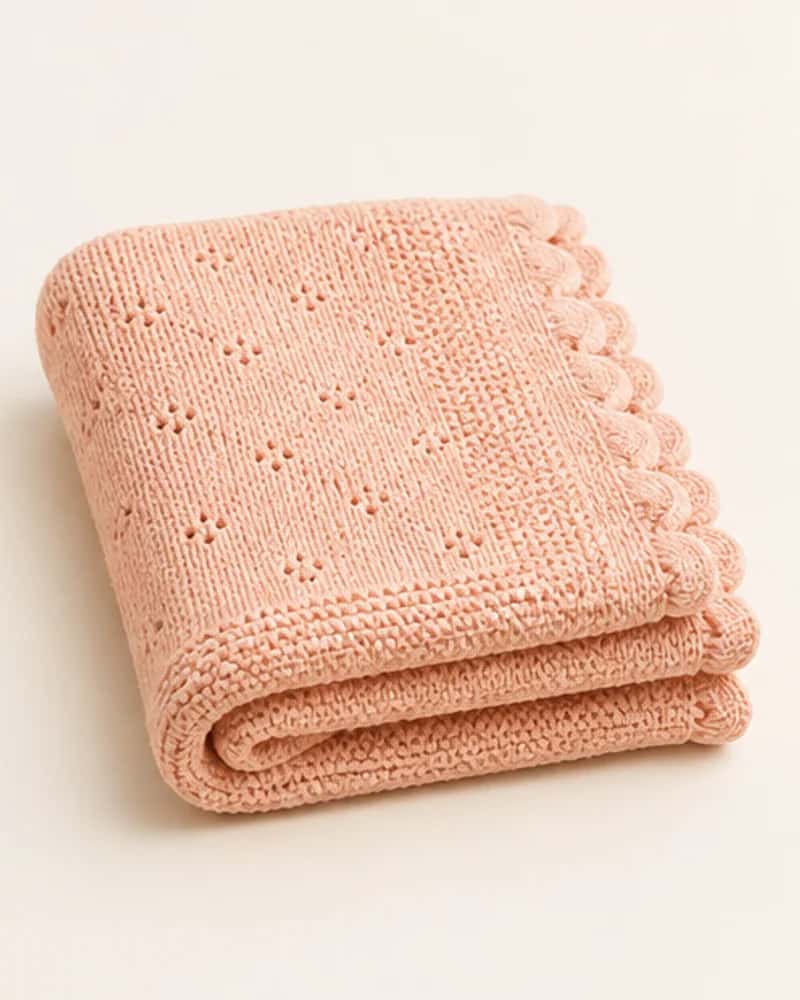
A loose knitted blanket is lovely for an awake cuddle moment on the sofa or in the pram, but does not belong as loose material in the cot during sleep. That way you get the softness without letting go of the safety.
Where your money is better not spent
Not every sleep gadget earns a place. Devices that promise to guarantee sleep, or that sound like a medical aid without being one, often only raise expectations. Pricey sets with ten functions are rarely used in full in practice either.
Better to choose a few simple things you genuinely use every day: sound, light and a well-fitting sleep sack. The rest is often atmosphere, not sleep. And remember that restless nights are part of development and are no sign that you are doing something wrong.
Frequently asked questions
Do baby sleep gadgets really help?
Some do, as support. Soothing sound and a warm, dimmed night light help many parents at bedtime and during the night feed. No device makes sleep safe or guarantees longer nights.
Is white noise safe for a baby?
Yes, as long as you keep it soft and place the device away from the cot. Long, loud sound can strain hearing, so use a low volume and do not let it run at full power all night.
Which night light is best for a nursery?
One with warm, dimmable light rather than bright white light. That way you see enough during the night feed without waking the baby. Place it stably outside the cot and out of reach.
What matters more than sleep gadgets?
The safe basics: on the back, in an own and empty cot, in a well-fitting sleep sack on a firm mattress. That costs nothing and always comes before any device.
Sources and review
This guide follows the NHS and VeiligheidNL for safe sleep and the WHO for hearing protection around sound. Products at most support the routine and are not medical aids. If you have ongoing concerns about sleep, breathing or growth, consult your health visitor or GP. Last content review: 17 July 2026.